
The automotive landscape is shifting at a lightning pace, and as we look toward the 2026 model year, two South Korean giants are leading the charge. Hyundai and Kia have transitioned from being formidable competitors to absolute trendsetters in the electric vehicle space. With groundbreaking battery technology, ultra-fast charging architectures, and designs that look like they have been pulled straight from a sci-fi blockbuster, the 2026 lineup is set to redefine what consumers expect from sustainable transportation.
In this deep dive, we explore the specific models, technical innovations, and market shifts that make the 2026 Hyundai and Kia electric offerings the most anticipated vehicles of the decade.
The Flagship Era: 2026 Hyundai Ioniq 9
One of the most significant arrivals for the 2026 model year is the Hyundai Ioniq 9. Previously teased as the Seven Concept, this massive three-row SUV is the flagship that Hyundai enthusiasts have been waiting for. It is designed to offer the utility of a traditional large SUV with the whisper-quiet efficiency of a world-class electric drivetrain.
Space, Luxury, and Innovation
The Ioniq 9 is built on the proven E-GMP platform, but it has been stretched to its absolute limits to provide a lounge-like interior. One of the standout features is the available swiveling seats in the second row, allowing passengers to face each other while the vehicle is stationary—perfect for mobile meetings or family interactions during charging stops.
- Battery Capacity: A massive 110.3 kWh lithium-ion pack.
- Driving Range: Up to 335 miles on a single charge for the RWD Long Range model.
- Performance: The dual-motor AWD Performance trim delivers a staggering 422 horsepower, moving this large SUV from 0 to 60 mph in just 4.9 seconds.
- Charging: Thanks to the 800V architecture, you can go from 10% to 80% charge in approximately 24 minutes.
Advanced Safety and Tech
The 2026 Ioniq 9 is not just about size; it is a rolling laboratory of safety technology. It features the latest Hyundai SmartSense suite, including Forward Collision-Avoidance Assist 2 and a unique UV-C sterilizer in the center console to disinfect personal items like smartphones and wallets.
The Performance Push: Kia EV3 GT, EV4 GT, and EV5 GT
While Hyundai focuses on “Living Space” and flagship luxury, Kia is doubling down on “Opposites United” design and raw performance. The big news for 2026 is the simultaneous unveiling of three high-performance GT models at the Brussels Motor Show.
Kia EV5 GT: The Midsize Powerhouse
The EV5 GT is expected to be the crown jewel of the midsize segment. Combining the practicality of a family crossover with a dual-motor setup, it is confirmed to produce around 302 bhp and 480 Nm of torque. This puts it in direct competition with premium European performance EVs but at a significantly more accessible price point.
Kia EV3 and EV4: Compact Brilliance
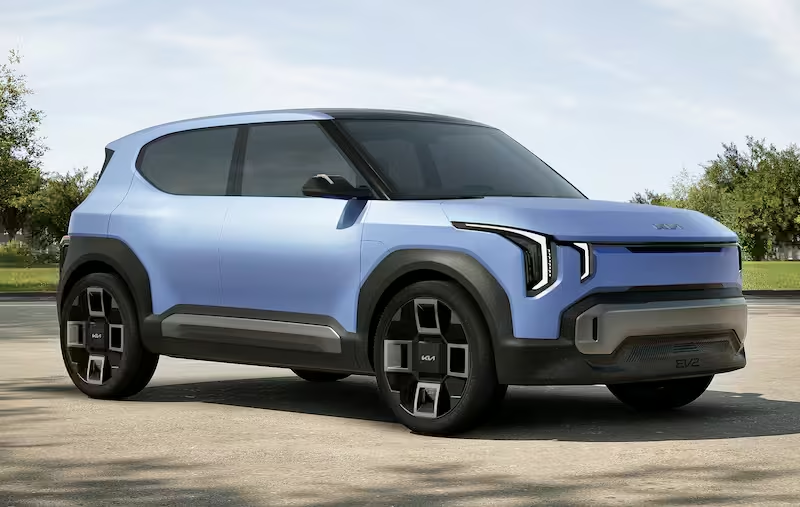
The EV3 is the city-friendly SUV that brings flagship tech to the masses. With a target price starting around $35,000, it offers an incredible 300-plus miles of range in its Long Range configuration. Meanwhile, the EV4 arrives as a sleek electric sedan, offering a futuristic alternative to the traditional compact car. Both will receive the “GT” treatment in 2026, featuring sport-tuned suspensions, aggressive styling, and enhanced power outputs to satisfy driving enthusiasts.
Technological Breakthroughs: Solid-State and Semi-Solid Batteries
The year 2026 marks a pivotal turning point for energy storage. Hyundai has officially announced the start of pilot production for “Dream” batteries—solid-state units that replace liquid electrolytes with solid materials.
Why Solid-State Matters
The shift to solid-state technology is the “Holy Grail” of the industry. These batteries offer:
- Higher Energy Density: More miles in a lighter, smaller package.
- Unmatched Safety: Significantly reduced risk of thermal runaway or fire.
- Ultra-Fast Charging: Potential to charge the vehicle as quickly as filling a gas tank.
While mass-market 1,000 km range cars are still a few years away, 2026 will see the first real-world prototype deployments and semi-solid state batteries entering the premium tiers of the Hyundai and Kia lineups.
2026 Pricing and Market Availability
The 2026 lineup is designed to cover every possible price bracket, ensuring that there is an electric option for every type of buyer.
| Model | Estimated Starting Price (USD) | Primary Configuration |
| Kia EV2 | $25,000 | Compact City SUV |
| Kia EV3 | $35,000 | Subcompact Crossover |
| Kia EV4 | $39,000 | Electric Sport Sedan |
| Kia EV5 | $35,000 | Midsize Family SUV |
| Hyundai Ioniq 6 (Facelift) | $40,000 | Aerodynamic Sedan |
| Kia EV9 | $56,495 | Luxury 3-Row SUV |
| Hyundai Ioniq 9 | $60,555 | Flagship 3-Row SUV |
Live Daily Updates: What is Happening Now?
In the last 24 hours, reports from the Korean Car Blog and major automotive outlets have confirmed that Kia will use the Brussels Motor Show on January 9, 2026, as the official launchpad for its performance offensive. Additionally, production lines in North America are being retrofitted to include NACS (Tesla-style) charging ports as standard for all 2026 models, providing owners with seamless access to over 20,000 Superchargers without needing an adapter.
Expert Verdict: Should You Wait for 2026?
If you are in the market for a new vehicle, the 2026 models represent a “Goldilocks” zone. The first generation of teething issues for many electric platforms has been resolved, and the 2026 versions benefit from refined software, more efficient thermal management, and the standardized NACS charging port.
Whether you need the seven-passenger capacity of the Hyundai Ioniq 9 or the budget-friendly innovation of the Kia EV3, 2026 is shaping up to be the best year yet to make the switch to electric.