
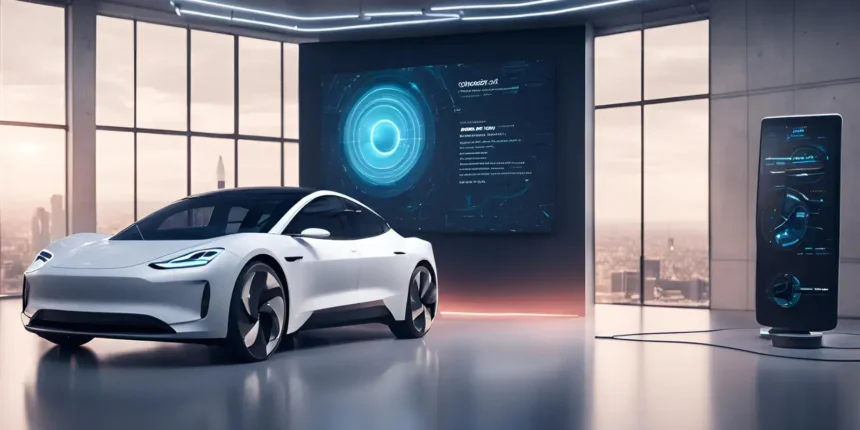
The automotive landscape has reached a definitive tipping point as we move through 2026. What was once a slow transition from internal combustion engines to battery electric power has now evolved into a full scale digital transformation. Electric vehicles are no longer just machines with batteries; they are sophisticated mobile data centers driven by artificial intelligence. This shift marks the rise of the software defined vehicle, where the value of a car is determined more by its neural network than its horsepower.
- The Intelligence Behind the Power: AI Driven Battery Management Systems
- The Dawn of Level 4 Autonomy in Urban Environments
- The Generative AI Revolution in the Cabin
- Vehicle to Grid: The EV as a Mobile Power Plant
- Generative Design and the Manufacturing Shift
- Economic Impact and Market Outlook for 2026
- Conclusion: The Path Forward
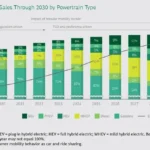
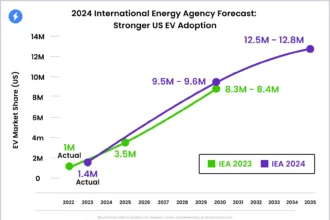
In 2026, the integration of AI within the electric vehicle ecosystem has moved beyond simple voice commands and basic lane keeping. It now dictates the entire lifecycle of the vehicle, from the generative design phase and manufacturing to the real time optimization of energy and autonomous navigation. According to recent forecasts from Gartner, over 116 million electric vehicles are expected to be on the road by the end of this year, and every single one of them relies on a complex stack of AI technologies to function efficiently.
The Intelligence Behind the Power: AI Driven Battery Management Systems
The most critical component of an electric vehicle is the battery, and in 2026, AI has become the primary guardian of its health and efficiency. Traditional battery management systems operated on fixed thresholds, but modern vehicles now use AI driven Battery Management Systems that leverage edge computing to monitor individual cells in real time.
Predictive Degradation and Longevity
One of the biggest breakthroughs this year is the widespread adoption of AI models that predict battery degradation with over 98% accuracy. By analyzing variables such as ambient temperature, charging speed, and individual driving habits, these systems can adjust charging cycles to maximize the lifespan of the battery pack. This technology has effectively extended the average State of Health expectancy by nearly 15%, reducing the long term costs for owners and secondary market buyers.
Preventing Thermal Runaway with Edge AI
Safety remains a top priority, and AI is the front line defense against thermal events. New AI architectures are now integrated directly into the battery pack sensors. These systems use machine learning to detect subtle voltage irregularities and temperature spikes that were previously invisible to standard sensors. By identifying these “ghost” signals, the vehicle can isolate a faulty cell or adjust cooling parameters before a thermal runaway event can occur. This proactive approach has significantly lowered insurance premiums for electric vehicle fleets in 2026.
Shutterstock
The Dawn of Level 4 Autonomy in Urban Environments
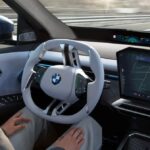
As of late 2025 and into 2026, we are witnessing the first major commercial rollout of Level 4 autonomous driving in major cities worldwide. Unlike Level 2 or Level 3 systems, Level 4 autonomy allows the vehicle to handle all driving tasks within specific geographic areas without human intervention.
Robotaxis and the 30 City Expansion
Leading manufacturers and tech giants like Tesla and Waymo have expanded their robotaxi services to more than 30 major global cities by 2026. This expansion is powered by massive neural networks that have been trained on billions of miles of real world data. The shift from “hand coded” rules to end to end neural networks has allowed these vehicles to navigate complex urban scenarios, such as construction zones and unpredictable pedestrian behavior, with human like intuition.
V2X Communication: The Collaborative AI Grid
The secret to safe autonomy in 2026 is V2X or Vehicle to Everything communication. AI systems in modern electric vehicles are constantly “talking” to smart traffic lights, pedestrians’ smartphones, and other cars on the road. This creates a collective intelligence where a car can “see” around a corner by receiving data from a vehicle ahead of it. This collaborative AI grid has reduced traffic congestion by 20% in smart cities that have fully embraced the 2026 mobility standards.
The Generative AI Revolution in the Cabin
The interior of the electric vehicle has been reimagined as a personal living space, thanks to the integration of Large Language Models and Generative AI. The 2026 cabin is no longer just a dashboard; it is an intelligent assistant that understands context, emotion, and intent.
On Device AI for Privacy and Performance
In 2026, automotive manufacturers have moved toward on device AI processing using specialized Neural Processing Units. This means that your voice assistant doesn’t need to send your data to the cloud to understand a command. Whether you are asking the car to “find a charging station that serves organic coffee” or “adjust the lighting to match my mood,” the processing happens locally. This ensures near zero latency and high levels of data privacy, a major selling point for the current year’s models.
Emotion Aware Infotainment
New sensor suites inside the 2026 EV cabin use computer vision to monitor the driver’s physiological state. If the AI detects signs of fatigue or stress, it can automatically adjust the cabin temperature, play calming music, or suggest a break at a nearby rest stop. This level of personalization has transformed the driving experience from a chore into a curated journey.
Vehicle to Grid: The EV as a Mobile Power Plant
In 2026, electric vehicles are no longer just consumers of energy; they are critical components of the global energy grid. This is made possible by AI driven Vehicle to Grid or V2G technology.
AI Orchestrated Virtual Power Plants
Through AI, millions of parked electric vehicles are aggregated into Virtual Power Plants. When the grid experiences a peak in demand, AI algorithms coordinate the discharge of a small percentage of energy from thousands of EVs back into the grid. This happens seamlessly and ensures that the vehicle owner still has enough range for their scheduled morning commute.
Dynamic Pricing and Smart Charging
AI algorithms now manage the charging schedules of millions of vehicles to take advantage of the lowest energy prices. In 2026, your car knows when the wind is blowing hardest or the sun is brightest, and it prioritizes charging during those windows of high renewable energy production. This has led to a reduction in charging costs by up to 70% for some users who participate in AI managed energy programs.
Generative Design and the Manufacturing Shift
The influence of AI begins long before the vehicle hits the road. In 2026, generative design is the industry standard for automotive engineering.
Biomimetic Chassis and Material Science
Engineers are now using AI to “grow” vehicle components. By inputting structural requirements into a generative AI model, manufacturers like BMW and Toyota are creating chassis parts that look organic and biomimetic. These parts are 40% lighter yet significantly stronger than traditional designs, which directly translates to increased range and better safety ratings.
Shorter Development Cycles
The traditional five year vehicle development cycle has been slashed to just 18 months in 2026. AI powered virtual validation allows manufacturers to perform millions of crash tests in a digital environment before a single physical prototype is built. This rapid iteration has allowed new features and safety improvements to reach the market at an unprecedented pace.
Economic Impact and Market Outlook for 2026
The convergence of AI and electric vehicles is a massive driver of global GDP this year. The market for autonomous car technology alone is poised for a compound annual growth rate of over 31% between now and 2033.
Investment in AI Infrastructure
Investors are pouring billions into the companies that provide the “brains” of the 2026 EV. This includes semiconductor manufacturers specializing in automotive AI chips, software companies developing autonomous stacks, and energy firms building the smart grid infrastructure. The “mobility multiplier effect” suggests that for every dollar spent on an electric vehicle, an additional three dollars of economic value is created through related services and energy efficiencies.
The Rise of Software as a Service in Automotive
In 2026, the traditional car ownership model is being challenged by software subscriptions. Many AI features, such as advanced autonomous driving modes or performance upgrades, are now delivered via Over The Air updates. This has created a recurring revenue stream for manufacturers, further solidifying the vehicle as a platform for digital services.
Conclusion: The Path Forward
As we look at the state of the industry in late 2025 and 2026, it is clear that AI has become the soul of the electric vehicle. The synergy between clean energy and intelligent software has created a transportation ecosystem that is safer, more efficient, and more personalized than ever before. We are no longer just driving cars; we are interacting with intelligent partners that optimize our world one kilowatt at a time.
For those looking to stay ahead in the automotive sector, understanding the nuances of AI battery management, Level 4 autonomy, and V2G orchestration is no longer optional. The future of mobility is here, and it is powered by the perfect union of silicon and electricity.
Sources and Further Reading
- Gartner Forecasts 116 Million Electric Vehicles on the Road in 2026
- StartUs Insights: AI in Automotive Market Report 2026
- The 2026 EV Breakthrough: Inside the Race for Ultra Safe Battery Architectures
- Advanced Automotive Battery Conference (AABC) Europe 2026
- SkyQuest: Autonomous Cars Market Demand and Trends 2026-2033