
The automotive landscape is undergoing its most significant transformation since the invention of the internal combustion engine. As we close out 2025, the shift toward electrification has moved past simple utility vehicles and entered the prestigious world of high performance. Enthusiasts who once feared that the soul of the sports car would vanish with the sound of a V12 are now witnessing a new era of engineering brilliance.
- The Ferrari Elettrica: A New Chapter For The Prancing Horse
- Porsche 718 Electric: The Successor To A Legend
- Rimac Nevera R: The Record-Breaker From Croatia
- Tesla Roadster: The Long-Awaited Demo
- Maserati Folgore: Italian Elegance Meets Electric Power
- Lotus Emeya: The British Precision Tool
- The Technological Frontier: Solid-State Batteries And Beyond
- The Future Of Track Days: Infrastructure For High Performance
- Market Trends: Investment And Sustainability
- Conclusion: A Golden Age Of Motoring
Electric motors offer something that traditional engines simply cannot: instantaneous torque and a level of precision in power delivery that redefines what it means to drive. From the historic streets of Maranello to the high-tech laboratories in Silicon Valley, the race is on to create the ultimate driving machine for the modern age. This guide explores the most anticipated electric sports cars coming this year and into 2026, offering a deep dive into the technology, design, and performance that will shape the next decade of motoring.
The Ferrari Elettrica: A New Chapter For The Prancing Horse
Perhaps the most significant milestone in recent automotive history occurred on October 9, 2025. Ferrari officially unveiled its first fully electric supercar, a vehicle that many purists thought would never exist. Known internally and through early marketing as the Ferrari Elettrica, this model represents a pivot for a brand built on the emotional resonance of engine notes.
The Elettrica does not try to mimic a gasoline engine; instead, it leverages the unique characteristics of electric propulsion to enhance the Ferrari experience. Engineers have focused heavily on what they call “emotional sound signatures,” which are not synthesized recordings but rather the natural frequencies of the electric motors and drivetrain tuned to provide visceral feedback to the driver.
Technical specifications suggest a tri-motor setup capable of delivering over 1,000 horsepower. With an advanced torque vectoring system, the Elettrica can distribute power to each wheel with millisecond precision, allowing for cornering speeds that were previously impossible for a road-legal car. This vehicle proves that the transition to sustainable power does not mean a loss of passion.
Learn more about Ferrari’s official range here
Porsche 718 Electric: The Successor To A Legend
As of late December 2025, the automotive world is buzzing with news of the upcoming Porsche 718 Electric. Codenamed the 983, this vehicle has been spotted undergoing rigorous winter testing in Arjeplog, Sweden. Porsche has a monumental task: replacing the beloved mid-engine Cayman and Boxster with a platform that retains their signature balance and agility.
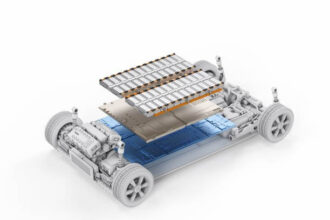
The 718 Electric is built on a specific derivative of the Premium Platform Electric (PPE) architecture. Unlike the Taycan, which uses a traditional floor-mounted battery, the 718 EV is expected to feature a “stacked” battery arrangement behind the seats. This design replicates the weight distribution of a mid-engine car, ensuring that the center of gravity remains low and central to the vehicle’s rotation axis.
Reports from December 2025 indicate that the 718 Electric will utilize an 800-volt architecture, allowing for incredibly fast charging times. For a sports car intended for weekend canyon runs, the ability to gain 100 miles of range in under ten minutes is a game-changer. While the official launch is slated for 2026 as a 2027 model, the technological foundations are being laid today.
Read more about the 2027 Porsche 718 Electric updates
Rimac Nevera R: The Record-Breaker From Croatia
If 2025 has taught us anything, it is that Rimac is currently the undisputed king of electric performance. On December 18, 2025, the company announced the Nevera R Founder’s Edition, a strictly limited run of only ten units. The Nevera R is a more aggressive, track-focused evolution of the standard Nevera, pushing the boundaries of physics.
The numbers associated with the Nevera R are staggering. It produces 2,107 horsepower from its quad-motor system. In 2025 alone, the Nevera R set 24 verified performance world records, including a 0 to 60 mph time of just 1.74 seconds. It is not just about straight-line speed; the “R” variant features a higher-downforce body and stickier tires designed to dominate the Nürburgring.
The Founder’s Edition offers owners a bespoke experience, including direct access to the Bugatti Rimac headquarters and involvement in strategy discussions with Mate Rimac himself. This car is a rolling laboratory for the future of hyper-performance, showcasing how carbon fiber construction and advanced software can create a vehicle that feels alive.
Explore the Rimac Nevera R Founder’s Edition details
Tesla Roadster: The Long-Awaited Demo
Tesla remains a central figure in the conversation regarding electric sports cars. While the second-generation Roadster has seen several delays, the end of 2025 has brought renewed hope for enthusiasts. During a shareholder meeting in November 2025, Elon Musk confirmed that a full demonstration event for the next-generation Roadster is scheduled for April 1, 2026.
The Roadster aims to be more than just a car; Tesla refers to it as a brand-shaping product. The most discussed feature is the optional SpaceX package, which utilizes cold air thrusters to improve acceleration, braking, and cornering. While some are skeptical of rocket technology on a road car, Tesla engineers have been working through the complexities of fuel-to-weight ratios to make it a reality.
The promised specs include a top speed of over 250 mph and a 0 to 60 mph time that could potentially dip below one second with the thruster package. With a 200 kWh battery, the Roadster also aims to set a new standard for electric range in the sports car segment, potentially offering over 600 miles on a single charge.
Get the latest updates on the Tesla Roadster project
Maserati Folgore: Italian Elegance Meets Electric Power
Maserati has fully embraced its “Folgore” (Lightning) sub-brand, bringing Italian flair to the electric market. The 2025 Maserati GranCabrio Folgore is a prime example of a luxury sports car that prioritizes style and comfort without sacrificing performance. It utilizes a tri-motor setup, with one motor in the front and two in the rear, delivering a combined 751 horsepower.
What makes the GranCabrio Folgore unique is its 800-volt T-bone battery pack. By placing the battery in the central tunnel and behind the rear seats rather than under the entire floor, Maserati has managed to keep the seating position low, maintaining the classic silhouette of a grand tourer.
The performance is equally impressive, with a 0 to 60 mph sprint completed in just 2.7 seconds. For drivers who want the thrill of an open-top sports car without the noise of an exhaust, the GranCabrio Folgore offers a serene yet powerful alternative. It represents a shift in the luxury segment where “quiet luxury” is becoming a dominant theme.
View the Maserati GranCabrio Folgore specifications
Lotus Emeya: The British Precision Tool
Lotus has transitioned from a small-scale manufacturer of lightweight gasoline cars to a global leader in electric luxury and performance. The Lotus Emeya, arriving in showrooms throughout 2025 and 2026, is a four-door “Hyper-GT” that rivals the Porsche Taycan.
The top-tier Emeya variant produces 918 horsepower and features active aerodynamics, including an active front grille and a large rear spoiler that adjusts based on speed and driving mode. Lotus has maintained its heritage of exceptional handling by employing advanced air suspension systems that read the road 1,000 times per second.
In comparison to its rivals, the Emeya emphasizes the connection between the driver and the machine. It uses sustainable materials throughout the interior, such as repurposed luxury fabrics and carbon-neutral leathers, proving that a sports car can be both high-performance and environmentally conscious.
Compare the Lotus Emeya with the Porsche Taycan
The Technological Frontier: Solid-State Batteries And Beyond
The cars arriving in 2025 and 2026 are not just exciting because of their speed; they are exciting because of the technology under the skin. We are currently seeing the transition from traditional lithium-ion batteries to more advanced chemistries. Several manufacturers are beginning to pilot solid-state battery technology, which promises higher energy density, lower weight, and faster charging.
Weight has always been the enemy of the sports car. The use of carbon fiber reinforced polymers (CFRP) and lightweight aluminum alloys is becoming standard in this segment to offset the weight of the battery packs. Furthermore, the integration of silicon carbide inverters allows for higher efficiency in energy transfer, ensuring that more power reaches the wheels with less heat loss.
The Future Of Track Days: Infrastructure For High Performance
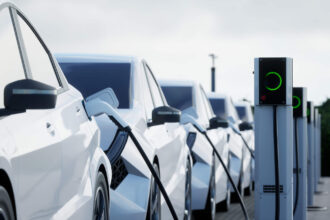
As more electric sports cars hit the road, the infrastructure for performance driving is also evolving. Leading tracks around the world are installing high-output DC fast chargers in pit lanes, allowing drivers to recharge their vehicles between sessions.
The software side of performance is also advancing. Cars like the Rimac Nevera and the Porsche Taycan Turbo GT now feature “drift modes” and advanced lap timers that use GPS to help drivers improve their lines. The ability to update these cars over-the-air means that a sports car purchased today could actually become faster and more efficient a year from now through software optimization.
Market Trends: Investment And Sustainability
The luxury sports car market is seeing a shift in buyer demographics. Younger collectors are increasingly looking for vehicles that align with their values of sustainability and technological innovation. This has led to strong resale values for early high-performance EVs and a surge in demand for bespoke, limited-edition models.
Manufacturers are responding by offering more personalization options. From vegan interiors that feel like premium leather to unique paint finishes that use sustainable pigments, the definition of a “top-tier” vehicle is expanding. The sports car of 2025 is as much a statement of technological prowess as it is a statement of speed.
Conclusion: A Golden Age Of Motoring
Contrary to the belief that electrification would end the era of the sports car, we are entering a new golden age. The variety of vehicles coming this year, from the elegant Maserati Folgore to the record-breaking Rimac Nevera R, shows that the industry is more creative than ever. Whether you value the heritage of Ferrari or the disruptive nature of Tesla, there is a performance EV that meets your needs.
The integration of advanced aerodynamics, high-voltage charging, and intelligent software is creating a driving experience that is faster, safer, and more engaging than anything that came before. As we look toward 2026, the arrival of the Porsche 718 Electric and the Tesla Roadster demo will only further cement the electric motor’s place at the heart of the automotive world.