
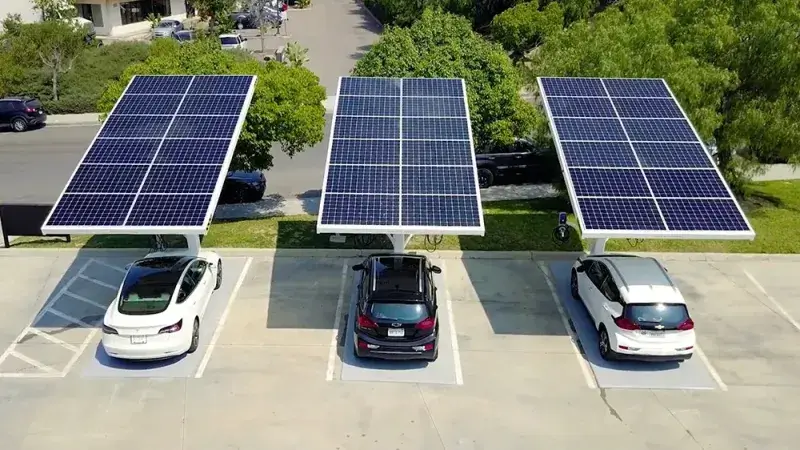
The global transition toward sustainable transportation has reached a fever pitch. As of late 2025, the automotive industry has undergone a radical transformation. What was once a niche market for early adopters has evolved into a global standard, with one in four new cars sold worldwide now being electric. However, as the presence of electric vehicles (EVs) on our roads becomes the norm, the central question remains more pertinent than ever: are these machines truly as green as they are marketed to be, or is the environmental cost simply shifted from the tailpipe to the mine and the power plant?
- The Manufacturing Reality: Understanding the Initial Carbon Debt
- Mining in 2025: Lithium, Cobalt, and the Ethics of Extraction
- The Role of the Energy Grid: Is Your Fuel Truly Green?
- Life Cycle Assessment: The Break Even Point
- The Battery Recycling Revolution: Closing the Loop
- Solid State Batteries: The 2025 Breakthrough
- Beyond Carbon: Air Quality and Public Health
- The Economic Impact: Investing in a Green Future
- Daily Information: Current State of the EV Market in 2025
- Conclusion: The Verdict on Electric Mobility
This comprehensive analysis dives into the multi-layered reality of electric mobility in 2025. We will explore the lifecycle of a modern vehicle, from the extraction of rare minerals in the Lithium Triangle to the advanced recycling facilities now operating across Europe and North America. By the end of this deep dive, you will understand the nuances of the carbon debt, the ethics of the supply chain, and the technological breakthroughs that are currently redefining the sustainability of the modern fleet.
The Manufacturing Reality: Understanding the Initial Carbon Debt
To address the environmental impact of any vehicle, we must first look at its birth. It is a well documented fact that manufacturing an electric vehicle is more energy intensive than producing a traditional internal combustion engine (ICE) counterpart. The primary culprit for this disparity is the high voltage battery pack.
In 2025, battery production emissions are estimated at approximately 75 kilograms of carbon dioxide per kilowatt hour of capacity. For a high performance sedan with a 100 kilowatt hour battery, that translates to 7.5 metric tonnes of carbon dioxide emitted before the car even travels its first mile. This initial carbon debt is the biggest hurdle for the industry. The mining and refining of lithium, cobalt, and nickel require massive amounts of energy, often sourced from grids that are still in the process of decarbonizing.
However, the context of 2025 is vital. Major manufacturers like Tesla, Volvo, and BYD have transitioned many of their gigafactories to run on 100 percent renewable energy. This shift has significantly reduced the manufacturing footprint compared to just five years ago. Furthermore, the rise of the circular economy in manufacturing means that secondary aluminum and recycled plastics are now standard in premium EV models, further chipping away at that initial debt.
Mining in 2025: Lithium, Cobalt, and the Ethics of Extraction
The environmental friendliness of a car is inextricably linked to the ethics of its materials. For years, the industry was plagued by reports of hazardous mining conditions and the use of child labor in cobalt mines within the Democratic Republic of Congo. As we navigate the landscape of 2025, the industry has implemented rigorous safeguards to address these issues.
The Global Battery Alliance (GBA) has successfully launched the Digital Battery Passport. This blockchain-based system allows consumers and regulators to track the origin of every gram of material in a battery. If a battery contains cobalt from an unverified or unethical source, it cannot be sold in major markets like the European Union. This has forced a massive cleanup of the supply chain.
Moreover, the tech itself is changing. The widespread adoption of Lithium Iron Phosphate (LFP) batteries has reduced the reliance on cobalt and nickel. LFP batteries are not only safer and more durable, but they also use materials that are more abundant and less environmentally taxing to extract.
In the lithium sector, we are seeing the rise of Direct Lithium Extraction (DLE). Traditional lithium mining involved massive evaporation ponds that consumed billions of gallons of water in arid regions. New DLE technologies, which are being scaled up in 2025, allow for lithium to be extracted from brine in a matter of hours while returning the water to the underground aquifers. This innovation has drastically reduced the water footprint of the “Lithium Triangle” in South America.
The Role of the Energy Grid: Is Your Fuel Truly Green?
An electric car is only as clean as the electricity used to charge it. Critics often point to “coal powered EVs” as a sign of hypocrisy in the green movement. In 2025, the reality is far more optimistic, but it remains geographically dependent.
The carbon intensity of global power grids is falling at an unprecedented rate. In regions like Scandinavia, where the grid is almost entirely powered by hydro, wind, and nuclear energy, an EV is nearly 80 percent cleaner than an ICE car over its lifetime. In the United States, the average grid mix now includes over 25 percent renewable energy, meaning that even in states with some coal usage, an EV is still significantly better for the planet.
A major development in 2025 is the integration of Smart Charging and Vehicle to Grid (V2G) technology. Modern EVs are no longer just consumers of energy; they are mobile storage units that help stabilize the grid. By charging during periods of high renewable output (like a sunny afternoon or a windy night) and discharging back to the grid during peak demand, EVs are actively facilitating the transition to a 100 percent renewable energy system. This symbiotic relationship makes the entire energy infrastructure more environmentally friendly.
Life Cycle Assessment: The Break Even Point
The most scientific way to answer the environmental question is through a Life Cycle Assessment (LCA). This considers the emissions from raw material extraction, manufacturing, operation, and eventual disposal.
According to a 2025 report from the International Energy Agency (IEA), the average electric vehicle reaches its “carbon break even point” at approximately 15,000 to 20,000 miles. For the average driver, this happens within the first two years of ownership. After this point, every mile driven is a net win for the environment compared to a gasoline vehicle.
Over a typical lifespan of 150,000 miles, a modern EV will emit about 60 to 70 percent less carbon dioxide than a comparable internal combustion car. Even if the battery needs to be replaced (which is becoming rarer due to improved chemistry), the environmental benefits still vastly outweigh the costs. The efficiency of the electric motor is also a factor. While a gasoline engine wastes about 75 percent of its energy as heat, an electric motor converts over 85 percent of its energy into motion.
The Battery Recycling Revolution: Closing the Loop
One of the biggest concerns regarding EVs is what happens when the battery dies. In the past, there were fears of millions of tons of lithium ion batteries ending up in landfills. In 2025, these fears have been put to rest by a booming recycling industry.
New regulations in the EU and North America now mandate that 90 percent of key metals like cobalt, copper, and nickel must be recovered from end of life batteries. Companies like Redwood Materials and Li-Cycle have scaled up facilities that can process “black mass” back into battery grade materials with 95 percent efficiency.
Interestingly, most EV batteries do not go straight to recycling. When a battery’s capacity drops to about 70 percent, it is no longer ideal for a car, but it is perfect for stationary energy storage. These “second life” batteries are being used to power homes, hospitals, and data centers, acting as a backup for solar and wind farms. This extends the useful life of the battery to 20 years or more, drastically lowering its lifetime environmental impact per year of service.
Solid State Batteries: The 2025 Breakthrough
As we look at the cutting edge of 2025, the arrival of solid state batteries is changing the game once again. Manufacturers like Toyota and various startups have begun pilot production of these next generation cells.
Solid state batteries replace the liquid electrolyte with a solid material, which offers several environmental advantages:
- Higher Energy Density: They can store more energy in a smaller, lighter package, requiring fewer raw materials.
- Improved Safety: They are non flammable, reducing the need for complex and heavy cooling systems.
- Faster Charging: They can be charged in minutes without the degradation issues seen in traditional batteries.
- Longer Lifespan: These batteries are expected to last for the entire life of the vehicle, perhaps even reaching 500,000 miles, which would make the “per mile” environmental cost negligible.
Beyond Carbon: Air Quality and Public Health
While much of the debate focuses on carbon dioxide, we must not ignore the immediate benefits to local environments. Internal combustion engines emit nitrogen oxides (NOx), carbon monoxide, and particulate matter (PM2.5) directly into the air we breathe.
In 2025, urban centers that have aggressively transitioned to electric buses and cars are seeing a measurable improvement in public health. Rates of childhood asthma and cardiovascular disease in these cities are declining. The reduction in noise pollution is also a significant, though often overlooked, environmental benefit. A quieter city is a more livable city, and the transition to silent electric motors is a major contributor to urban well-being.
The Economic Impact: Investing in a Green Future
The shift to electric vehicles is not just an environmental imperative; it is an economic revolution. In 2025, we are seeing a massive influx of capital into green technology and infrastructure. For investors and businesses, the electrification of commercial fleets is a top priority.
Companies that operate large delivery fleets, such as Amazon and FedEx, have found that the total cost of ownership (TCO) for electric vans is now lower than for diesel models. This economic incentive is driving a faster transition than regulation alone could achieve. Furthermore, the development of ultra fast charging networks and hydrogen fuel cell technology for heavy duty trucking represents a multi billion dollar growth sector.
Investing in sustainable transport infrastructure, from smart grids to lithium refineries, has become a cornerstone of the modern financial landscape. This “green finance” ensures that the transition is not just a trend but a permanent structural change in the global economy.
Daily Information: Current State of the EV Market in 2025
For those tracking the industry daily, here are the key figures as of late 2025:
- Global EV Sales: On track to exceed 22 million units for the year.
- Average Battery Cost: Dropped to below 100 dollars per kilowatt hour, achieving price parity with gasoline cars in many segments.
- Charging Infrastructure: Over 5 million public charging points are now active globally.
- Lithium Prices: Stabilizing due to the success of new extraction technologies like DLE.
- Solid State Progress: The first consumer vehicles featuring semi solid state batteries are now hitting the roads in Asia and Europe.
Conclusion: The Verdict on Electric Mobility
Are electric cars really environmentally friendly? The answer in 2025 is a resounding yes, but with the necessary caveat that they are a tool, not a magic wand. An EV is a significantly cleaner alternative to an ICE vehicle, especially as our power grids become greener and our recycling processes more efficient.
The challenges of the past, such as ethical mining and battery waste, are being addressed through technology and strict regulation. While no manufacturing process is completely “zero impact,” the life cycle of an electric vehicle offers the most viable path toward a decarbonized transport sector.
As we move forward, the focus must remain on improving battery chemistry, expanding renewable energy, and ensuring that the benefits of electric mobility are shared globally. The electric car is not just a replacement for the gasoline car; it is a catalyst for a cleaner, quieter, and more sustainable world.
External Sources and Further Reading
To learn more about the data and studies mentioned in this post, please visit the following resources:
- International Energy Agency (IEA) – Global EV Outlook 2025
- Intergovernmental Panel on Climate Change (IPCC) – Transport Sector Mitigation
- Global Battery Alliance – The Battery Passport Initiative
- Environmental Protection Agency (EPA) – Electric Vehicle Myths vs. Facts
- BloombergNEF – Electric Vehicle Outlook 2025