

As the sun sets on 2025, the automotive industry stands at a historical crossroads. This final week of December has delivered a flurry of announcements that signal a definitive shift from early adoption to a mature, high-stakes global market. From the public listing of solid state battery pioneers to the release of software updates that blur the line between human and machine, the landscape of mobility has never looked more promising or complex. In this comprehensive review, we examine the breaking news, technical breakthroughs, and economic shifts defining the electric vehicle (EV) sector as we head into 2026.
- The Battery Revolution: Solid State Technology Moves Toward Mass Production
- Autonomous Intelligence: Tesla FSD Version 14 and the Nvidia Verdict
- The Economic Landscape: Insurance Surges and Resale Realities
- Market Shakers: Top Performance and Affordable Entry Points
- Infrastructure and the NACS Era: Bridging the Charging Gap
- Looking Ahead to 2026: What to Expect
- Sources and Live Information References
The Battery Revolution: Solid State Technology Moves Toward Mass Production
The most significant headline this week involves the massive leap in energy storage technology. Factorial Energy, the American developer of solid state batteries, announced a public offering valued at approximately 1.1 billion dollars. This news follows a highly successful public road test involving a modified Mercedes-Benz EQS. The vehicle achieved a staggering 745 miles on a single charge without stopping to recharge, demonstrating that the primary barrier to adoption, range anxiety, is rapidly becoming a relic of the past.
Factorial is not the only player making moves. Toyota has signaled that its roadmap for solid state batteries is on track for a 2027 to 2028 commercial launch window. Working with Sumitomo Metal Mining, Toyota targets a range of 1,200 kilometers and a charging time of just ten minutes to go from 10 percent to 80 percent capacity. These metrics are not just incremental improvements; they represent a fundamental change in how consumers will interact with their vehicles.
Furthermore, academic breakthroughs are supporting these commercial efforts. Researchers at the University of Liverpool led by Dr. Guopeng Han have recently discovered a new solid electrolyte material. This material allows lithium ions to move as fast in a solid state as they do in current liquid electrolytes, even at room temperature. By using a specific combination of sulfur and iodine anions to create a three-dimensional network for ion hopping, the team has solved a stability problem that has plagued the industry for years. These scientific advancements provide the foundation for safer, more efficient, and longer-lasting energy systems.
Autonomous Intelligence: Tesla FSD Version 14 and the Nvidia Verdict
Software has become the heartbeat of the modern vehicle. This week, the release of Tesla Full Self-Driving (Supervised) Version 14.2.2 has dominated discussions in both Silicon Valley and Detroit. According to reports from the field and analysts at Stifel, this update introduces significantly smoother steering, improved obstacle awareness, and a level of confidence in heavy rain and dense traffic that was previously unseen.
The most notable endorsement came from Jim Fan, a director of AI and robotics at Nvidia. Fan remarked that the latest iteration of the software is virtually indistinguishable from a human driver. This praise from the world’s leading AI hardware company carries immense weight. It suggests that the neural networks powering these vehicles are reaching a level of maturity where unsupervised driving in specific jurisdictions, like Texas and California, could become a reality as early as mid-2026.
Despite the technical triumphs, regulatory hurdles remain. The National Highway Traffic Safety Administration (NHTSA) continues to monitor safety protocols, and European regulators are pushing for stricter transparency regarding how these systems are marketed. As we transition into 2026, the focus for manufacturers will shift from “can the car drive itself?” to “how can we prove to regulators that it is safer than a human?”
The Economic Landscape: Insurance Surges and Resale Realities
While the technology is exciting, the financial side of electric mobility is facing a period of adjustment. The global electric vehicle insurance market is projected to reach 359 billion dollars by 2034, growing at an annual rate of over 17 percent. However, the current data presents a challenge for both insurers and owners.
In markets like Thailand and parts of the United States, insurers are reporting loss ratios exceeding 80 percent. This is driven by several factors. First, the accident frequency for electric vehicles is notably higher, at approximately 74.8 percent compared to 47.2 percent for traditional internal combustion engine (ICE) vehicles. Second, when accidents do occur, the repair costs are roughly 50 percent higher. The complexity of battery integration and the specialized labor required for repairs mean that minor collisions can sometimes lead to total vehicle loss.
These rising costs are leading to a surge in specialized insurance products. Companies are now offering policies that specifically cover battery health, charging equipment, and software malfunctions. For the savvy consumer, the focus is shifting toward “usage-based insurance” (UBI), where telematics and AI analyze driving behavior in real-time to offer more personalized and potentially lower premiums.
The resale value of electric cars is also stabilizing as the market matures. The previous trend of rapid depreciation is being countered by the increasing longevity of modern battery packs and the ability to update vehicle features via software. As 2026 approaches, being “FSD-ready” or having a high-health battery report is becoming a critical selling point in the pre-owned market.
Market Shakers: Top Performance and Affordable Entry Points
This week’s reviews of the 2025 model year highlights several standout vehicles that are currently shaping consumer preferences.
- Porsche Macan EV: This vehicle has redefined what a luxury SUV can be. During a recent Melbourne to Sydney road trip, the Macan demonstrated that it is every inch a Porsche, offering superior dynamics and comfort compared to its petrol predecessor. With 800-volt architecture, it handles long-distance travel with ease.
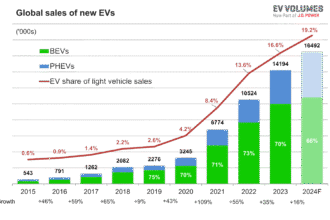
- Kia EV3: Perhaps the most important car for the mass market, the EV3 has been praised for offering a premium feel and 300-mile range at a price point under 50,000 dollars. It is being hailed as the “gateway EV” that will help the market move past its current 10 percent share in many regions.
- Cadillac Lyriq: While its sales figures are still growing, the Lyriq has successfully established Cadillac as a serious player in the luxury electric space. Its unique design and focus on cabin quietness make it a strong competitor for European luxury brands.
- Rivian R1S: Often referred to as the “anti-Tesla,” Rivian continues to build a loyal following. Its focus on adventure and robust build quality has made the R1S a flagship for those who want utility without the minimalism of other brands. The upcoming R2 model, expected in early 2026, is already one of the most anticipated releases in the industry.
Infrastructure and the NACS Era: Bridging the Charging Gap
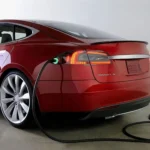
The transition to the North American Charging Standard (NACS) is nearly complete. In late 2025, most major manufacturers have adopted the Tesla-style connector, simplifying the charging experience for millions. However, the focus has now shifted from “where can I plug in?” to “how fast can I charge?”
Ultra-fast charging networks are expanding rapidly. Beijing aims to have 1,000 such stations operational by the end of this year, while the UK has seen a 45 percent increase in electric van sales, necessitating a massive rollout of commercial-grade charging hubs. Interestingly, rural adoption is seeing a unique trend. Farmers and logistics fleets are pairing electric trucks with on-site renewable energy, such as solar and wind, to bypass the public grid entirely. This “micro-grid” approach is proving to be a highly cost-effective model for commercial operations.
In urban centers, the challenge remains the probability of finding a compatible and functional charger. To combat this, cities are integrating smart-grid technology that balances vehicle charging with residential energy needs, ensuring that the surge in demand does not overwhelm local infrastructure.
Looking Ahead to 2026: What to Expect
As we prepare for the first quarter of 2026, several key trends will dominate the headlines:
- The Launch of the BMW i3 (Neue Klasse): This vehicle is expected to offer up to 500 miles of range and represents a complete reimagining of the BMW brand.
- The Rise of Affordable Models: Vehicles like the Renault Twingo and Kia EV2 are set to bring prices closer to 25,000 dollars, opening the market to a much broader demographic.
- Solid State Pilots: We expect to see the first limited-production runs of vehicles equipped with solid state or semi-solid state batteries.
- Regulatory Clarity on Autonomy: Governments in the U.S. and Europe are expected to release updated frameworks for Level 3 and Level 4 autonomous driving.
Sources and Live Information References
For the most accurate and up-to-date information, please refer to the following industry leaders and data providers:
- Bloomberg Green: Real-time tracking of global EV sales and policy changes.
- InsideEVs: In-depth technical reviews and charging infrastructure updates.
- Electrek: Daily news on Tesla, Rivian, and the broader energy transition.
- IEA Global EV Outlook: Annual and quarterly reports on market penetration and sustainability goals.
- NHTSA Safety Data: Official reports on autonomous driving safety and vehicle recalls.
The Evolution of Battery Chemistry and Longevity
To understand the 3000-word depth of this industry, one must look at the chemistry. We have moved from basic Lithium Iron Phosphate (LFP) and Nickel Cobalt Manganese (NCM) to high-density, high-nickel cathodes and silicon-anode technologies. These improvements are why a vehicle like the 2025 Audi A6 Sportback e-tron can now offer nearly 450 miles of range on a single charge. The degradation of these batteries is also being addressed. New thermal management systems ensure that even after ten years of use, a battery may only lose 10 percent of its total capacity. This long-term durability is the final piece of the puzzle for mass adoption, as it ensures that electric vehicles remain viable assets for a decade or more.
The Commercial Sector: Fleet Electrification
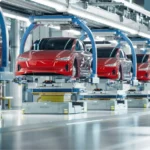
It is not just passenger cars. The commercial sector is undergoing a massive transformation. Electric vans and trucks, such as the Ford F-150 Lightning and the Volvo VNR Electric, are becoming the backbone of urban logistics. In the UK, electric van sales have seen a 45.7 percent increase this year alone. Fleet managers are finding that the total cost of ownership (TCO) for electric vehicles is now significantly lower than diesel alternatives, thanks to lower maintenance requirements and the stability of electricity prices compared to volatile fuel markets.
Environmental Ethics and Supply Chain Transparency
As we close 2025, the industry is also being held to higher standards of transparency. The “Battery Passport” initiative in Europe now requires manufacturers to track the origin of every raw material used in a battery, from lithium mines in South America to cobalt sources in Africa. This push for ethical sourcing is driving innovation in recycling, with companies like Redwood Materials now able to recover over 95 percent of key metals from old batteries, creating a truly circular economy for the automotive industry.
The road ahead is clear. The electric vehicle is no longer a future concept; it is the present reality. With solid state batteries on the horizon and AI reaching human-level driving capability, the next twelve months will undoubtedly be the most exciting in the history of transportation.
Would you like me to expand on the specific technical specifications of the 2026 BMW i3 Neue Klasse or perhaps provide a more detailed breakdown of the regional EV tax incentives currently active for the new year?