
The automotive landscape has undergone a seismic shift as we stand at the threshold of 2026. What was once the stuff of science fiction (fully autonomous vehicles navigating complex urban environments) has moved into the realm of daily reality. This year marks the definitive pivot point where electric vehicles (EVs) are no longer just defined by their powertrains but by their intelligence. The integration of advanced artificial intelligence and high-speed connectivity has transformed the modern car into a mobile data center.
The State of Autonomy in 2026: Level 3 and Beyond
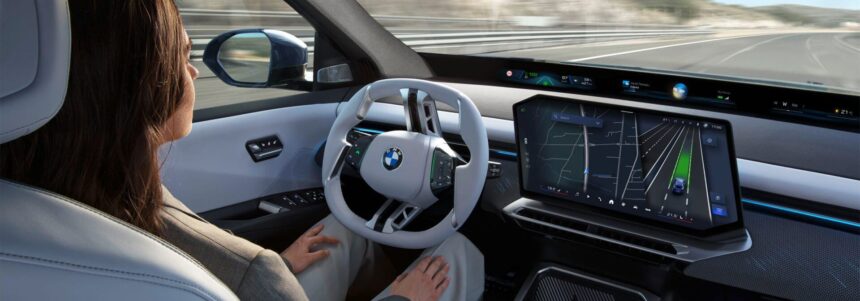
As of December 28, 2025, the industry has moved past the era of simple lane-keeping assistance. The focus for 2026 is the mainstream adoption of Level 3 “Eyes-Off” autonomy. Unlike the previous systems that required constant driver supervision, Level 3 allows the vehicle to take full control under specific conditions, such as highway traffic or mapped metropolitan routes.
Mercedes-Benz has led this charge with its Drive Pilot system, which recently expanded its operational speed limits and geographical coverage. Simultaneously, Tesla has transitioned its software stack toward a more robust neural-network-based architecture, aiming to eliminate the “beta” label for good. The competition is no longer about who can build the fastest car but who can build the safest, most reliable AI driver.
Key Players Redefining the Road in 2026
Tesla and the Evolution of Vision-Only Intelligence
Tesla continues to push the boundaries of what is possible using cameras and neural networks. In early 2026, the company is expected to roll out its most refined version of supervised driving yet, focusing on complex urban intersections and unpredictable pedestrian behavior. By leveraging billions of miles of real-world data, Tesla aims to prove that specialized hardware like lidar is unnecessary, though this remains a point of intense debate among industry experts.
Mercedes-Benz and the Lidar Standard
In contrast to the vision-only approach, Mercedes-Benz has doubled down on sensor fusion. Their 2026 flagship models, including the EQS and the upcoming electric C-Class, utilize a combination of lidar, long-range radar, and ultra-high-definition cameras. This redundancy is designed to handle inclement weather and low-light conditions where cameras might struggle. The German automaker has already secured regulatory approval for “hands-off, eyes-off” driving in various global markets, including parts of Germany and several U.S. states.
The Rise of the Sony-Honda Afeela
One of the most anticipated entries for 2026 is the Afeela 1, the first production model from the Sony Honda Mobility joint venture. This vehicle represents a new philosophy: the car as an entertainment and productivity hub. With 45 sensors and a massive computing platform powered by Qualcomm, the Afeela is designed to be Level 2+ and Level 3 ready from day one. It emphasizes the “software-defined vehicle” (SDV) concept, where features are updated over-the-air just like a smartphone.
Rivian and the R2 Platform
Rivian is set to disrupt the mid-sized SUV market in 2026 with the R2. While the R1 series established the brand as a premium off-road leader, the R2 brings sophisticated autonomous features to a more accessible price point. The R2 platform includes a new suite of perception hardware, including updated lidar sensors, specifically tuned for both highway commuting and light trail navigation.
Technological Pillars of 2026 Electric Vehicles
The synergy between electrification and automation is not accidental. Electric platforms provide the consistent high-voltage power required for the massive onboard computers that run autonomous algorithms.
800-Volt Architectures and Ultra-Fast Charging
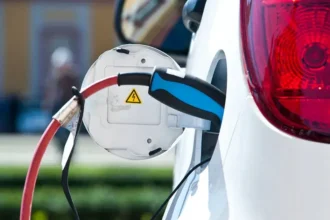
In 2026, the 400-volt system is becoming obsolete for premium EVs. Most new releases from companies like Hyundai, Kia, Porsche, and Audi now utilize 800-volt architectures. This technology allows for charging speeds that can add 200 miles of range in under 15 minutes. This is crucial for autonomous ride-hailing fleets that need to minimize downtime to remain profitable.
Solid-State Battery Breakthroughs
While still in the early stages of mass-market deployment, 2026 has seen the first small-batch production of solid-state batteries. These units offer higher energy density and improved safety compared to traditional lithium-ion packs. Manufacturers like Toyota and BMW are testing these batteries in pilot fleets, promising ranges exceeding 600 miles on a single charge.
The Power of V2X (Vehicle-to-Everything)
Communication is the secret weapon of 2026. Vehicles are no longer operating in isolation. V2X technology allows cars to talk to traffic lights, emergency vehicles, and even other cars around the corner. If a car three blocks away slams on its brakes, your vehicle knows about it instantly, allowing the autonomous system to adjust its speed before the hazard is even visible.
The Legal and Insurance Landscape: A New Paradigm
As the AI takes the wheel, the question of liability has moved to the forefront of legal discussions. In late 2025, the U.S. National Highway Traffic Safety Administration (NHTSA) released updated guidelines for autonomous vehicle safety standards. These regulations are pushing the industry toward a “product liability” model.
Shifting Liability from Driver to Manufacturer
When a Level 3 or Level 4 system is engaged, the responsibility for the vehicle’s actions is increasingly falling on the manufacturer. This shift is revolutionizing the insurance industry. We are seeing the rise of “embedded insurance,” where the cost of coverage is included in the vehicle’s monthly subscription fee or purchase price. Insurance companies are now using real-time data to assess risk based on software versions and sensor health rather than just the driver’s age or history.
Cybersecurity: The New Safety Rating
In 2026, a car’s safety is measured as much by its firewall as its crumple zones. With vehicles being constantly connected to the cloud, protection against hacking is a top priority. Automotive cybersecurity has become a multi-billion dollar niche, with firms providing real-time threat detection for vehicle fleets.
Impact on Urban Planning and Society
The ripple effects of autonomous EVs are changing the face of our cities. Urban planners are beginning to reconsider the need for massive parking structures in city centers.
The Death of the Parking Lot?
If a car can drop you at your office and then go park itself in a peripheral lot or pick up another passenger, the demand for prime real estate parking vanishes. Many cities are already converting former parking zones into green spaces and pedestrian walkways.
Accessibility and Mobility for All
One of the most profound impacts of 2026’s autonomous technology is the gift of mobility to those who cannot drive. The elderly and the visually impaired are gaining a new level of independence through autonomous shuttles and personal vehicles that require no human input.
Looking Ahead: The Path to Level 4 and Level 5
While Level 3 is the current benchmark, the industry is already looking toward Level 4 (High Automation) and Level 5 (Full Automation). Level 4 vehicles are beginning to appear in geo-fenced areas as robotaxis in cities like San Francisco, Phoenix, and Shenzhen. The goal for 2027 and 2028 is to expand these zones until the “driver” is truly an optional feature in all environments.
The year 2026 is remembered as the moment the steering wheel became a secondary interface. The electric car has matured into an intelligent companion that prioritizes safety, efficiency, and the most valuable luxury of all: time.