
The electric vehicle landscape has shifted dramatically. As we move through 2026, the transition from internal combustion engines to electric powertrains is no longer a futuristic concept but a daily reality for millions of households. With more electric vehicles on the road than ever before, the demand for efficient, smart, and durable residential charging solutions has reached an all-time high.
- The Evolution of Residential Power Delivery in 2026
- Top 5 Residential Units for 2026: Detailed Reviews
- Daily Market Insights: Costs and Availability
- Smart Features to Look for in 2026
- Installation and Safety Standards
- Environmental Impact and Energy Efficiency
- Future Outlook: What Lies Beyond 2026?
- Conclusion
Selecting the right equipment for your garage or driveway is about more than just finding a plug. It is about energy management, future-proofing your home infrastructure, and ensuring that your vehicle is ready to go whenever you are. This comprehensive guide explores the top-rated residential charging units available in 2026, highlighting the technological leaps in bidirectional power and smart grid integration.
The Evolution of Residential Power Delivery in 2026
In previous years, a simple plug-and-play approach was sufficient. However, the 2026 market is defined by “Smart Ecosystems.” Modern units now communicate directly with your home energy management system, solar arrays, and even the local power grid to optimize delivery times.
One of the most significant trends this year is the widespread adoption of the North American Charging Standard (NACS) alongside traditional J1772 connectors. Many of the leading manufacturers now offer “Universal” units that eliminate the need for cumbersome adapters, making them ideal for multi-car households with different vehicle brands.
Why Charging Speed Matters
Efficiency is measured in kilowatts (kW) and amperage. Most modern residential units operate on a 240V circuit, providing what is commonly known as Level 2 speed. In 2026, we are seeing a shift toward higher amperage units, with 48A and 50A becoming the standard for those who want to maximize their “miles per hour” of recovery.
Top 5 Residential Units for 2026: Detailed Reviews
1. Tesla Universal Wall Connector
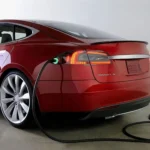
Tesla remains a dominant force in the industry, and their Universal Wall Connector is a masterclass in versatility. By integrating a built-in J1772 adapter directly into the NACS holster, this unit can power any electric vehicle on the market without requiring the owner to purchase extra hardware.
- Maximum Output: 11.5 kW (48 Amp)
- Cable Length: 24 feet
- Connectivity: Wi-Fi for over-the-air updates and remote monitoring via a dedicated app.
- Best For: Households with a mix of Tesla and non-Tesla vehicles.
2. ChargePoint Home Flex
The Home Flex continues to be a favorite among tech enthusiasts due to its incredibly refined software. In 2026, ChargePoint has updated its interface to provide even more granular data on energy consumption and localized utility rates. It is one of the few units that can be safely adjusted up to 50 Amps when hardwired, offering some of the fastest recovery times available for home use.
- Maximum Output: 12 kW (50 Amp)
- Cable Length: 23 feet
- Highlights: Extremely flexible cable that remains manageable even in freezing temperatures.
- Best For: Users who want deep insights into their energy usage patterns.
3. Emporia Pro Smart Charger
For the budget-conscious homeowner who does not want to sacrifice performance, the Emporia Pro stands out. This unit is often paired with the Emporia Vue energy monitor, allowing for “Load Management.” This means the unit can automatically throttle its power draw if it detects that your home’s main electrical panel is reaching its limit, preventing tripped breakers.
- Maximum Output: 11.5 kW (48 Amp)
- Special Feature: Real-time energy monitoring and solar integration.
- Best For: Homes with solar panels or limited electrical panel capacity.
4. Wallbox Pulsar Max
Compact and powerful, the Pulsar Max is designed for those with limited space. Despite its small footprint, it packs all the smart features of its larger competitors. In 2026, Wallbox has improved the “voice command” functionality, allowing users to start or schedule sessions via smart home assistants with greater accuracy.
- Maximum Output: 11.5 kW (48 Amp)
- Design: One of the smallest footprints in the industry.
- Durability: High weather-resistance rating for outdoor installations.
- Best For: Tight garage spaces or outdoor mounting in harsh climates.
5. Enphase IQ Bidirectional Charger
This is the breakthrough technology of 2026. Unlike standard units that only send power to the car, the Enphase IQ allows for “Vehicle-to-Home” (V2H) power flow. In the event of a blackout, your car’s battery can actually provide electricity to your house. This turns your vehicle into a massive mobile backup battery.
- Technology: GaN-based power electronics for high efficiency.
- Capability: V2H and V2G (Vehicle-to-Grid) ready.
- Best For: Homeowners looking for total energy independence and emergency backup solutions.
Daily Market Insights: Costs and Availability
As of late 2025 and moving into early 2026, hardware prices have stabilized significantly due to improved supply chains. On average, a high-quality smart unit will cost between $450 and $900, depending on the features and amperage.
Installation costs remain the most variable factor. A standard installation typically ranges from $500 to $1,500. However, if your home requires a service panel upgrade to 200 Amps, you should budget an additional $2,000 to $3,500. It is important to check for local utility rebates and federal tax credits, as many regions are offering incentives that cover up to 30% of the total equipment and labor costs through 2026.
Smart Features to Look for in 2026
When browsing for your next unit, prioritize these features to ensure your investment remains relevant for years to come:
- Dynamic Load Balancing: This allows multiple units to share a single circuit without overloading your electrical system.
- Solar Tracking: The ability to charge exclusively when your solar panels are producing excess energy, effectively allowing you to drive on sunshine.
- ISO 15118 Compliance: This protocol enables “Plug and Charge,” where the car and the unit communicate automatically to start a session without needing an app or a card.
- Over-the-Air (OTA) Updates: Ensure your hardware can receive software improvements to fix bugs or add new features remotely.
Installation and Safety Standards
Safety should never be compromised when dealing with high-voltage equipment. Always ensure that any unit you purchase is UL (Underwriters Laboratories) or ETL listed. These certifications guarantee that the device has undergone rigorous testing for fire safety and electrical integrity.
Hardwiring your unit is generally recommended over using a NEMA 14-50 plug. While a plug offers portability, a hardwired connection is more robust, weather-resistant, and allows for the higher 48A to 50A speeds that many modern vehicles can accept.
Environmental Impact and Energy Efficiency
By 2026, the efficiency of power conversion has reached nearly 96% in top-tier units. This means very little electricity is lost as heat during the transfer process. By utilizing smart scheduling, you can set your vehicle to pull power during “off-peak” hours (typically in the middle of the night). This not only saves money but also reduces the strain on the national power grid, allowing for a more sustainable energy ecosystem.
Future Outlook: What Lies Beyond 2026?
The industry is currently moving toward wireless induction charging. While this technology is beginning to appear in high-end luxury models, the standard “plug-in” unit remains the most reliable and cost-effective solution for the vast majority of drivers in 2026. Bidirectional charging will likely become the standard requirement for all new residential installations by the end of the decade.
Conclusion
The “Best Home EV Charger in 2026” is the one that fits your specific driving habits, home infrastructure, and budget. Whether you prioritize the universal compatibility of the Tesla Wall Connector, the advanced data of the ChargePoint Home Flex, or the revolutionary backup capabilities of the Enphase bidirectional system, there has never been a better time to upgrade your home power setup.
Investing in a high-quality residential station is more than a convenience. It is a commitment to a cleaner, more efficient way of living. As the technology continues to mature, these devices are becoming the central hubs of our modern, electrified homes.