
The global landscape of sustainable mobility reached a historic turning point in December 2025. As the year draws to a close, the narrative of the automotive sector has shifted from speculative growth to a high-stakes battle for market dominance and technological supremacy. This month has been defined by massive shifts in global sales leadership, groundbreaking discoveries in energy storage, and a rapidly evolving regulatory environment that is redefining how vehicles are manufactured and sold across continents.
The Great Global Sales Flip: BYD Claims the Crown
The most significant headline of December 2025 is the official confirmation that BYD is poised to surpass Tesla as the world’s top seller of battery electric vehicles. Data finalized through the end of November and into late December reveals a staggering performance by the Shenzhen based giant. By the end of November, BYD had already moved 2.07 million units, while Tesla trailed significantly with approximately 1.22 million units sold through the third quarter.
Analysts suggest that the final figures for 2025 will confirm a widening gap. While Tesla saw a massive sales spike in August and September due to consumers rushing to utilize expiring federal tax credits in the United States, the subsequent crash in October and November has left the American automaker in a defensive position. Tesla’s fourth-quarter deliveries are estimated to hover around 420,000 to 449,000 units, bringing their annual total to roughly 1.65 million. In contrast, BYD’s aggressive expansion into international markets like Europe and Southeast Asia has bolstered its volume to levels previously thought unattainable for a single manufacturer within this timeframe.
Market Divergence: The United States vs. the World
The end of 2025 highlights a stark divergence in market behavior between North America and other major regions. In the United States, the elimination of the 7,500 dollar federal tax credit under the current administration has created a period of cooling. After hitting an all time high of 11.6 percent market share in September, domestic sales saw a dramatic 50 percent drop in the following month. This has forced manufacturers to pivot their strategies, focusing more on high performance luxury models and commercial fleets rather than the entry level consumer segment.
Conversely, the European and Chinese markets continue to show robust resilience. Germany, in particular, has seen a remarkable bounce back in 2025, with sales growing by more than 35 percent compared to the previous year. The United Kingdom is also a standout performer, maintaining a 22 percent market share for battery electric vehicles. This international growth is driven by a more stable regulatory environment and a deeper integration of renewable energy sources into the charging grid.
Breakthroughs in Battery Technology: The End of Range Anxiety
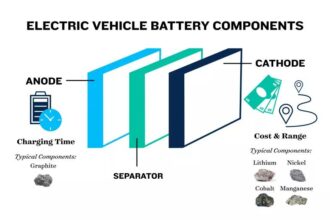
December 2025 has been a landmark month for energy storage research. One of the most talked about developments comes from Tohoku University, where researchers have successfully utilized a new carbon material to boost battery stability and charging speeds. By creating a covalently bridged fullerene framework, scientists have demonstrated a method to store lithium more stably, preventing the structural collapse and material loss that typically plague high capacity anodes. This discovery is a blueprint for the next generation of power cells that will be safer, longer lasting, and capable of much faster charging.
In the commercial sector, Factorial Energy made waves this month by announcing plans to go public following successful real world testing of its solid state battery technology. A modified Mercedes EQS equipped with Factorial’s solid state cells achieved over 745 miles (1,200 kilometers) on a single charge in a continuous test. This technology, which uses a solid electrolyte instead of a flammable liquid one, is being hailed as a true game changer. Major automotive groups including Mercedes-Benz, Stellantis, and Hyundai are already working to integrate these cells into their 2027 and 2028 model lineups.
Furthermore, research published in late December by the Argonne National Laboratory and the University of Chicago has uncovered a hidden cracking mechanism that explains why some advanced battery materials underperform. The study found that single crystal lithium ion batteries fail differently than older polycrystalline designs. By understanding these internal stresses, engineers can now design cathodes that are significantly more durable, potentially doubling the lifespan of a standard vehicle power pack.
Infrastructure Expansion: Scaling the Global Network
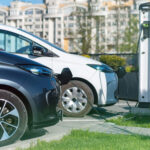
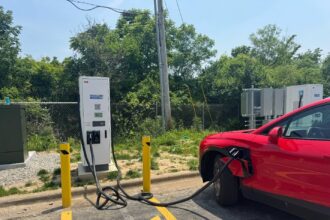
As the number of electric vehicles on the road increases, the demand for charging infrastructure has reached a fever pitch. The global charging station market is estimated to be valued at over 33 billion dollars at the close of 2025, with projections suggesting it will grow to over 355 billion by 2032.
Asia Pacific remains the dominant region, holding nearly half of the global market share. China alone is on track to deploy over 12 million charging stations by 2030. In India, the expansion has been equally impressive: the public charging network grew fourfold between early 2023 and the end of 2025. The Indian government’s allocation of 2,000 crore rupees for 72,000 public chargers has been a primary catalyst for this growth.
In Europe, the focus has shifted to high power fast charging. The average power per charger in Europe increased by 12 percent this year, addressing one of the primary concerns of long distance travelers. Countries like Latvia and Lithuania have made significant strides by installing ultra fast chargers, leapfrogging older systems found in more established markets.
The Rise of New Players: Foxconn and the Bria EV
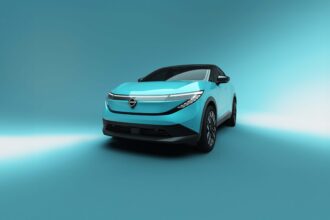
The industry saw a major new entry this month as Foxtron, a joint venture between Foxconn and Yulon Motor, launched the Bria EV in Taipei. This vehicle represents more than just a new model: it is a proof of concept for Foxconn’s contract manufacturing model. Much like they manufacture hardware for major electronics brands, Foxconn aims to become the primary hardware provider for the future of transportation.
The Bria EV is the first electric vehicle developed in Taiwan specifically for global export. With prices ranging from approximately 28,600 to 36,540 dollars, it targets the high volume mid range segment that many legacy automakers are currently struggling to fill. Foxconn’s acquisition of Yulon’s Luxgen brand gives them full operational control over the end to end value chain, signaling their intent to be a major global player.
Autonomous Driving: The Software Frontier
The race for Level 4 autonomy reached new heights in December 2025. Waymo, a leader in the space, demonstrated the resilience of its technology during a massive power outage in San Francisco. Despite disabled traffic signals and city wide gridlock, the Waymo Driver successfully navigated complex intersections, proving that autonomous systems can handle extraordinary real world disruptions. Waymo has now surpassed 100 million miles of fully autonomous driving experience, setting a high bar for safety and reliability.
Tesla remains a key competitor in this space, with CEO Elon Musk recently discussing autonomous vehicle legislation with international leaders, including Israeli Prime Minister Benjamin Netanyahu. Wall Street is currently laser focused on the upcoming autonomous chapter for Tesla, with the Cybercab robotaxi model expected to enter production in early 2026. The success of Tesla’s Full Self Driving (FSD) software is seen as a critical driver for the company’s future valuation as it moves beyond traditional hardware sales.
The Geopolitics of Raw Materials
A fundamental challenge facing the industry in late 2025 is the sustainable supply of rare earth elements (REEs). These 17 heavy metals are essential for producing the powerful permanent magnets used in efficient electric motors. Currently, China dominates this sector, accounting for over two thirds of global production and nearly half of known reserves.
This concentration of resources has led to significant geopolitical tension. In response, the European Union and the United States have introduced new incentives for exploration and processing. New deposits have been discovered in places like Wyoming and Sweden, and there is a growing push toward alternative materials. For example, many manufacturers are shifting toward lithium iron phosphate (LFP) batteries, which do not require the nickel and cobalt that have raised human rights and environmental concerns.
Looking Ahead to 2026
As we transition into 2026, several key trends are expected to define the next twelve months:
- Commercial Deployment of Solid State Tech: Expect more announcements regarding pilot production lines for solid state cells.
- Infrastructure Harmonization: The adoption of the North American Charging Standard (NACS) will continue to simplify the user experience across different brands.
- A Shift Toward Software Revenue: Automakers will increasingly look to software subscriptions and autonomous features to bolster their profit margins.
- Regionalized Supply Chains: To mitigate geopolitical risks and navigate complex tariff environments, more companies will build localized manufacturing hubs.
The electric vehicle industry is no longer a niche segment of the market: it is the market. The innovations and shifts witnessed in December 2025 are just the beginning of a larger transformation that will continue to reshape the global economy for decades to come.
Sources and References
- Electric Vehicle Sales Review Q2-2025 | PwC and Strategy
- Battery Breakthrough Uses New Carbon Material to Boost Stability | Gadgets 360
- BYD Poised to Overtake Tesla in 2025 EV Sales | The Japan Times
- QuantumScape Accomplishes Annual Commercial Engagement Goal | QuantumScape IR
- Solid-State EV Battery Maker Factorial Going Public | Electrek
- EV Charging Station Market Size and Trends 2025-2032 | Coherent Market Insights
- Waymo: Autonomously Navigating the Real World | Waymo Blog
https://kentshield.online/category/news/latest-electric-car-news