
The automotive landscape has undergone a tectonic shift over the last decade, transitioning from internal combustion engines to a future powered by electrons. As we stand in late 2025, the proliferation of electric vehicles (EVs) on our roads is no longer a futuristic vision but a daily reality. However, despite the visible surge in adoption, a thick fog of misinformation continues to swirl around this technology. For potential buyers, fleet managers, and investors, separating fact from fiction is essential for making informed decisions in a high-stakes market.
- Myth 1: Range Anxiety and the Inability to Travel Long Distances
- Myth 2: Charging an Electric Vehicle Takes Too Much Time
- Myth 3: Electric Vehicle Batteries Will Die After a Few Years
- Myth 4: EVs Are More Expensive to Own and Maintain
- Myth 5: The Power Grid Cannot Handle the Surge in EVs
- Myth 6: EVs are Worse for the Environment Due to Battery Production
- Myth 7: Electric Vehicles Are a Fire Risk
- Myth 8: EVs Perform Poorly in Cold Weather
- Myth 9: Hydrogen is the “Real” Future of Transportation
- The Outlook for 2026 and Beyond
- Technical Appendix: Sources and Real-Time Data
This comprehensive guide dissects the most persistent myths surrounding electric vehicles, providing data-driven clarity on range, battery health, environmental costs, and the true economics of ownership. By examining the latest reports from December 2025, we can see how technology has outpaced the narratives of the past.
Myth 1: Range Anxiety and the Inability to Travel Long Distances
One of the most enduring arguments against electric mobility is the fear of being stranded. This concept, known as range anxiety, suggests that EVs are only suitable for short city commutes and fail during long-distance road trips.
The 2025 Reality of Battery Density
In 2025, the average range of a new electric car has reached a threshold that renders range anxiety obsolete for most drivers. Recent data from the International Energy Agency (IEA) and leading manufacturers shows that the median range for new models has climbed to approximately 310 to 350 miles (500 to 560 kilometers). Luxury models and long-range variants frequently exceed 450 miles on a single charge.
Furthermore, advancements in silicon anode technology and refined lithium-ion chemistries have significantly improved energy density. Driving from London to Edinburgh or Los Angeles to San Francisco is now a routine task rather than a calculated risk. Modern navigation systems have also evolved to become highly sophisticated, integrating real-time variables such as elevation changes, ambient temperature, and current wind speeds to provide hyper-accurate range projections.
Daily Driving Habits vs. Vehicle Capability
Statistically, the vast majority of passenger vehicle trips are remarkably short. According to the National Household Travel Survey, nearly 98 percent of daily trips in the United States are under 75 miles. Even the most basic electric vehicles currently on the market provide double or triple this distance. For the average consumer, the car is charged at home or work, meaning they start every day with a full “tank.” This convenience actually eliminates the need for the weekly trip to the gas station that internal combustion engine (ICE) owners must endure.
Myth 2: Charging an Electric Vehicle Takes Too Much Time
The image of a driver sitting at a desolate charging station for hours is a relic of the early 2010s. The narrative that EVs require an eternity to refuel is one of the most significant barriers to entry, yet it ignores the massive leap in high-power charging infrastructure.
The Rise of Ultra-Fast Charging Networks
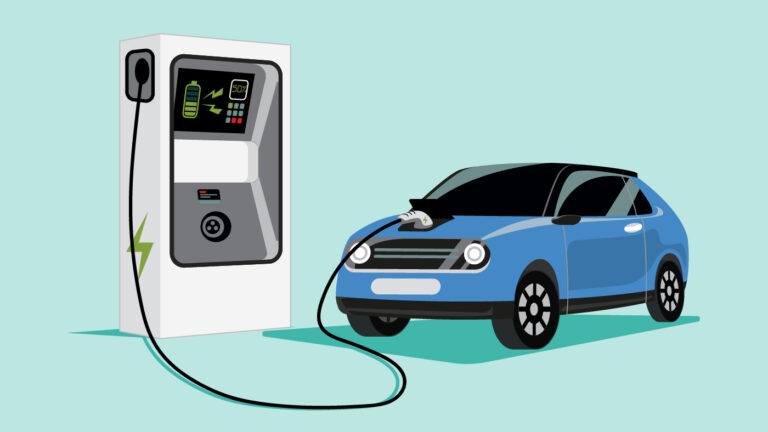
As of December 2025, the global deployment of 350kW and 400kW ultra-fast DC chargers has transformed the long-distance experience. Many modern EV platforms, particularly those using 800-volt architectures, can now charge from 10 percent to 80 percent in under 18 minutes. This is roughly the time it takes to grab a coffee and use the restroom, fitting perfectly into the natural rhythm of a highway break.
The Shift to Ubiquitous Charging
The strategy for “refueling” an EV is fundamentally different from a gas car. Instead of waiting until the battery is empty, drivers utilize “top-up” charging. With chargers increasingly integrated into grocery store parking lots, gymnasiums, and office complexes, vehicles are charged while they are already stationary for other reasons.
In Europe, the number of public charging points surpassed 1.2 million in late 2024, with a projected growth rate that continues to accelerate through 2025. The implementation of the Alternative Fuels Infrastructure Regulation (AFIR) has mandated fast-charging stations every 60 kilometers along major transit corridors, ensuring that high-speed power is never out of reach.
Myth 3: Electric Vehicle Batteries Will Die After a Few Years
A common concern among used car buyers and skeptics is that EV batteries are like smartphone batteries: prone to rapid degradation and requiring expensive replacement after three or four years.
Real-World Longevity Data
The data from 2025 tells a much more optimistic story. Comprehensive fleet studies, including those conducted by Geotab and various automotive research firms, indicate that modern EV batteries degrade at an average rate of only 1.5 percent to 1.8 percent per year. At this rate, a vehicle with a 300-mile range would still retain roughly 250 miles of range after a full decade of use.
Most manufacturers now provide robust warranties, typically covering the battery for 8 to 10 years or 100,000 to 150,000 miles. Recent findings suggest that the physical lifespan of the battery pack may actually outlast the chassis of the car itself. Experts now project that many batteries produced in 2025 will remain functional for over 20 years before their capacity drops below the 70 percent threshold usually considered the end of a vehicle’s primary life.
The Second Life and Recycling Ecosystem
Even when a battery is no longer fit for a high-performance vehicle, it is far from useless. A thriving secondary market has emerged for “second-life” batteries, which are used for stationary energy storage. These units help stabilize power grids and store energy from residential solar panels.
When a battery truly reaches the end of its functional life, the recycling technology available in 2025 is capable of recovering over 95 percent of key materials like lithium, cobalt, and nickel. This creates a closed-loop system that reduces the need for new mining and ensures that the materials remain within the productive economy.
Myth 4: EVs Are More Expensive to Own and Maintain
The sticker price of an electric vehicle is often higher than a comparable gasoline model, leading many to believe that EVs are a luxury reserved for the wealthy. However, this view ignores the Total Cost of Ownership (TCO), which is the only metric that truly matters for a long-term investment.
Fuel and Maintenance Savings
The cost of electricity per mile is significantly lower than the cost of gasoline or diesel in almost every global market. On average, an EV driver can save between $1,000 and $2,500 annually on energy costs depending on local utility rates and driving frequency.
Maintenance is where the financial benefits of electrification become even more pronounced. An internal combustion engine contains hundreds of moving parts, including pistons, valves, fuel pumps, and complex transmission systems, all of which require regular lubrication and eventually wear out. In contrast, an electric drivetrain is remarkably simple, consisting primarily of an electric motor and a single-speed reduction gear. There are no oil changes, no spark plugs to replace, and no timing belts to snap. Furthermore, regenerative braking systems significantly reduce wear on brake pads and rotors, often allowing them to last twice as long as those on conventional vehicles.
Insurance and Resale Value Trends
While insurance premiums for EVs were historically higher due to the cost of specialized repairs, the gap is narrowing in 2025. Insurers now have better data on the safety profiles of EVs, which often feature lower centers of gravity and advanced driver-assistance systems as standard. Furthermore, as the number of qualified EV technicians increases, repair costs are stabilizing.
Resale values for EVs have also seen a boost. As cities implement low-emission zones and governments phase out the sale of new ICE vehicles, the demand for high-quality used electric cars is surging. This high residual value further lowers the effective monthly cost for those who lease or finance their vehicles.
Myth 5: The Power Grid Cannot Handle the Surge in EVs
Critics often argue that the widespread adoption of electric vehicles will lead to catastrophic failures of the electrical grid, causing blackouts and requiring trillions of dollars in immediate upgrades.
Smart Charging and Load Management
The reality is that the transition to EVs is happening over decades, giving utilities ample time to upgrade infrastructure. More importantly, EVs are not just consumers of energy; they are increasingly becoming part of the solution for grid stability.
Smart charging technology allows vehicles to communicate with the grid, shifting the charging load to off-peak hours when demand is low (usually in the middle of the night). In 2025, Vehicle-to-Grid (V2G) and Vehicle-to-Home (V2H) technologies are entering the mainstream. This allows an EV to act as a giant mobile battery, feeding power back into the house during peak pricing hours or supporting the grid during a local emergency. This “load leveling” can actually make the grid more efficient and resilient.
Renewable Energy Integration
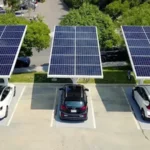
The rise of EVs is perfectly timed with the expansion of renewable energy. Because EVs can be flexible about when they charge, they can be programmed to soak up excess solar power during the day or wind power at night. This helps solve the intermittency problem of renewables, making the entire energy system greener and more cost-effective.
Myth 6: EVs are Worse for the Environment Due to Battery Production
A common “gotcha” argument is that the environmental cost of mining lithium and manufacturing batteries is so high that an EV is actually dirtier than a diesel truck.
Life Cycle Analysis and the “Carbon Debt”
It is true that manufacturing an electric vehicle is more carbon-intensive than building a traditional car, primarily due to the energy required for battery production. This creates a “carbon debt” at the start of the vehicle’s life.
However, multiple studies from 2024 and 2025 confirm that this debt is “paid off” very quickly. Depending on the local energy mix used for charging, an EV typically becomes cleaner than a gasoline car within 15,000 to 30,000 miles of driving. Over the full life of the vehicle, an EV in the United States or Europe produces 60 percent to 80 percent fewer emissions than a comparable ICE vehicle. As the power grid continues to decarbonize, this advantage only grows.
Improving Mining and Supply Chain Ethics
The industry is also addressing the social and environmental costs of mining. In 2025, new techniques such as Direct Lithium Extraction (DLE) are significantly reducing water usage in mining regions. Furthermore, the industry is moving away from controversial materials; cobalt-free batteries (such as Lithium Iron Phosphate or LFP) now make up a significant portion of the global market. Legislative frameworks like the EU Battery Passport now require full transparency regarding the carbon footprint and ethical standards of every battery sold, ensuring that manufacturers are held accountable for their entire supply chain.
Myth 7: Electric Vehicles Are a Fire Risk
Viral videos of burning cars have led to a perception that EVs are rolling fire hazards that are impossible to extinguish.
Statistical Safety vs. Anecdotal Evidence
The data suggests the opposite. Research from organizations like the National Transportation Safety Board (NTSB) and various international insurers shows that EVs are significantly less likely to experience a fire than gasoline-powered vehicles. Gasoline is a highly flammable liquid that is often stored in thin-walled tanks, whereas battery packs are heavily armored and designed with sophisticated thermal management systems to prevent overheating.
In fact, per 100,000 vehicles sold, internal combustion cars experience fires at a much higher rate than fully electric ones. While it is true that lithium-ion fires require different firefighting techniques (primarily large amounts of water to cool the cells), fire departments globally have updated their protocols and equipment to handle these incidents effectively.
Myth 8: EVs Perform Poorly in Cold Weather
The myth that electric vehicles are useless in winter stems from the fact that battery chemistry is less efficient in cold temperatures and that heating the cabin consumes significant energy.
Advanced Thermal Management and Heat Pumps
In 2025, this issue has been largely mitigated by the widespread adoption of high-efficiency heat pumps. Unlike traditional resistive heaters, heat pumps move heat rather than generating it, using much less energy and preserving driving range.
Furthermore, “pre-conditioning” has become a standard feature. While the car is still plugged in at home, the owner can use a smartphone app to warm the battery and the cabin using grid power. This ensures the battery is at its optimal operating temperature before the journey begins, maximizing efficiency even in sub-zero conditions. Countries like Norway, where over 90 percent of new car sales are electric, serve as the ultimate proof that EVs are perfectly capable of performing in harsh northern climates.
Myth 9: Hydrogen is the “Real” Future of Transportation
For years, proponents of hydrogen fuel cells have argued that battery-electric vehicles are just a stopgap and that hydrogen will eventually take over due to faster refueling and better range.
The Efficiency Gap
In 2025, the market has clearly spoken. While hydrogen remains a vital technology for heavy-duty shipping, aviation, and certain industrial processes, it has lost the battle for the passenger car market. The primary reason is energy efficiency.
To use hydrogen, you must use electricity to create the gas, compress it, transport it, and then convert it back into electricity inside the vehicle. This process loses a massive amount of energy at every step. A battery-electric vehicle is roughly three times more efficient than a hydrogen fuel cell vehicle when looking at the “well-to-wheel” energy path. Combined with the massive lead that charging infrastructure has over hydrogen fueling stations, the economic case for hydrogen passenger cars has largely evaporated.
The Outlook for 2026 and Beyond
As we move toward 2026, the transition to electric mobility is accelerating. We are seeing the arrival of solid-state batteries in limited production, promising even faster charging times and higher energy densities. The “entry-level” EV market is also expanding, with several major manufacturers launching models priced under $25,000, bringing the benefits of electrification to a much broader demographic.
The myths that once held back the industry are being dismantled by a combination of engineering brilliance and real-world performance. For the modern consumer, the question is no longer “if” they will go electric, but “when.”
Technical Appendix: Sources and Real-Time Data
For those seeking to verify the data points mentioned in this article, the following organizations provide daily and annual updates on the state of the industry:
- The International Energy Agency (IEA): Provides the “Global EV Outlook,” a definitive source for sales, infrastructure, and policy trends. Link to IEA
- The U.S. Department of Energy (DOE): Their Alternative Fuels Data Center offers a live map of charging stations and detailed technical specifications for current EV models. Link to AFDC
- The European Alternative Fuels Observatory (EAFO): Excellent for tracking the rapid expansion of charging networks across Europe. Link to EAFO
- BloombergNEF (BNEF): Offers high-level market analysis on battery price parity and investment trends in the green energy sector. Link to BNEF
- The Environmental Protection Agency (EPA): For verified data on vehicle range, efficiency, and life cycle emissions. Link to EPA Myths Page