
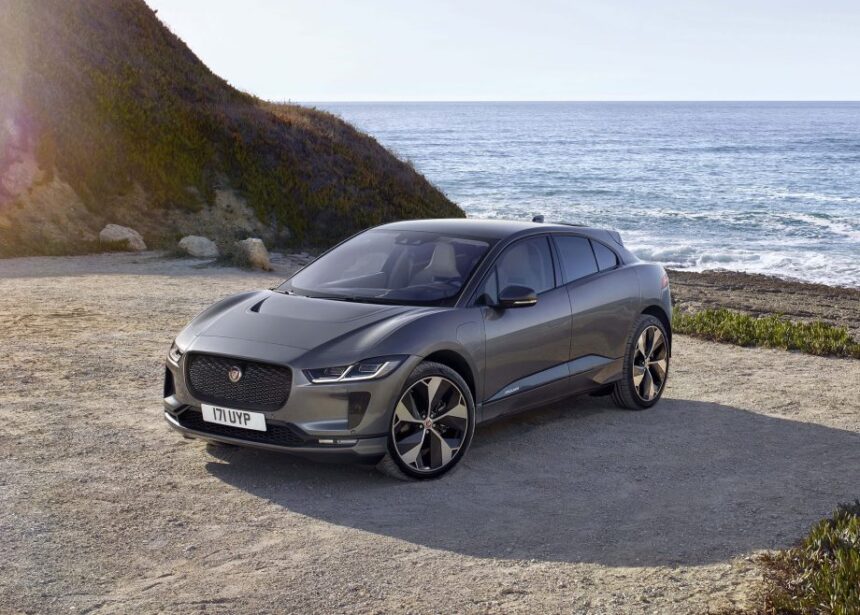
The landscape of transportation in the United Kingdom is undergoing a seismic shift. As we navigate through 2026, the transition toward sustainable mobility has moved from a niche ambition to a mainstream reality. For the modern British driver, choosing an electric vehicle is no longer just a statement of environmental consciousness; it is a calculated decision based on cutting-edge technology, shifting fiscal policies, and a rapidly maturing infrastructure.
- The New Guard: Most Anticipated Electric Car Launches in 2026
- State of the Grid: Charging Infrastructure in 2026
- The Economics of Ownership: Costs, Taxes, and Incentives
- Charging Costs: Home vs. Public
- Technology and Safety: The Software-Defined Vehicle
- Insurance Trends for Electric Cars in 2026
- Summary of Key Motoring Changes (2026 Onwards)
- Final Thoughts: Should You Go Electric in 2026?
This comprehensive guide explores every facet of the electric car market in the UK for 2026. From the most anticipated vehicle launches and the evolution of the national charging grid to the latest changes in taxation and insurance, we provide the essential insights required to navigate this high-voltage era.
The New Guard: Most Anticipated Electric Car Launches in 2026
The year 2026 marks the arrival of several groundbreaking models that redefine performance, luxury, and affordability. Manufacturers have shifted from simply “electrifying” existing frames to building vehicles on dedicated, software-defined platforms.
1. Honda 0 Series: A New Philosophy
Honda’s much-anticipated “0 Series” is set to make its European debut in 2026. This lineup represents a “Thin, Light, and Wise” approach to engineering.
- The 0 Saloon: A flagship model with a low-slung, aerodynamic silhouette. It is expected to feature a range of roughly 300 miles and ultra-fast charging capabilities (15% to 80% in approximately 10 to 15 minutes).
- The 0 SUV: Preceding the saloon, this model offers a modular aluminum platform and dual-motor all-wheel-drive configurations, aiming to capture the family-focused market.
2. The BMW i3 (Neue Klasse)
The iconic BMW 3 Series receives its fully electric counterpart under the “i3” moniker. Built on the Neue Klasse architecture, this vehicle promises a 30% increase in range and 30% faster charging compared to previous generations. It features a futuristic interpretation of the kidney grille and a highly integrated digital cockpit.
3. Porsche Taycan 2026 Update
The Porsche Taycan remains the gold standard for electric performance. The 2026 iteration brings refined lighting signatures and advanced battery chemistry, allowing for even higher sustained speeds and improved thermal management during rapid charging sessions.
4. Kia EV4 and EV3 Expansion
Following the success of the EV6 and EV9, Kia is filling the gaps with the EV3 (a compact crossover) and the EV4 (a sleek executive saloon). These models focus on making high-end technology accessible to a broader demographic, with the EV4 expected to start around £34,695.
5. Luxury and Supercars: Bentley and Ferrari
2026 is a landmark year for the ultra-luxury segment. Bentley is slated to reveal its “luxury urban SUV,” a slightly more compact alternative to the Bentayga, while Ferrari’s first fully electric supercar is expected to debut with a quad-motor powertrain producing upwards of 1,000 horsepower.
State of the Grid: Charging Infrastructure in 2026
One of the most significant barriers to adoption has been “range anxiety.” In 2026, the UK’s charging network has reached a level of density and reliability that rivals traditional petrol stations.
The Rise of Ultra-Rapid Hubs
The focus has shifted from single, isolated chargers to large-scale “Full-Service Hubs.” Key players like InstaVolt are deploying sites along the Strategic Road Network (SRN) that feature:
- Speeds of 150kW to 350kW: Adding hundreds of miles of range in under 20 minutes.
- Battery-Backed Resilience: Integration of on-site battery storage ensures that charging speeds remain consistent even during peak grid demand.
- Enhanced Amenities: Modern hubs now include 24/7 cafes, high-speed Wi-Fi, and well-lit, secure environments, transforming a “charge stop” into a genuine rest break.
Workplace and SME Support
The UK government continues to support the expansion of charging points through various grants.
- Workplace Charging Scheme (WCS): Provides businesses with up to 75% of the cost of installation (capped at £350 per socket) for up to 40 sockets.
- SME Infrastructure Grant: Small and medium-sized enterprises can access up to £15,000 to support wider building works needed for future-proofing their fleets.
The Economics of Ownership: Costs, Taxes, and Incentives
While the environmental benefits are clear, the financial implications of driving an electric car in 2026 have evolved. Recent budget changes have introduced new fees that every owner must account for.
Vehicle Excise Duty (VED) and the “Luxury Tax”
As of 2025/2026, electric vehicles are no longer exempt from road tax.
- Standard Rate: Most EV owners will pay a standard annual rate of £195.
- Expensive Car Supplement: For vehicles with a list price exceeding £50,000, an additional “luxury” supplement of £425 per year applies for the first five years. This threshold was notably increased from £40,000 to encourage the purchase of mid-range premium models.
Pay-Per-Mile (eVED) Outlook
The government has outlined a future “Electric Vehicle Excise Duty” based on mileage. While the full implementation of a 3p-per-mile charge for battery-electric vehicles (BEVs) is slated for 2028, 2026 serves as a transitional year where reporting mechanisms and pilot schemes are being refined.
Salary Sacrifice: The “Golden Ticket”
For many professionals, salary sacrifice remains the most cost-effective way to drive a new electric car. By paying for the car from gross salary (before tax), employees can save between 30% and 42% on the total cost.
- Benefit in Kind (BiK): In April 2026, the BiK rate for electric cars increases from 3% to 4%. While this is a slight rise, it remains significantly lower than the 37% rate often applied to high-emission combustion vehicles.
Charging Costs: Home vs. Public
The disparity between home charging and public rapid charging is a key factor in the total cost of ownership.
| Charging Type | Estimated Cost per kWh | Cost for 60kWh Charge |
| Home (Off-Peak/EV Tariff) | 7.5p – 10p | £4.50 – £6.00 |
| Home (Standard Rate) | 25p – 30p | £15.00 – £18.00 |
| Public Rapid/Ultra-Rapid | 65p – 80p | £39.00 – £48.00 |
Data based on late 2025/early 2026 market averages.
Drivers who can install a smart home charger and utilize a dedicated EV energy tariff can see annual fuel savings of over £1,000 compared to a petrol-equivalent car.
Technology and Safety: The Software-Defined Vehicle
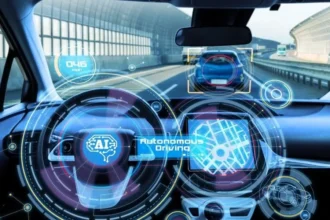
In 2026, an electric car is as much a computer as it is a vehicle. The integration of Artificial Intelligence (AI) has fundamentally changed the driving experience.
Autonomous Driving and the AV Act
The Automated Vehicles (AV) Act of 2024 has paved the way for more advanced Level 3 autonomy on UK motorways by 2026. Vehicles like the Honda 0 Series and high-end BMWs now offer hands-off driving in specific motorway conditions, provided the driver is ready to intervene.
Over-the-Air (OTA) Updates
The standard for 2026 is the “evergreen” car. Manufacturers now push regular software updates that can improve battery efficiency, unlock new infotainment features, or even increase horsepower without the need for a physical dealership visit.
Insurance Trends for Electric Cars in 2026
Insuring an electric vehicle has historically been more expensive due to higher repair costs and a lack of specialist technicians. However, 2026 sees a stabilization in this sector.
- Specialist Providers: A surge in insurance companies specializing in “Green Cover” has increased competition, leading to more favorable premiums.
- Repairability Improvements: As battery designs become more modular, the cost of repairing minor accidents has decreased, positively impacting insurance group ratings.
Summary of Key Motoring Changes (2026 Onwards)
- September 2026: The 5p fuel duty cut for petrol and diesel is expected to end, further widening the cost gap between fossil fuels and electricity.
- November 2026: All new cars must meet Euro 7 emission standards, making the production of small, cheap petrol cars increasingly difficult for manufacturers.
- Luxury Tax Threshold: The £50,000 limit for the Expensive Car Supplement provides a much-needed “buffer” for those buying premium family SUVs.
Final Thoughts: Should You Go Electric in 2026?
The year 2026 represents a point of maturity for the UK’s electric vehicle market. The “pioneer” phase is over, and we have entered the “utility” phase. With a charging network that is becoming truly robust, a plethora of new models catering to every budget, and significant tax advantages still available via salary sacrifice, the argument for making the switch is stronger than ever.
While new road taxes have been introduced, the total cost of ownership—when factoring in maintenance, fuel, and depreciation—remains heavily skewed in favor of electric mobility. Whether you are looking for the raw power of a Porsche or the practical efficiency of a Kia, 2026 is the year the electric car truly becomes the “people’s car” of Great Britain.