
The Great Transition: Where We Stand Today
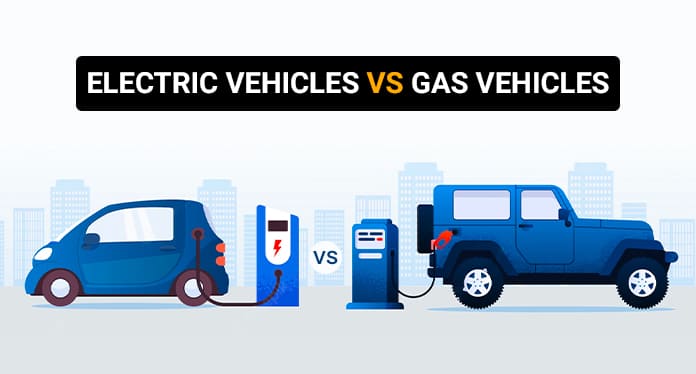
The global automotive landscape is currently undergoing its most significant transformation since the introduction of the assembly line. As we move through the final days of December 2025, the choice between an electric vehicle (EV) and a traditional internal combustion engine (ICE) vehicle has moved from a niche environmental debate to a mainstream financial and lifestyle calculation.
- The Great Transition: Where We Stand Today
- The Sticker Price Reality: Financing Your Next Vehicle
- Fueling Economics: Today’s Market Snapshot
- Maintenance and Reliability: Under the Hood Comparison
- Insurance and Protection: Calculating Monthly Premiums
- Performance Metrics: Horsepower vs. Instant Torque
- Battery Technology: The Heart of the Innovation
- Environmental Impact: A Full Lifecycle Analysis
- Infrastructure: Range Anxiety vs. Charging Speed
- Resale Value and Depreciation: Which Asset Holds Value?
- The 2026 Outlook: Upcoming Models and Trends
- Final Verdict: Who Should Buy What?
- Sources for Further Reading
Today, the decision involves complex variables including battery technology breakthroughs, shifting energy markets, and sophisticated financing structures. This guide provides a comprehensive deep dive into every facet of the EV versus gas debate, updated with live data from late 2025 to help you make an informed investment.
The Sticker Price Reality: Financing Your Next Vehicle
When entering a dealership today, the initial price tag remains the most visible differentiator between these two technologies. As of late 2025, the average transaction price for a new electric vehicle in the United States sits at approximately $59,205. In contrast, a new gas powered vehicle averages around $48,699. While this $10,500 gap is significant, it has narrowed considerably since 2023, when the difference often exceeded $15,000.
Financing and Auto Loans
High value purchases like these require careful consideration of interest rates and loan terms. Many lenders now offer specialized green auto loans for electric vehicles, which may feature slightly lower interest rates or longer repayment windows to account for the higher purchase price. Buyers with high credit scores are currently finding competitive rates around 5.5 percent to 6.5 percent for new vehicles, regardless of the powertrain.
Tax Incentives and Rebates
The actual cost of an EV is often mitigated by federal and state incentives. In the United States, eligible buyers can still access tax credits of up to $7,500 for vehicles meeting specific battery sourcing requirements. When these credits are applied at the point of sale, the effective price of an EV like the 2026 Chevrolet Equinox EV (starting around $36,495) becomes highly competitive with its gas counterparts like the Toyota RAV4 or Honda CR-V.
Fueling Economics: Today’s Market Snapshot
The cost of moving from point A to point B is the most frequent expense for any car owner. The volatility of the oil market versus the relative stability of the electrical grid creates a fascinating economic contrast.
Daily Gas Prices: December 2025
As of December 26, 2025, the national average for a gallon of regular unleaded gasoline in the United States is $2.97. This represents a downward trend from the $3.13 average seen this time last year. However, regional variations remain extreme. Drivers in California are seeing prices near $4.45 per gallon, while those in Oklahoma are enjoying lows around $2.37.
The Cost of Electrons
For EV owners, the cost of fueling is measured in cents per kilowatt-hour (kWh). The national average for residential electricity is currently approximately 17 cents per kWh. For a typical EV that achieves 3 to 4 miles per kWh, the cost to travel 100 miles is between $4 and $6. To travel that same 100 miles in a gas car averaging 25 MPG at $3.00 per gallon, you would spend $12.00.
The math is clear: even with lower gas prices in late 2025, electric propulsion remains roughly 50 percent to 70 percent cheaper on a per mile basis when charging at home.
Maintenance and Reliability: Under the Hood Comparison
The mechanical complexity of a vehicle determines its long term reliability and the frequency of shop visits.
Internal Combustion Engine (ICE) Maintenance
A traditional gas engine contains hundreds of moving parts that operate under extreme heat and pressure. Regular maintenance is a requirement for longevity:
- Oil and filter changes every 5,000 to 10,000 miles.
- Spark plug replacements and fuel system cleanings.
- Timing belt or chain adjustments.
- Transmission fluid flushes.
- Complex exhaust system repairs, including catalytic converters and sensors.
Over a ten year period, the average gas vehicle owner can expect to spend between $8,000 and $10,000 on routine maintenance and minor repairs.
Electric Vehicle (EV) Maintenance
Electric vehicles are fundamentally simpler. A Tesla Model Y or a Ford F-150 Lightning lacks a multi-speed transmission, a fuel injection system, and an exhaust manifold. The primary maintenance tasks include:
- Tire rotations (which happen more frequently due to the weight of the batteries).
- Cabin air filter replacements.
- Brake fluid checks.
- Windshield wiper fluid refills.
Regenerative braking is a standout feature of EVs. By using the electric motor to slow the vehicle and recapture energy, mechanical brake pads and rotors can last twice as long as those on a gas car, sometimes exceeding 100,000 miles before needing replacement. Overall, EV maintenance costs are roughly 40 percent to 50 percent lower than gas vehicles over the first decade of ownership.
Insurance and Protection: Calculating Monthly Premiums
Insurance is a critical component of the total cost of ownership (TCO) that many buyers overlook. Currently, electric vehicles generally cost 10 percent to 20 percent more to insure than comparable gas models.
Factors Driving EV Insurance Costs
Several variables contribute to these higher premiums:
- Higher Purchase Price: Since EVs are more expensive to replace, the comprehensive and collision coverage must reflect that value.
- Repair Complexity: Fixing a damaged EV requires specialized technicians and diagnostic equipment.
- Battery Sensitivity: Even a minor collision can sometimes lead to a total loss if the battery casing is compromised, as the battery pack alone can cost between $10,000 and $15,000.
- Specialized Parts: Global supply chains for lithium-ion components and high-voltage sensors are more specialized than the established market for gas engine parts.
For example, insuring a 2025 BMW i4 may cost approximately $3,800 annually for full coverage, while a gas powered BMW 3 Series might cost closer to $2,700 for the same driver profile. Shopping for specialized EV insurance policies that offer “new car replacement” or “battery protection” is a growing trend among savvy owners.
Performance Metrics: Horsepower vs. Instant Torque
The driving experience differs wildly between these two platforms.
The Gas Experience
Internal combustion engines have a power curve. You must wait for the engine to reach a certain RPM (revolutions per minute) to access maximum torque. This creates a mechanical symphony of gear shifts and engine notes that many driving enthusiasts still prefer. High performance gas cars offer a visceral connection to the machine through vibration and sound.
The Electric Experience
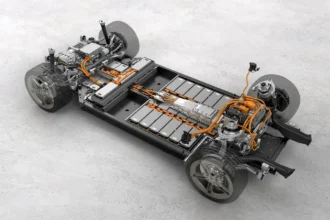
Electric motors provide 100 percent of their torque instantly from a standstill. This results in “neck-snapping” acceleration that allows even modest family SUVs to outperform classic supercars in 0 to 60 MPH sprints. The absence of a traditional transmission means there is no lag between pressing the pedal and moving forward. Furthermore, the low center of gravity (provided by the heavy battery pack located in the floor) gives EVs exceptional handling and stability in corners.
Battery Technology: The Heart of the Innovation
The battery is the most expensive and most important component of an electric vehicle. In December 2025, we are witnessing a significant drop in battery prices.
Price Trends and Chemistry
According to recent data from BloombergNEF, the average price of a lithium-ion battery pack has fallen to a record low of $108 per kWh in 2025. For the second year in a row, battery electric vehicle packs have dipped below the psychological threshold of $100 per kWh in certain markets.
We are also seeing a shift in battery chemistry:
- Lithium Iron Phosphate (LFP): These batteries are cheaper to produce, safer, and can be charged to 100 percent daily without significant degradation. They are becoming the standard for entry-level and mid-range EVs.
- Nickel Manganese Cobalt (NMC): These offer higher energy density and better performance in cold weather but are more expensive and sensitive to charging habits.
- Solid State Batteries: While still in the early stages of commercialization for 2026 and 2027 models, solid-state technology promises to double the range and cut charging times in half.
Environmental Impact: A Full Lifecycle Analysis
The “green” credentials of EVs are often debated. It is important to look at the lifecycle rather than just the tailpipe.
Manufacturing Footprint
Producing an electric vehicle currently generates more carbon emissions than producing a gas vehicle. This is primarily due to the energy-intensive process of mining and refining lithium, cobalt, and nickel. This is often referred to as the “carbon debt” of an EV.
The Payback Period
Once an EV is on the road, it begins to “pay back” that carbon debt. In countries with a clean energy grid (high use of wind, solar, and nuclear), an EV typically becomes cleaner than a gas car after about 15,000 to 20,000 miles of driving. As the global electrical grid continues to decarbonize, this payback period will continue to shorten. By 2025, recycling programs for old EV batteries have also matured, allowing manufacturers to recover up to 95 percent of the valuable metals for use in new batteries, creating a more circular economy.
Infrastructure: Range Anxiety vs. Charging Speed
For the gas car owner, infrastructure is a non-issue. There are over 145,000 gas stations in the United States, and a refill takes five minutes.
The Charging Landscape in 2025
The charging infrastructure has improved dramatically. The adoption of the North American Charging Standard (NACS) by almost all major automakers has opened up the Tesla Supercharger network to Ford, GM, Rivian, and Volvo owners.
Charging is now categorized into three levels:
- Level 1 (120V): Using a standard wall outlet. It is very slow, adding about 3 to 5 miles of range per hour.
- Level 2 (240V): The standard for home charging and workplace parking. It adds 25 to 40 miles of range per hour.
- Level 3 (DC Fast Charging): Found along highways. Modern EVs can now charge from 10 percent to 80 percent in just 15 to 20 minutes, making long-distance road trips feasible for the average family.
Resale Value and Depreciation: Which Asset Holds Value?
Depreciation is the single largest cost of owning any new vehicle.
Gas Car Resale
Gas vehicles have predictable depreciation curves. High-demand models like the Honda Civic or Toyota Tacoma hold their value exceptionally well because there is a massive, well-understood secondary market for them. Buyers know exactly what a 100,000-mile gas engine is worth.
EV Resale
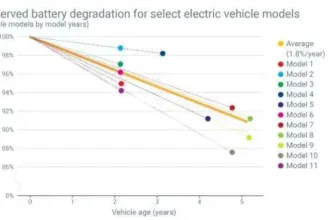
The resale value for EVs has been more volatile. Rapid advancements in battery technology can make a three-year-old EV feel “outdated” if the new models have significantly more range or faster charging speeds. However, as battery health monitoring tools have become standard, used EV buyers are gaining confidence. A 2025 EV with a battery health report showing 98 percent capacity is a much safer bet than an early 2017 model. Leasing has become a popular way to avoid depreciation risks, with many drivers choosing 36-month terms to ensure they can upgrade to the latest technology.
The 2026 Outlook: Upcoming Models and Trends
As we look toward the 2026 model year, several exciting vehicles are set to hit the market:
- The 2026 Subaru Trailseeker: An all-electric rugged SUV designed for off-road enthusiasts.
- The 2026 Honda 0 Series: A new philosophy of “thin and light” electric sedans and crossovers.
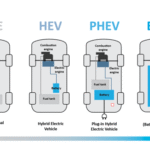
- Updated Toyota RAV4 Hybrid: While not a full EV, the next generation of the world’s best-selling SUV will feature even more electrification.
The trend for 2026 is clearly moving toward “affordable luxury,” where manufacturers focus on interior quality and software integration rather than just raw battery size.
Final Verdict: Who Should Buy What?
Choose a Gas Car If:
- You live in an apartment without access to home or workplace charging.
- You frequently tow heavy loads over long distances (where EV range drops significantly).
- You live in an extremely remote area with limited high-voltage infrastructure.
- You prefer the lower upfront purchase price and predictable insurance costs.
Choose an Electric Car If:
- You can charge at home (this is the “game changer” for convenience and cost).
- Your daily commute is under 100 miles.
- You enjoy cutting-edge technology and a quiet, high-performance driving experience.
- You want to insulate yourself from the fluctuating prices of the global oil market.
Sources for Further Reading
- U.S. Department of Energy (Fuel Economy Guide): fueleconomy.gov
- BloombergNEF (Battery Price Survey): about.bnef.com
- AAA Gas Prices (Daily National Average): gasprices.aaa.com
- International Energy Agency (Global EV Outlook): iea.org
- Kelley Blue Book (Vehicle Pricing Trends): kbb.com