
The electric vehicle landscape has shifted dramatically as we enter 2026. With the introduction of solid state batteries and the maturation of artificial intelligence in power management, the way we view battery health has evolved. Understanding how your vehicle ages is no longer just for enthusiasts: it is a critical factor in determining your car’s resale value and operational efficiency.
- The State of EV Batteries in 2026
- What Exactly is EV Battery Degradation?
- The 2026 Battery Chemistry Breakdown
- Primary Factors Influencing Battery Health in 2026
- The Role of AI-Driven Battery Management Systems (BMS)
- The Economics: Resale Value and Replacement Costs in 2026
- Daily Maintenance: How to Maximize Battery Life in 2026
- Future Outlook: 2027 and Beyond
- Conclusion
This detailed guide explores the mechanics of battery wear, the latest 2026 industry data, and the high level strategies you can use to ensure your electric vehicle remains at peak performance for decades.
The State of EV Batteries in 2026
As of early 2026, the global electric vehicle market has reached a pivotal milestone. We are seeing the first true wave of price parity between internal combustion engine vehicles and battery electric vehicles. According to recent 2025 data from Goldman Sachs and SNE Research, battery pack prices have fallen toward the 80 dollar per kilowatt hour mark. This shift is driven by massive scaling in manufacturing and the stabilization of raw material costs like lithium and cobalt.
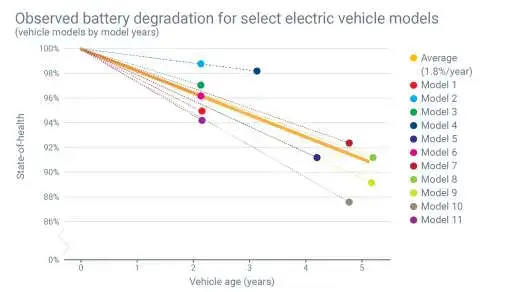
However, as batteries become more affordable, the focus has shifted toward durability. Consumers are no longer just asking “How far can it go?” but “How long will it last?” Current 2026 benchmarks show that modern EV batteries are now degrading at an average rate of only 1.5% to 1.8% per year. This is a significant improvement from the 2.3% average seen earlier in the decade, meaning a car bought today could easily maintain 80% of its original capacity after 15 or 20 years of service.
What Exactly is EV Battery Degradation?
Battery degradation is the natural, irreversible process of capacity loss in a battery cell. It manifests in two distinct ways:
- Capacity Fade: The reduction in the total amount of energy the battery can store. This directly impacts your maximum driving range.
- Power Fade: The reduction in how quickly the battery can deliver energy. This affects acceleration and the speed at which the vehicle can take a charge.
In 2026, we categorize degradation into two life cycles: the calendar life and the cycle life. Calendar life refers to how the battery ages while sitting idle, influenced primarily by temperature and state of charge. Cycle life refers to the wear caused by the active movement of ions during driving and charging.
The Chemistry of Aging: What Happens Inside?
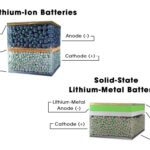
To understand degradation, we must look at the microscopic level. Inside a lithium-ion or solid state cell, lithium ions move between the anode and the cathode. Over time, several chemical side reactions occur:
- SEI Layer Growth: The Solid Electrolyte Interphase is a protective layer that forms on the anode. While necessary for stability, it thickens over time, consuming active lithium and increasing internal resistance.
- Lithium Plating: When a battery is charged too quickly or in cold temperatures, lithium ions can accumulate on the surface of the anode as metallic lithium. This permanently reduces the amount of “mobile” lithium available for energy storage.
- Mechanical Stress: The physical expansion and contraction of battery materials during charge cycles can cause microscopic cracks in the electrodes, leading to a loss of electrical contact.
The 2026 Battery Chemistry Breakdown
In 2026, the market is no longer dominated by a single “one size fits all” battery type. Your vehicle’s degradation profile depends heavily on which chemistry is under the floorboard.
Lithium Iron Phosphate (LFP)
LFP batteries have become the standard for entry-level and mid-range EVs. Their primary advantage is durability. LFP cells can often handle 3,000 to 5,000 full charge cycles before reaching 80% health. In 2026, these are the “million-mile” batteries that fleet operators prefer.
Nickel Manganese Cobalt (NMC)
High-performance and long-range vehicles still favor NMC chemistries due to their superior energy density. While they are more sensitive to high heat and frequent 100% charging than LFP, 2026 formulations have introduced silicon-carbon anodes that significantly mitigate these risks compared to 2022 models.
The Rise of Solid State Batteries (SSB)
2026 marks the first year where pilot fleets of solid state vehicles from brands like Toyota, Mercedes, and Chery are hitting the roads for public testing. These batteries replace the liquid electrolyte with a solid ceramic or polymer layer. The result is a battery that is virtually immune to the traditional causes of thermal runaway and has a vastly superior degradation profile, potentially lasting 25 years without meaningful loss of range.
Primary Factors Influencing Battery Health in 2026
Despite technological leaps, certain environmental and behavioral factors remain the primary drivers of degradation.
1. Thermal Management and Ambient Temperature
Heat remains the number one enemy of battery longevity. Modern 2026 EVs utilize advanced immersion cooling where cells are submerged in dielectric fluid to maintain an optimal temperature of 21.5 degrees Celsius (70 degrees Fahrenheit).
If you live in a hot climate (Phoenix, Dubai, or Mumbai), your battery management system (BMS) works overtime to cool the pack. Frequent exposure to temperatures above 35 degrees Celsius (95 degrees Fahrenheit) while the battery is at a high state of charge can accelerate chemical breakdown.
Conversely, extremely cold climates impact performance more than permanent health. However, charging a “frozen” battery can lead to the aforementioned lithium plating. This is why 2026 vehicles now come standard with “pre-conditioning” features that use energy from the grid to warm the battery before you even start your journey.
2. High Power DC Fast Charging (DCFC)
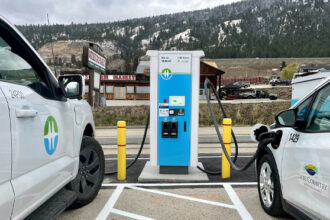
In 2026, 350kW and even 400kW chargers are common. While convenient for road trips, the high current generates internal heat and mechanical stress. Industry data suggests that cars used almost exclusively with DC fast charging may see 0.5% more annual degradation than those charged primarily at home with Level 2 AC power.
3. Depth of Discharge (DoD)
The “golden rule” of 2026 EV ownership remains the 20-80 rule. Keeping your battery between 20% and 80% state of charge minimizes voltage stress on the cells. While modern buffers mean that “100%” on your dashboard is rarely 100% of the actual physical capacity, staying in the middle of the range significantly extends the cycle life.
The Role of AI-Driven Battery Management Systems (BMS)
One of the biggest breakthroughs in 2026 is the integration of predictive AI within the vehicle’s BMS. Unlike older systems that reacted to temperature and voltage changes, current AI systems use “Digital Twins” in the cloud to simulate your battery’s health in real-time.
These systems can now:
- Identify a failing cell before it causes a pack-level issue.
- Optimize the charging curve based on your predicted driving habits for the day.
- Adjust thermal cooling strategies based on hyper-local weather forecasts.
- Increase the transparency of the “State of Health” (SOH) for easier resale valuation.
The Economics: Resale Value and Replacement Costs in 2026
For many, the fear of a 20,000 dollar bill for a new battery has been the primary barrier to EV adoption. In 2026, that narrative has changed.
Replacement Cost Projections
Thanks to the rapid decline in lithium prices and the rise of “Cell-to-Pack” (CTP) design, replacing a battery is more affordable than ever. A standard 75 kWh pack that cost 15,000 dollars in 2022 now costs approximately 6,000 to 8,000 dollars for a brand-new unit. Refurbished packs are available for as little as 4,000 dollars.
Resale Value and SOH Reports
In 2026, the “SOH Report” is the new odometer. Used car buyers now demand a certified battery health certificate. A vehicle with 92% SOH after five years will command a significant premium over a neglected vehicle at 85% SOH. This financial incentive is driving a new culture of “battery hygiene” among owners.
Daily Maintenance: How to Maximize Battery Life in 2026
If you want your EV battery to outlast the chassis of the car, follow these expert-vetted steps:
- Avoid the Extremes: Do not leave your car sitting for days at 0% or 100%. If you are going on vacation, leave it at 50%.
- Use Smart Charging: Set your vehicle to finish charging just before you plan to leave. This minimizes the time the battery spends at a high voltage.
- Prioritize Level 2 Charging: Save DC fast charging for long-distance travel. Your home charger is the healthiest way to “fuel” your car.
- Utilize Pre-conditioning: Use your app to warm or cool the battery while it is still plugged in. This uses wall power instead of battery power to achieve the optimal operating temperature.
- Slow Down: High-speed driving requires high-current discharge, which increases heat. Efficiency is the friend of longevity.
Future Outlook: 2027 and Beyond
Looking past 2026, the focus is shifting toward “Second Life” applications. Even when an EV battery degrades to 70% (making it less ideal for a car), it still has massive value for grid storage. Companies like Tesla and BYD are already implementing programs where old car batteries are repurposed to store solar energy for homes and businesses. This circular economy ensures that the “environmental cost” of a battery is spread over 30 or 40 years of total use.
Furthermore, the emergence of Sodium-ion batteries for ultra-budget vehicles promises a future where batteries are not only durable but also free from the geopolitical tensions surrounding cobalt and nickel.
Conclusion
EV battery degradation is no longer the “boogeyman” of the automotive industry. In 2026, we have the tools, the data, and the chemistry to ensure that electric vehicles are more durable than their gasoline predecessors. By understanding the simple science of heat and voltage, you can maintain a vehicle that stays efficient, powerful, and valuable for hundreds of thousands of miles.