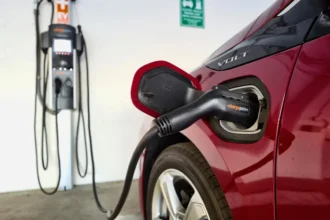

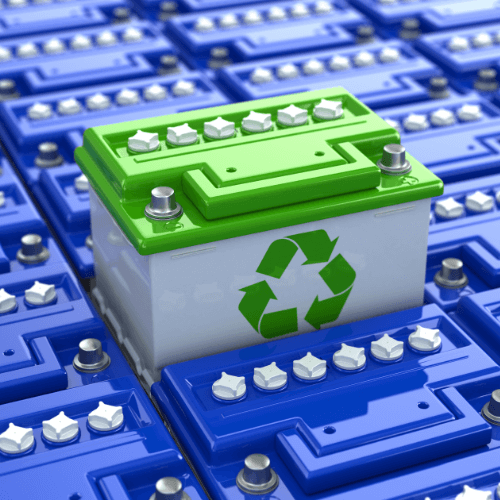
The global transition toward electric mobility is no longer a distant vision but a present reality. As we enter 2026, the focus has shifted from merely putting electric vehicles (EVs) on the road to managing the entire lifecycle of the batteries that power them. The sustainability of the EV industry now hinges on a robust circular economy where the end of a battery’s life in a vehicle marks the beginning of its journey as a secondary resource or a stationary energy storage unit.
The State of EV Battery Recycling in 2026
By 2026, the volume of retired EV batteries has reached a critical mass, necessitating industrial-scale solutions. The industry has moved beyond pilot projects to fully integrated recycling hubs capable of processing hundreds of thousands of tons of battery waste annually. This evolution is driven by the realization that the expensive components of lithium-ion batteries (LIBs), particularly the cathode active materials, make recycling more economically advantageous than traditional mining in many contexts (Man, 2024).
Technological Innovations in Recovery
The landscape of recycling technology in 2026 is dominated by three primary methodologies, each refined for maximum efficiency and minimum environmental footprint:
- Hydrometallurgical Processing: This method has emerged as a frontrunner due to its flexibility and ability to recover high-purity metals like lithium, cobalt, and nickel at temperatures generally below 100°C (Man, 2024). It uses chemical leaching to isolate metals from cathodes, offering a more environmentally friendly and energy-efficient alternative to older methods.
- Direct Recycling: Gaining significant traction in 2026, direct recycling focuses on recovering and reconditioning the cathode materials without breaking them down into their elemental components. This preserves the energy invested during the original manufacturing process.
- Advanced Pyrometallurgy: While traditional smelting was energy-intensive, 2026 versions of pyrometallurgy are often autogenous, utilizing the embedded chemical energy within the batteries themselves to reduce external energy demand and carbon emissions (ACS Publications, 2025).
Regulatory Landscape and the EU Battery Regulation
The regulatory environment has become a primary driver of sustainability in 2026. The European Union (EU) Battery Regulation, which began its phased implementation years earlier, now sets the global gold standard.
Mandatory Recovery Targets
Starting in 2026, the EU has set a stringent 90% recycling rate for key materials including cobalt, copper, nickel, and lead (Saari et al., 2024). These mandates ensure that valuable resources stay within the economic loop and do not end up in landfills. Furthermore, the regulation requires manufacturers to incorporate minimum levels of recycled content into new batteries, creating a guaranteed market for recycled materials.
The Digital Battery Passport
A cornerstone of 2026 sustainability is the “Battery Passport.” This digital traceability tool provides a transparent record of a battery’s entire journey (Saari et al., 2024). It includes:
- Chemical Composition: Precise details of the minerals used.
- Manufacturing History: Where and how the battery was produced.
- Environmental Footprint: The total carbon and water intensity of the unit.
- State of Health (SoH): Real-time data to determine if a battery is suited for recycling or a second-life application.
Second-Life Applications: Extending the Lifecycle
Not every battery removed from an EV in 2026 goes straight to the shredder. Many retain 70% to 80% of their original capacity, making them ideal for “second-life” uses.
Grid Stabilization and Renewable Storage
Repurposed EV batteries are increasingly used in Battery Energy Storage Systems (BESS) to stabilize power grids and store energy from intermittent renewable sources like solar and wind (Parvizi et al., 2025). This strategy effectively doubles the functional life of the battery, spreading its initial manufacturing carbon footprint over a much longer period.
Challenges in Battery Reuse
Despite the promise, second-life applications in 2026 face technical hurdles. Aged batteries, particularly those with nickel-manganese-cobalt (NMC) chemistries, show reduced thermal stability. For instance, the thermal runaway onset temperature can drop from 200–250°C in new cells to 150–200°C after significant cycling (MDPI, 2025). To combat this, the industry has adopted machine learning-based State of Health (SoH) prediction and robust thermal management systems to ensure safety in stationary storage environments.
Environmental Impact: Recycling vs. Mining
The environmental argument for recycling has become irrefutable by 2026. Lifecycle assessments (LCAs) indicate that recycling lithium-ion batteries into battery-grade materials can reduce greenhouse gas emissions by 58% to 81% compared to primary mining (MDPI, 2025).
| Resource Impact | Conventional Mining | Recycled Production |
| Energy Usage | 100% (Baseline) | 11% – 23% |
| Water Consumption | 100% (Baseline) | 12% – 28% |
| GHG Emissions | High | Reduced by 58–81% |
(Source: MDPI, 2025)
By minimizing the need for new mining, the industry is mitigating the social and ecological costs often associated with mineral extraction in sensitive regions. It is estimated that by 2040, recycling could meet 25% of lithium demand and 35% of cobalt and nickel demand (University of Technology Sydney, 2021).
The Economic Outlook for 2026
The global EV battery market is projected to reach approximately $93.9 billion in 2026 (Korea Science, 2023). This massive growth is accompanied by a decline in pack prices, with average prices expected to fall below $100/kWh in the 2026-2027 period (JRC, 2025). This price reduction is driven by:
- Improved Manufacturing Yields: Production rejects, once considered waste, are now efficiently captured for recycling or stationary use.
- Scale of Operations: Large-scale recycling facilities are lowering the per-unit cost of recovered materials.
- Technological Maturation: The TRL (Technology Readiness Level) of advanced recovery methods has reached commercial viability.
Looking Toward the Future: Next-Generation Chemistries
While lithium-ion remains dominant, 2026 is seeing the early stages of next-generation technologies. Solid-state batteries are moving toward commercialization, with major manufacturers like Toyota and Samsung SDI targeting mass production and commercial use between 2025 and 2027 (Korea Science, 2023). These new chemistries will require further innovation in recycling processes to handle solid electrolytes, but the groundwork laid by current circular economy practices provides a strong foundation.
Conclusion
The year 2026 represents a turning point where sustainability in the EV sector has moved from a goal to a regulated requirement. Through the combination of advanced hydrometallurgical recycling, the implementation of digital battery passports, and the growth of second-life storage markets, the industry is successfully decoupling growth from environmental degradation.
For those tracking the industry, the focus remains on scaling these technologies and harmonizing global policies to ensure that every battery produced contributes to a truly sustainable energy future.
References
- ACS Publications. (2025). Life Cycle Assessment of Lithium-Ion Battery Recycling: Evaluating the Impact of Recycling Methods and Location. Environmental Science & Technology. https://pubs.acs.org/doi/10.1021/acs.est.4c13838
- JRC Publications Repository. (2025). Battery Technology in the European Union. https://publications.jrc.ec.europa.eu/repository/bitstream/JRC139392/JRC139392_01.pdf
- Korea Science. (2023). Techno-economic Analysis on the Present and Future of Secondary Battery Market for Electric Vehicles and ESS. Journal of the Korea Academia-Industrial cooperation Society. https://koreascience.kr/article/JAKO202326257659057.page
- Man, G. T. (2024). Recycling Lithium-Ion Batteries—Technologies, Environmental, Human Health, and Economic Issues—Mini-Systematic Literature Review. Membranes, 14(12), 277. https://doi.org/10.3390/membranes14120277
- MDPI. (2025). Progress, Challenges and Opportunities in Recycling Electric Vehicle Batteries: A Systematic Review Article. Batteries, 11(6), 230. https://doi.org/10.3390/2313-0105/11/6/230
- Parvizi, P. (2025). From Present Innovations to Future Potential: The Promising Journey of Lithium-Ion Batteries. Micromachines, 16(2), 194. https://doi.org/10.3390/mi16020194
- Saari, et al. (2024). Circular economy strategies driving innovation of electric vehicle batteries. University of Lapland. https://lacris.ulapland.fi/ws/portalfiles/portal/43108526/ISPIM_Osaka_2024_Saari_et_al._Final.pdf
- University of Technology Sydney. (2021). Reducing new mining for electric vehicle battery metals: responsible sourcing through demand reduction strategies and recycling. https://www.uts.edu.au/globalassets/sites/default/files/2021-04/20210423_ew-report-final.pdf