

The landscape of electric vehicle ownership has shifted dramatically as we move into 2026. While early adopters once feared the “ticking time bomb” of an expensive battery replacement, the reality today is far more nuanced. Advances in cell chemistry, massive scaling in manufacturing, and a robust secondary market for refurbished packs have redefined the financial math of EV maintenance. For anyone considering a new purchase or managing an aging fleet, understanding the granular details of battery replacement costs is now a critical part of financial planning.
- The Current Market Landscape and Price Per Kilowatt-Hour
- Lithium Prices and Global Supply Chain Dynamics
- Breakdown of Replacement Costs by Popular Models
- Labor Costs: Why Specialized Technicians Charge a Premium
- Understanding Battery Degradation Factors
- Solid-State vs. LFP vs. NMC: The Chemistry That Dictates Price
- Financial Incentives and the Inflation Reduction Act (IRA)
- Second-Life Value and Recycling Credits
- Strategies for Prolonging Battery Health
- The Road Ahead for Electric Vehicle Ownership
The Current Market Landscape and Price Per Kilowatt-Hour
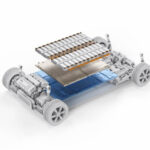
As of late December 2025, the global average cost for an EV battery pack has settled near $105 per kilowatt-hour (kWh). This represents a monumental decline from the $1,500 per kWh seen in 2010 and a steady improvement over the $108 per kWh average from last year. This downward trend is driven by two primary forces: the overcapacity of manufacturing in China and the rapid adoption of Lithium Iron Phosphate (LFP) chemistry in entry-level and mid-range vehicles.
LFP batteries are significantly cheaper to produce than their Nickel Manganese Cobalt (NMC) counterparts because they do not require expensive minerals like cobalt and nickel. In 2026, we are seeing LFP pack prices in China dip as low as $84 per kWh, though prices in North America and Europe remain roughly 40% to 50% higher due to logistical costs and regional supply chain constraints.
For a standard 75 kWh battery pack, which is common in vehicles like the Tesla Model 3 or the Hyundai Ioniq 6, the raw pack cost now sits between $7,500 and $8,200. However, this is just the cost of the hardware. When you factor in the manufacturer’s markup, shipping, and specialized diagnostic equipment, the consumer’s out-of-pocket expense often ranges higher.
Lithium Prices and Global Supply Chain Dynamics
The price of lithium carbonate has been the most volatile variable in the battery equation. After reaching historic lows in mid-2025, lithium prices have begun a modest recovery as of December 2025. This resurgence is fueled by the massive build-out of Battery Energy Storage Systems (BESS) for the power grid, which now competes directly with the automotive sector for raw materials.
Supply chain experts predict that 2026 will be a year of price stabilization. The “wild west” era of lithium pricing is largely over, replaced by long-term contracts and strategic stockpiling by major automakers like Ford, GM, and Volkswagen. This stability is good news for consumers, as it prevents the sudden spikes in replacement quotes that plagued the industry a few years ago.
Furthermore, the emergence of “battery passports” in the European Union has created a more transparent market. These digital records track the origin of minerals and the health of the battery throughout its life, making it easier for third-party repair shops to verify the quality of a used or refurbished pack before installation.
Breakdown of Replacement Costs by Popular Models
Not all batteries are created equal, and the cost to replace one varies wildly depending on the vehicle’s architecture and the manufacturer’s service philosophy.
Tesla Model 3 and Model Y
Tesla remains the benchmark for EV service efficiency. In 2026, a brand-new 75 kWh battery pack for a Model 3 or Model Y typically costs between $10,000 and $13,000 when ordered through an official Service Center. This price includes the battery itself and the necessary hardware updates.
For those looking to save money, the refurbished market has matured significantly. Companies like Greentec Auto and various local specialists now offer remanufactured Tesla packs for $7,000 to $9,000. These packs often come with a 3-year or 50,000-mile warranty, providing a middle ground for owners of older vehicles that are out of the original 8-year factory warranty.
Ford F-150 Lightning and the Pickup Segment
Replacing the battery in a large electric truck is a far more substantial undertaking. The Ford F-150 Lightning features massive battery packs: 98 kWh for the standard range and 131 kWh for the extended range. Due to the sheer size and the complexity of the liquid-cooling system integrated into the chassis, replacement costs for an extended-range Lightning battery in 2026 can range from $22,000 to $28,000.
These high costs are a reflection of the specialized labor required. The battery in a Lightning is a structural component of the frame, requiring heavy-duty lifts and a team of certified technicians to perform the swap safely. Owners of these vehicles often rely on comprehensive insurance policies to cover battery damage from road debris, as an out-of-pocket replacement is comparable to the cost of a small luxury car.
Nissan Leaf and Legacy EV Maintenance
The Nissan Leaf remains a unique case in the 2026 market. As one of the earliest mass-market EVs, there is a huge demand for replacement packs for older 24 kWh and 40 kWh models. Because the Leaf uses an air-cooled battery design (which is prone to faster degradation in hot climates), a vibrant third-party industry has emerged.
A new 40 kWh Leaf battery from a dealer might cost around $8,000, but the real value is found in “battery upgrades.” Specialists can now retro-fit older Leafs with 62 kWh packs from newer salvaged vehicles for roughly $10,000, effectively doubling the range of a decade-old car and making it more useful than when it was new.
Labor Costs: Why Specialized Technicians Charge a Premium
One of the most overlooked aspects of battery replacement is the labor. This is not a standard “unbolt and replace” procedure. In 2026, labor rates for EV-certified technicians range from $180 to $250 per hour. A full battery swap typically takes between 6 and 12 hours of active labor.
The process involves several critical steps:
- High-voltage system deactivation and safety verification.
- Draining and vacuum-sealing the liquid cooling loops.
- Dropping the battery pack using specialized hydraulic lifts.
- Transferring peripheral components (like the onboard charger or DC-DC converter) if they are not integrated into the new pack.
- Programming the vehicle’s Battery Management System (BMS) to recognize the new cells and balance the voltages.
Because of the high voltages involved (often 400V or 800V), shops must invest in safety gear, insulated tools, and rigorous training. These overhead costs are passed on to the consumer, adding anywhere from $1,500 to $3,000 to the total bill.
Understanding Battery Degradation Factors
Why do batteries need replacement in the first place? In 2026, we have a much better understanding of the variables that kill battery health. Most modern EV batteries are designed to last between 150,000 and 200,000 miles before dropping below 70% of their original capacity (the industry standard for “end of life” in a vehicle).
The primary enemies of battery longevity are:
- Heat: Sustained high temperatures during fast charging or driving in desert climates accelerate the chemical breakdown of the electrolyte.
- State of Charge (SoC): Leaving a battery at 100% or 0% for long periods causes mechanical stress on the cathode and anode.
- Cycle Count: Every full charge and discharge cycle slightly wears down the lithium ions.
Interestingly, 2026 has seen the rise of “Battery Health Certificates” during used car sales. Similar to a Carfax report, these documents provide a deep-dive analysis of the battery’s internal resistance and capacity fade, allowing buyers to negotiate prices based on the remaining life of the cells.
Solid-State vs. LFP vs. NMC: The Chemistry That Dictates Price
The year 2026 marks the beginning of the “Three-Tier Battery Market.”
- LFP (Lithium Iron Phosphate): These are the workhorses. They are heavy and have lower energy density but are incredibly durable, often lasting 3,000+ charge cycles. They are the cheapest to replace.
- NMC (Nickel Manganese Cobalt): Found in long-range and high-performance vehicles. They offer great range but are more expensive and have a slightly shorter lifespan than LFP.
- Solid-State Batteries: In 2026, we are seeing the first limited-run production vehicles featuring solid-state cells from manufacturers like Toyota and Samsung. These batteries replace the liquid electrolyte with a solid material, offering nearly double the energy density and much faster charging. However, as of today, a replacement solid-state pack is prohibitively expensive, likely exceeding $35,000, and is currently restricted to ultra-luxury models.
Financial Incentives and the Inflation Reduction Act (IRA)
The regulatory environment in 2026 continues to support EV maintenance through various incentives. In the United States, the Inflation Reduction Act has evolved to include credits for “remanufactured” components. While the initial $7,500 tax credit is for new vehicle purchases, certain states have introduced “Right to Repair” subsidies that provide tax breaks for consumers who choose to repair an existing EV rather than scrap it.
In the European Union, the “Battery Directive” now requires manufacturers to provide easy access to battery health data and ensures that batteries are designed for “disassembly and repair.” This has forced automakers to move away from glued-in battery cells and toward modular designs where individual bad modules can be replaced for $2,000 to $4,000 instead of replacing the entire $12,000 pack.
Second-Life Value and Recycling Credits
A “dead” EV battery is still incredibly valuable. Even when a pack only has 70% capacity remaining, it is no longer ideal for a car but is perfect for stationary energy storage. In 2026, a “Second-Life” market has matured where homeowners and utility companies buy used EV packs to store solar energy.
When you replace your battery at a certified shop, you often receive a “core credit” for your old pack. Depending on the condition, this credit can range from $1,000 to $3,000. The shop then sells the old pack to a recycler or a second-life integrator.
For packs that are truly beyond repair, recycling companies like Redwood Materials and Li-Cycle have achieved a 95% recovery rate for critical materials. These recycled minerals are then fed back into the supply chain, which is a major reason why battery prices are expected to continue their slow decline through the end of the decade.
Strategies for Prolonging Battery Health
To avoid the high costs of replacement, savvy EV owners in 2026 are following strict “Battery Hygiene” protocols:
- Limit DC Fast Charging: Use Level 2 home charging for 90% of your needs. Only use high-speed chargers on road trips.
- The 20-80 Rule: Keep your battery between 20% and 80% charge for daily use. Modern software allows you to set this limit easily.
- Pre-conditioning: Always use the car’s navigation to “pre-condition” the battery before fast charging in winter. This warms the cells to the optimal temperature, reducing the internal stress during the high-current intake.
- Avoid “Vampire Drain”: If you are parking the car for a week or more, ensure it is at roughly 50% charge and, if possible, in a climate-controlled environment.
The Road Ahead for Electric Vehicle Ownership
Looking toward the late 2020s, the concept of a “battery replacement” will likely become as routine and predictable as a transmission rebuild was for gasoline cars in the 1990s. With the average age of an EV on the road increasing, the infrastructure for repairs is catching up to the technology.
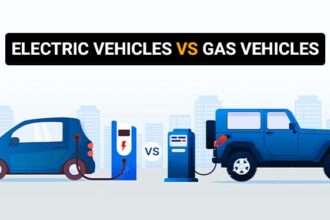
The total cost of ownership for an EV in 2026, even when factoring in a potential battery replacement after 10 years, is now significantly lower than a comparable internal combustion vehicle. When you subtract the thousands of dollars saved on gasoline, oil changes, and brake pads over a decade, the $10,000 battery “bill” becomes much easier to swallow.
For the most up-to-date daily pricing on specific modules and regional labor rates, it is always best to consult with a local high-voltage specialist. The market is moving fast, and today’s quote may be different by the time your vehicle reaches its 200,000-mile milestone.
Sources and Further Reading: