
The transition toward electric mobility is no longer a distant ambition. It is a massive global industrial shift that is reshaping the very foundations of urban planning and energy consumption. As we stand in late 2025, the momentum behind electric vehicle (EV) adoption has reached a point of no return. However, the success of this transition hinges on one critical factor: the availability and reliability of charging infrastructure. This forecast explores the comprehensive roadmap for EV charging network coverage in 2030, examining the technological, economic, and geopolitical forces that will define the next five years.
- The Global Infrastructure Landscape in 2025
- China: The Uncontested Leader of the 2030 Horizon
- North America: The NEVI Effect and Market Maturity
- Europe: Regulatory Mandates and High-Power Corridors
- Emerging Markets: The Next Frontier
- The Technological Evolution of 2030
- The Economic Impact: A $125 Billion Market
- Critical Challenges on the Road to 2030
- Year-by-Year Predictions: 2026 to 2030
- Summary of Regional Targets for 2030
- Actionable Insights for Investors and Developers
- Conclusion: A Seamlessly Connected World
The Global Infrastructure Landscape in 2025
To understand 2030, we must first look at where we are today. As of December 2025, the global EV fleet has surpassed 60 million vehicles. Public charging capacity has grown exponentially, yet it remains unevenly distributed. While major urban hubs in China, Europe, and parts of North America enjoy dense networks, rural corridors and emerging economies are still in the early stages of deployment.
The year 2025 has been a pivotal one for standardization. In the United States, the broad adoption of the North American Charging Standard (NACS) has simplified the user experience, while in Europe, the Alternative Fuels Infrastructure Regulation (AFIR) has begun to mandate minimum charging capacities along major motorways. These foundational steps are the building blocks for the massive expansion projected for the next half decade.
China: The Uncontested Leader of the 2030 Horizon
China continues to set the pace for the rest of the world. By 2030, the Chinese EV charging network will be the most sophisticated and dense infrastructure project in human history.
Scale and Ambition
The Chinese government has unveiled a strategic plan to establish a nationwide network of 28 million charging facilities by 2027. By 2030, this number is expected to exceed 40 million units. This infrastructure is designed to support a fleet of over 80 million electric vehicles. The density of coverage in major metropolitan areas like Beijing, Shanghai, and Shenzhen will be such that a driver is never more than a few minutes away from a high-speed charger.
Technological Prowess
China is not just building more chargers; they are building faster ones. The adoption of the ChaoJi charging standard and the deployment of 900 kW ultra-fast liquid-cooled chargers mean that 2030 will see five-minute charging sessions become the norm. Furthermore, China is the world leader in battery swapping technology. Companies like NIO and CATL are projected to operate over 10,000 swapping stations by 2030, providing a seamless “refueling” experience that rivals traditional gasoline stations.
North America: The NEVI Effect and Market Maturity
In North America, the forecast for 2030 is defined by the successful execution of the National Electric Vehicle Infrastructure (NEVI) Formula Program.
Federal Funding and the 500,000 Charger Goal
The $5 billion NEVI program, a cornerstone of the 2021 Infrastructure Investment and Jobs Act, is now in full swing. By 2030, the United States will have achieved its goal of a nationwide network of at least 500,000 public chargers. These stations are strategically placed every 50 miles along designated Alternative Fuel Corridors. This ensures that long-distance travel across the American heartland is no longer a logistical challenge for EV owners.
The Role of Private Enterprise
While federal funding provided the spark, private investment has become the primary driver. Major retailers, hotel chains, and real estate developers have integrated EV charging into their business models. By 2030, Level 2 charging will be a standard amenity in most commercial parking lots. Simultaneously, the Tesla Supercharger network, now open to all NACS-compatible vehicles, continues to expand, maintaining its reputation for high uptime and reliability.
Europe: Regulatory Mandates and High-Power Corridors
Europe’s path to 2030 is guided by the most stringent environmental regulations in the world. The European Union’s Fit for 55 package mandates a 100% reduction in CO2 emissions from new cars by 2035, making the 2030 infrastructure targets non-negotiable.
The AFIR Framework
The Alternative Fuels Infrastructure Regulation (AFIR) requires EU member states to ensure that for every battery electric vehicle registered, a minimum power output of 1.3 kW is provided through public charging infrastructure. By 2030, Europe is projected to have between 3.5 million and 8.8 million public charging points. The disparity in these estimates depends on whether countries meet the minimum requirements or follow the more aggressive “demand-driving” scenarios proposed by industry associations like the ACEA.
Heavy-Duty Transport Electrification
One of the most significant developments in the European 2030 forecast is the electrification of long-haul trucking. High-power charging hubs specifically designed for heavy-duty vehicles will be situated every 60 to 100 kilometers along the Trans-European Transport Network (TEN-T). These hubs, featuring Megawatt Charging Systems (MCS), will allow truck drivers to recharge their vehicles during mandatory rest periods.
Emerging Markets: The Next Frontier
The 2030 forecast highlights a massive surge in infrastructure growth across India, Southeast Asia, and Latin America.
India’s Fourfold Expansion
India has seen a remarkable transformation between 2023 and 2025, with public charging stations increasing fourfold. By 2030, the Indian government’s PM E-Drive scheme aims to deploy 72,000 public chargers. The focus in India is unique, with a heavy emphasis on two and three-wheeled vehicles, which make up the bulk of the country’s electric transition.
Southeast Asian Hubs
Thailand, Vietnam, and Indonesia are positioning themselves as regional EV hubs. By 2030, these nations will have established robust charging networks, supported by both local government incentives and international investments from major automakers looking to capture these growing markets.
The Technological Evolution of 2030
The chargers of 2030 will look and function very differently from the units we see today. The focus has shifted from simple power delivery to intelligent energy management.
Ultra-Fast and Megawatt Charging
By 2030, the distinction between “fast” and “ultra-fast” will have shifted. Standard public DC chargers will routinely offer 150 kW to 350 kW of power. For the heavy-duty sector, Megawatt Charging Systems (MCS) capable of delivering over 1,000 kW will be the standard. These advancements reduce charging times to less than 20 minutes for passenger cars and 30 to 45 minutes for large trucks.
Vehicle-to-Grid (V2G) Integration
One of the most transformative technologies in the 2030 landscape is Vehicle-to-Grid (V2G). By the end of the decade, millions of EVs will act as mobile batteries for the power grid. During periods of high demand, EVs can feed energy back into the grid, helping to stabilize it and prevent blackouts. For owners, this creates a new revenue stream, as utility companies pay for the use of their vehicle’s battery capacity.
Wireless Inductive Charging
While still a premium feature in 2025, wireless inductive charging will have gained significant market share by 2030. This technology allows a vehicle to charge simply by parking over a pad, removing the need for physical cables. It will be widely deployed in luxury residential complexes, high-end corporate offices, and automated taxi fleets.
The Economic Impact: A $125 Billion Market
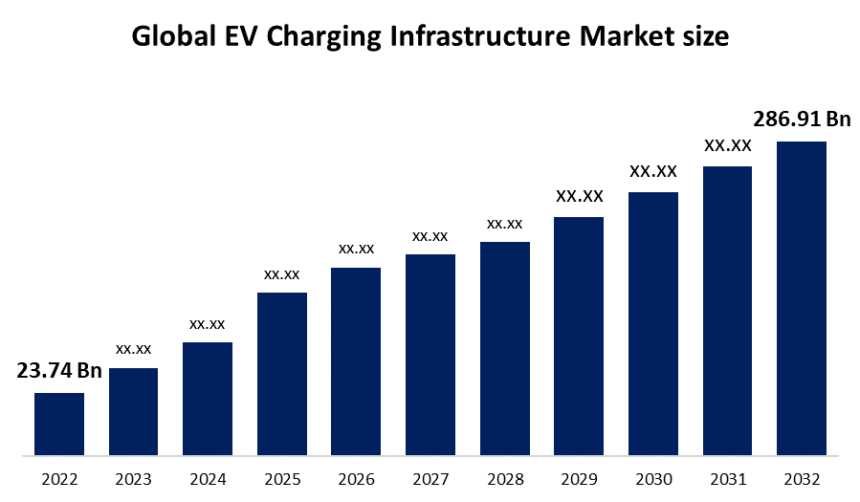
The global EV charging infrastructure market is projected to reach approximately $125 billion by 2030. This represents a compound annual growth rate (CAGR) of over 25%.
Investment Trends
Investors are increasingly viewing EV charging as a long-term infrastructure asset, similar to toll roads or telecommunications towers. Public-private partnerships (PPP) are the preferred vehicle for large-scale deployments, allowing governments to leverage private capital while ensuring public access.
Revenue Diversification
For charging point operators (CPOs), the business model has evolved beyond selling electrons. In 2030, revenue is generated through a mix of charging fees, advertising on digital displays, data analytics, and “retail synergies.” For example, a charging hub located at a shopping center drives foot traffic and increases “dwell time,” benefiting the surrounding businesses.
Critical Challenges on the Road to 2030
Despite the optimistic forecast, several hurdles remain that stakeholders must navigate to reach the 2030 targets.
Grid Resilience and Energy Demand
The massive influx of EVs will place unprecedented stress on aging electrical grids. By 2030, global electricity demand from EVs is expected to increase more than twofold. Utilities must invest heavily in grid modernization, including upgraded transformers, substations, and the integration of large-scale battery storage to manage peak loads.
Urban Density and “Charging Deserts”
In dense urban environments, many residents do not have access to private parking. This creates “charging deserts” where EV ownership is difficult. The 2030 solution involves the deployment of “curbside” charging integrated into streetlights and the creation of high-density “charging hubs” in multi-story parking garages.
Standardization and Interoperability
While NACS has become a de facto standard in North America, global interoperability remains a challenge. Ensuring that a driver can travel across borders and use different charging networks with a single payment method is crucial. The widespread adoption of the Open Charge Point Protocol (OCPP) is helping to bridge these gaps, but regulatory oversight is still needed.
Year-by-Year Predictions: 2026 to 2030
- 2026: The first Megawatt Charging Systems go live along major freight corridors in Europe and the US.
- 2027: China achieves its goal of 28 million charging facilities, effectively eliminating range anxiety in its eastern provinces.
- 2028: V2G technology becomes a standard feature in over 50% of new electric vehicles sold globally.
- 2029: Road transport oil demand peaks as the global EV fleet displaces millions of barrels of oil per day.
- 2030: The global public charging network reaches a milestone of 11 million units, supported by over 150 million private home and workplace chargers.
Summary of Regional Targets for 2030
| Region | Projected Public Chargers (2030) | Key Drivers |
| China | 12,000,000+ | Government mandates, Battery Swapping, Ultra-fast tech |
| European Union | 3,500,000 – 8,800,000 | AFIR Regulation, Fit for 55, Green Deal |
| United States | 500,000+ | NEVI Funding, NACS Adoption, Fleet Electrification |
| India | 72,000+ | Two-wheeler market, PM E-Drive Scheme |
Actionable Insights for Investors and Developers
The transition to 2030 offers a generational opportunity for those involved in energy and infrastructure.
- Focus on High-Power Hubs: The market is shifting from slow Level 2 charging to ultra-fast DC charging. Investing in locations along high-traffic corridors offers the highest utilization rates.
- Integrate Renewables: Charging stations powered by on-site solar and battery storage are more resilient and have lower long-term operational costs.
- Prioritize Software: The “user experience” is defined by software. Reliable apps, transparent pricing, and seamless payment integration are what will win customer loyalty.
- Explore Fleet Opportunities: Commercial fleets (delivery vans, buses, taxis) represent a massive and predictable source of demand for dedicated charging infrastructure.
Conclusion: A Seamlessly Connected World
By 2030, the “EV charging problem” will largely be solved in developed and leading emerging markets. Charging will be integrated into the fabric of daily life, occurring naturally while we sleep, work, shop, or travel. The forecast indicates a world where range anxiety is a relic of the past, replaced by a sophisticated, data-driven energy network that powers the global economy cleanly and efficiently.
The road to 2030 is paved with billions in investment and groundbreaking innovation. As the charging network expands, it will not only support the vehicles of the future but also act as a catalyst for a more resilient and sustainable global energy system.