
As we navigate the winter of 2026, the global shift toward electric mobility has reached an unprecedented scale. With electric vehicles (EVs) now making up nearly 27 percent of new car sales globally, the conversation has moved from “will they work” to “how do we maximize their performance.” One of the most persistent topics for drivers in northern climates remains the phenomenon of winter range loss. In 2026, despite massive leaps in solid state battery technology and thermal management, physics still dictates that cold weather impacts energy efficiency.
- The Science of Battery Chemistry in 2026
- The 2026 Revolution: Solid State Batteries in the Cold
- Thermal Management: The Role of Heat Pumps and Waste Heat
- Aerodynamics and Mechanical Friction in Winter
- Financial and Economic Implications of Winter Range Loss
- Practical Strategies for 2026 EV Owners
- The Future: Looking Toward 2027 and Beyond
- Sources and Further Reading
- Summary of 2026 Winter EV Performance Data
This comprehensive guide explores the multifaceted reasons why your EV range might drop when the mercury falls. We will look at the latest 2026 battery chemistries, the role of advanced heat pumps, and the economic implications for vehicle insurance and resale value.
The Science of Battery Chemistry in 2026
To understand why range drops, we must first look at what happens inside the battery cells. Most electric vehicles on the road today still utilize variations of lithium-ion chemistry, though 2026 has seen the first wave of commercial solid state batteries hitting the mass market.
Ion Mobility and Internal Resistance
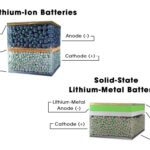
The core of an EV battery is a chemical reaction. In a standard lithium-ion cell, ions move through a liquid electrolyte between the anode and the cathode. When the temperature drops, this liquid electrolyte becomes more viscous, similar to how motor oil thickens in a traditional engine. This increased viscosity slows down the movement of ions, which increases internal resistance.
High internal resistance means the battery has to work harder to push the same amount of current. In practical terms, this means that even if the battery has a full charge, it cannot release that energy as efficiently. This is why you might notice a sudden drop in available “miles” on your dashboard even before you have driven a single block.
Chemical Kinetics at Low Temperatures
Beyond just the thickness of the electrolyte, the chemical reactions themselves slow down. This is governed by the Arrhenius equation, which describes how reaction rates change with temperature. In 2026, battery management systems (BMS) have become incredibly sophisticated at predicting these curves, but they cannot bypass the laws of thermodynamics. As of today, December 28, 2025, leading data from organizations like the International Energy Agency (IEA) shows that even the most advanced 2026 models can see a 15 to 20 percent reduction in range purely due to chemical sluggishness when temperatures hit freezing.
The 2026 Revolution: Solid State Batteries in the Cold
The biggest story of 2026 is the commercial debut of solid state batteries (SSBs). Unlike traditional batteries, SSBs use a solid electrolyte. Manufacturers like SAIC and Dongfeng have officially launched models in late 2025 and early 2026 that claim a low-temperature capacity retention of over 90 percent.
Why Solid State Wins in Winter
Solid state batteries do not suffer from the same viscosity issues as liquid electrolytes. Because the ions move through a solid medium, the performance remains much more stable across a wider temperature range. According to recent technical reports from SAE International, the 2026 solid state packs from Toyota and Stellantis can operate efficiently down to minus 30 degrees Celsius. This technology is currently the “holy grail” for EV insurance companies and fleet managers who require predictable range year round.
The Impact on High Voltage Architectures
In 2026, we have seen a massive transition toward 800V and even 1200V electrical architectures. While these systems allow for ultra-fast charging, they are also more sensitive to thermal extremes. A cold battery cannot accept high power levels without risking damage to the cells. Therefore, even if you are at a 400kW ultra-fast charger in December, your car may limit the intake to protect the battery until it reaches an optimal temperature.
Thermal Management: The Role of Heat Pumps and Waste Heat
One of the most significant energy drains in winter is not the motor: it is the cabin heater. In a traditional internal combustion vehicle, the engine generates an enormous amount of waste heat which is simply diverted into the cabin. Electric motors are too efficient to produce this kind of “free” heat.
Advanced Heat Pump Technology 2026
By 2026, heat pumps have become standard on almost every new EV, from the affordable Renault Twingo E-Tech to the premium Mercedes C-Class electric. A heat pump works like a refrigerator in reverse, moving heat from the outside air (even when it is cold) into the vehicle.
The efficiency of a heat pump is measured by its Coefficient of Performance (COP). At moderate temperatures, a 2026 heat pump might have a COP of 3.0, meaning it produces three units of heat for every one unit of electricity used. However, as the temperature drops toward minus 10 degrees Celsius, the COP often falls toward 1.0, making it no more efficient than a standard resistive heater.
Waste Heat Recovery Systems
The 2026 BMW iX3 Neue Klasse and the Audi A2 e-tron have introduced a second generation of waste heat recovery. These systems scavenge tiny amounts of heat from the power electronics, the electric motor, and the battery itself to supplement the heat pump. This “thermal loop” is critical for maintaining range. Drivers who utilize “Pre-conditioning” while the car is still plugged into a home charger can save up to 15 percent of their battery capacity by using grid power to warm the systems before departure.
Aerodynamics and Mechanical Friction in Winter
It is a common misconception that the battery is the only culprit for range loss. The physical environment of winter creates several other hurdles that increase the “cost of travel” for an EV.
Denser Air and Aerodynamic Drag
Cold air is denser than warm air. This means that at highway speeds, the car has to push through “thicker” air, which significantly increases aerodynamic drag. For a streamlined car like the Tesla Model 3 Long Range or the Hyundai Ioniq 3, the increased drag at 70 mph can account for a 5 to 7 percent drop in range on a cold day compared to a summer day.
Rolling Resistance and Winter Tires
The rubber compounds in tires harden in the cold, which increases rolling resistance. Furthermore, many EV owners switch to winter tires in late 2025. While essential for safety, winter tires often have deeper treads and softer compounds that are less aerodynamic and create more friction. Data from recent 2026 tire tests suggests that the combination of cold air and winter tires can sap an additional 10 percent of range compared to low resistance summer tires.
Financial and Economic Implications of Winter Range Loss
The performance of an EV in the cold has direct financial consequences for owners, particularly regarding insurance and resale value. In 2026, the market for “Used EVs” has matured, and buyers are now paying close attention to battery health reports.
EV Insurance and Risk Assessment
Insurance companies are increasingly using telematics to monitor how vehicles perform in extreme conditions. A vehicle that maintains its range well in the winter is seen as less of a risk for “stranding incidents,” which can lower premium costs. Models equipped with 2026 solid state tech or advanced thermal management are currently seeing more favorable insurance quotes because of their reliability in harsh climates.
Resale Value and Battery Longevity
The way a driver manages their battery in the winter affects the long term health of the pack. Repeatedly fast-charging a “frozen” battery can lead to lithium plating, which permanently degrades capacity. In 2026, savvy buyers look for vehicles with a documented history of pre-conditioning. This data is often accessible via the vehicle’s digital logbook and is a primary factor in determining the car’s resale value in the secondary market.
Practical Strategies for 2026 EV Owners
To mitigate the effects of the cold, drivers can adopt several high efficiency habits that have become standard practice in the 2026 EV community.
- Utilize Eco Modes: Most 2026 models feature a dedicated “Winter” or “Eco” mode that softens throttle response and optimizes the climate control system to preserve energy.
- Prioritize Surface Heating: Using heated seats and steering wheels is far more energy efficient than heating the entire cabin volume. These features use conductive heat, which requires much less wattage than the HVAC blower.
- Home Charging Integration: As of late December 2025, there are over 86,000 public chargers in the UK and millions globally. However, the most efficient way to handle winter is “smart” home charging. Setting your departure time in your car’s app ensures the battery is chemically active and warm by the time you start your commute.
- Monitor Tire Pressure: Cold weather causes air to contract, leading to under-inflated tires. Checking your pressure weekly during winter can claw back 3 to 5 percent of lost range.
The Future: Looking Toward 2027 and Beyond
The challenges of 2026 are already being met with innovations scheduled for 2027. We are seeing the development of “self-heating” battery cells and new cabin glass coatings that reflect heat back into the interior. While the physics of cold weather will always present a challenge, the gap between summer and winter performance is narrowing every year.
Sources and Further Reading
For those looking to dive deeper into the technical data and real-time trends of 2026 electric mobility, the following resources provide daily updates and peer-reviewed studies:
- Electrek: For daily news on 2026 model launches and battery breakthroughs.
- InsideEVs: Detailed winter range testing and comparisons of 2025 and 2026 vehicles.
- IEA (International Energy Agency): Global EV outlook and energy efficiency reports for 2026.
- SAE International: Technical papers on solid state battery thermal stability.
- Recurrent Auto: Live daily data on battery degradation and winter range retention.
Summary of 2026 Winter EV Performance Data
To give a clear overview of where we stand at the end of 2025, here is a breakdown of average range retention by technology type in freezing conditions.
| Technology Type | Average Range Retention (at 0°C) | Key Advantage |
| Standard Li-Ion (No Heat Pump) | 65% – 70% | Lower initial purchase cost |
| Standard Li-Ion (With Heat Pump) | 75% – 82% | Improved cabin efficiency |
| 2026 Solid State Battery | 90% – 94% | Superior ion mobility in cold |
| 800V Architecture (Pre-conditioned) | 80% – 85% | Faster winter charging speeds |
The move to electric is not just about the car: it is about understanding the ecosystem. By leveraging the technology available in 2026, from AI-powered route planning to solid state chemistry, drivers can ensure that their winter travels are as efficient and cost effective as their summer adventures.