
The technological landscape of 2026 has ushered in a new era of power management where the lines between convenience and longevity are more defined than ever before. For anyone navigating the world of high end smartphones, premium electric vehicles, or sophisticated wearable tech, the debate between fast charging and slow charging is no longer just a matter of minutes. It is a matter of asset preservation, chemical stability, and environmental responsibility. As we look at the latest hardware releases and the integration of artificial intelligence into our daily power cycles, understanding the nuances of how we fuel our devices has become a critical skill for the modern consumer.
- The State of Power in 2026
- The Mechanics of Fast Charging in 2026
- The Renaissance of Slow Charging
- Solid State Batteries: The 2026 Game Changer
- AI and Smart Charging: The Invisible Protector
- The NACS Standard and Global Infrastructure
- Comparing the Two: A 2026 Perspective
- Best Practices for Battery Health in 2026
- The Future Beyond 2026
The State of Power in 2026
In the current year, we have seen the widespread adoption of 240W charging for mobile devices and the first commercial rollout of solid state batteries in high performance electric vehicles. Companies like CATL and BYD have pushed the boundaries of what was previously thought possible, with charging platforms capable of adding 500 kilometers of range in less than five minutes. However, this blistering speed comes with a hidden dialogue between the charger and the battery cells. The primary focus for top tier tech users in 2026 is no longer just how fast a device can reach one hundred percent, but how much of the battery’s original capacity can be retained after two or three years of heavy use.
The emergence of Gallium Nitride (GaN) as the industry standard for semiconductors in charging bricks has significantly reduced heat waste, but it has not entirely eliminated the thermal challenges associated with high wattage energy transfer. Whether you are plugging in a flagship smartphone or a long range SUV, the physics of ion movement remains the central hurdle.
The Mechanics of Fast Charging in 2026
Fast charging in 2026 operates on a sophisticated curve rather than a linear path. When you connect a high wattage charger to a compatible device, the system enters a high energy phase. This is where the battery is at its lowest state of charge, usually between zero and fifty percent. During this window, the internal resistance is low, allowing a massive influx of current without immediate damage to the anode or cathode.
The Rise of 240W and Megawatt Platforms
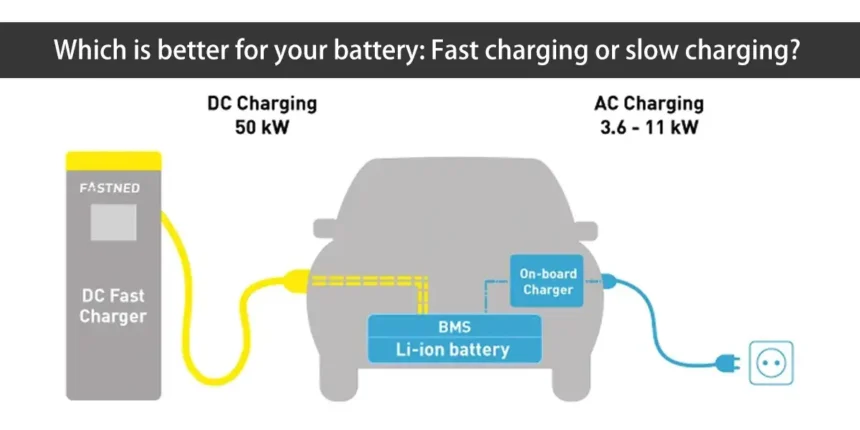
In the smartphone sector, we are seeing the peak of the 240W standard. This allows for a full charge in roughly nine minutes. The innovation here is not just in the power brick, but in the dual cell battery architectures that split the incoming current to manage heat. In the automotive world, 2026 has marked the arrival of megawatt level charging for heavy duty fleets and passenger EVs. These systems use 1000 volt architectures to move energy with surgical precision.
According to recent reports from industry leaders like InsideEVs, these advancements are supported by improved thermal management systems that use liquid cooling or advanced phase change materials to soak up the heat generated during the initial blast of energy.
Source: InsideEVs – Biggest EV Battery Developments 2025/2026
The Thermal Threshold and Active Cooling
The enemy of any battery is heat. Even with the most advanced 2026 hardware, fast charging generates a thermal signature that can accelerate the degradation of the electrolyte. Modern devices now feature ActiveShield technology and real time sensors that communicate with the charging brick via the USB Power Delivery (PD) 3.1 protocol. If the internal temperature exceeds a specific threshold, often around forty five degrees Celsius for mobile devices, the power intake is instantly throttled. This prevents the formation of lithium dendrites, which are microscopic spikes that can eventually pierce the battery separator and cause failure.
The Renaissance of Slow Charging
While fast charging is the headline grabber, slow charging has experienced a significant renaissance among tech enthusiasts who prioritize the long term value of their hardware. Slow charging, typically defined as Level 1 or standard 5W to 10W charging for mobile devices, operates at a much lower voltage and current. This gentler approach minimizes the stress on the battery’s chemical structure.
Why Overnight Charging is Moving Back to Slow
In 2026, the trend of overnight fast charging is being actively discouraged by software. Both Android and iOS now feature “Adaptive Charging” or “Clean Energy Charging” modes that deliberately slow down the intake of power while you sleep. By keeping the battery at a lower temperature for several hours, these systems ensure that the chemical state remains stable.
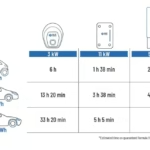
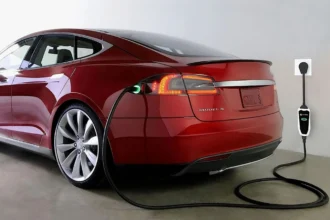
For electric vehicle owners, Level 2 home charging (240V) remains the gold standard for daily use. Charging at a rate of 7kW to 11kW is considered the “sweet spot” for 2026 batteries. It is fast enough to fill a large battery pack overnight but slow enough to avoid the high stress levels associated with DC fast charging stations.
The Benefits of Chemical Longevity
A battery that is primarily slow charged can see a lifespan extension of up to thirty percent compared to one that relies solely on ultra fast chargers. In an era where flagship devices cost upwards of fifteen hundred dollars and EVs are a major financial investment, this longevity translates directly into higher resale value and lower total cost of ownership. The 20 to 80 percent rule still holds weight in 2026, as staying within this range reduces the voltage stress on the cells.
Solid State Batteries: The 2026 Game Changer
The biggest shift in the fast vs slow debate this year is the introduction of solid state batteries. Unlike the liquid electrolytes used in traditional lithium ion cells, solid state technology uses a solid ceramic or polymer separator. This has profound implications for charging speeds.
Breaking the Speed Barrier Safely
Solid state batteries are inherently more resistant to high temperatures and dendrite formation. This means they can theoretically handle fast charging all the way to ninety percent without the aggressive tapering required by liquid cells. Toyota and QuantumScape have released data showing that their 2026 prototypes can maintain high wattage for significantly longer periods, effectively making “fast charging” the default safe mode for these specific chemistries.
Source: Research Nester – Solid State Battery Market Outlook 2026
The Cost of Innovation
While solid state tech is revolutionary, it remains expensive in early 2026. Most consumers are still using refined lithium iron phosphate (LFP) or nickel manganese cobalt (NMC) batteries. For these users, the choice between speed and health is still a daily consideration. LFP batteries, which have become dominant in the mid range market, are much more robust and can handle daily 100 percent charges better than NMC cells, but they still benefit from the lower heat of slow charging.
AI and Smart Charging: The Invisible Protector
The most important advancement of 2026 is not the hardware, but the intelligence managing it. Artificial Intelligence (AI) is now integrated into the Battery Management System (BMS) of almost every premium device. Platforms like Electra’s EVE-Ai are now used to predict battery degradation before it happens.
Predictive Charging Cycles
Your device now learns your schedule with incredible accuracy. If your AI assistant knows you have a flight at 8:00 AM, it will authorize a fast charge at 6:00 AM to ensure you are ready. However, on a lazy Sunday morning, it will default to a slow, health focused charge. This dynamic adjustment removes the burden of choice from the user while maximizing both convenience and battery health.
Source: Electra Vehicles – AI Powered Battery Intelligence
Vehicle to Grid (V2G) Integration
In 2026, slow charging has become a revenue stream for some. Through V2G technology, EV owners can slow charge during off peak hours when electricity is cheap and then sell that energy back to the grid during peak demand. This bidirectional flow requires a stable, slow discharge and charge cycle to protect the battery, further incentivizing users to move away from constant fast charging.
The NACS Standard and Global Infrastructure
The infrastructure of 2026 has largely consolidated around the North American Charging Standard (NACS). This has simplified the charging experience, allowing for seamless communication between the car and the station. Whether you are at a Tesla Supercharger or a third party 350kW station, the “Plug and Charge” protocol ensures that the handshake between the charger and the battery is optimized for that specific vehicle’s state of health.
Wireless Charging and Convenience
Wireless charging has also taken a leap forward with the Qi3 standard, which now includes better alignment and higher efficiency. While still slower than wired fast charging, Qi3 provides a “constant trickle” that is perfect for office environments or bedside tables. In 2026, many public spaces now feature integrated wireless pads that provide a slow, steady top up, reducing the need for high stress fast charging sessions during the day.
Comparing the Two: A 2026 Perspective
| Feature | Fast Charging (2026) | Slow Charging (2026) |
| Typical Wattage | 65W to 240W (Phone), 150kW to 1MW (EV) | 5W to 12W (Phone), 3kW to 11kW (EV) |
| Time to 80% | 5 to 20 Minutes | 4 to 8 Hours |
| Heat Generation | High (Managed by GaN/AI) | Low to Negligible |
| Battery Wear | Moderate (Reduced by modern BMS) | Minimal |
| Best Use Case | Road trips, emergencies, busy days | Overnight, workplace, long term storage |
| Cost Efficiency | Often higher at public stations | Lowest (Home/Off-peak) |
Best Practices for Battery Health in 2026
As we navigate this high tech year, there are several habits that top tier users adopt to ensure their devices stay at peak performance for years.
The 20 to 80 Percent Rule
Despite advancements, the chemical stress at the extreme ends of the charge cycle (zero and one hundred percent) remains a factor. Keeping your battery between twenty and eighty percent for the majority of the time can double the number of effective charge cycles your device can handle.
Avoiding “Parasitic Loads”
In 2026, using your phone for high intensity gaming or video editing while fast charging is a recipe for rapid degradation. This creates a “parasitic load” where the battery is simultaneously discharging and charging at high speeds, generating internal heat that even the best cooling systems struggle to dissipate.
Utilizing Smart Software Limits
Most laptops and smartphones in 2026 allow you to set a hard cap on the maximum charge level. Setting this to eighty percent for devices that are mostly plugged in, such as office laptops or home tablets, is one of the most effective ways to preserve the cathode material.
The Future Beyond 2026
Looking ahead, the conversation will likely shift toward “universal fast charging” that has zero impact on battery health. Research into graphene based electrolytes and lithium sulfur batteries suggests that by the end of the decade, the distinction between fast and slow charging may disappear entirely. But for now, in 2026, the balance between the two is the hallmark of a savvy tech user.
Conclusion
The choice between fast and slow charging in 2026 is a strategic one. Fast charging provides the freedom of the modern, fast paced lifestyle, while slow charging serves as the foundation for sustainable and cost effective technology use. By leveraging the AI tools built into our devices and understanding the physical limits of our batteries, we can enjoy the best of both worlds.