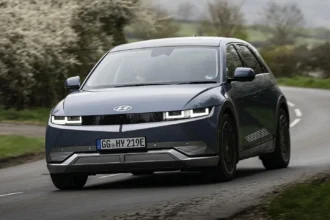

The automotive landscape is undergoing a tectonic shift that will culminate in a radical transformation of how we perceive transportation by the turn of the decade. As we move deeper into the 2020s, the convergence of electric propulsion and autonomous driving systems is no longer a distant dream found in science fiction but a rapidly approaching reality. By 2030, the global vehicle fleet is expected to look fundamentally different, driven by aggressive decarbonization targets and breakthroughs in machine learning (Zakrzewski & Czerniachowicz, 2024).
This transition is fueled by the dual necessity of reducing global carbon emissions and eliminating human error on the roads. Current projections suggest that to achieve full decarbonization by mid-century, sales of zero-emission vehicles must reach nearly 100 percent in major markets by the early 2030s (Transport & Environment, 2025). This blog post delves into the technological, regulatory, and market dynamics that will define the autonomous electric vehicle (EV) ecosystem by 2030.
The Rise of Software Defined Vehicles (SDVs)
Central to the evolution of autonomous EVs is the shift toward Software-Defined Vehicles (SDVs). In this new paradigm, the vehicle’s hardware is managed and optimized primarily through software, allowing for over-the-air updates that can improve performance and safety long after the car has left the factory (Garikapati & Shetiya, 2024).
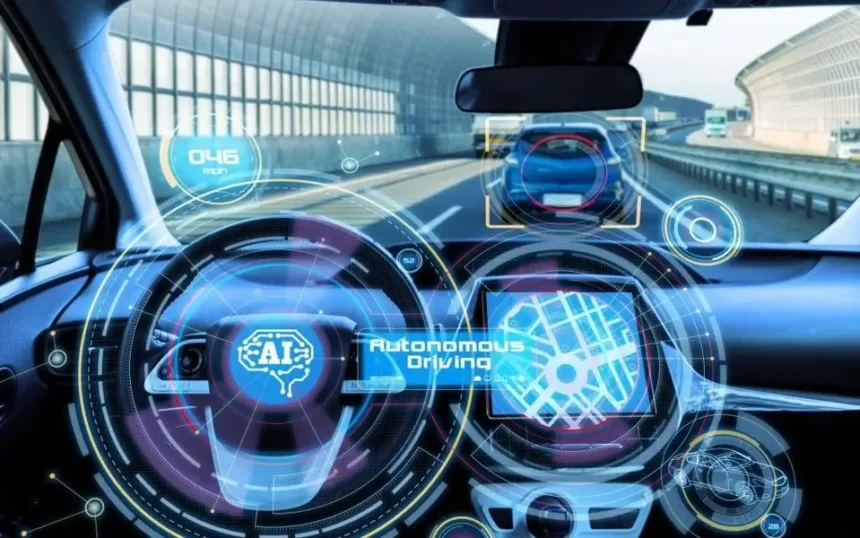
Artificial Intelligence (AI) acts as the “brain” of these systems, facilitating four core tasks: perception, prediction, planning, and control (Buff, 2025). Using a suite of sensors including LiDAR, radar, and high-definition cameras, AI algorithms analyze vast datasets in real-time to identify obstacles and predict the behavior of other road users. This shift toward AI-centric architecture allows vehicles to become safer and more efficient over time, a stark contrast to traditional internal combustion engine vehicles which typically depreciate in performance and feature set.
Evolution of Battery Technology: Solid-State and Beyond
One of the most significant barriers to the mass adoption of electric vehicles has been “range anxiety” and slow charging times. However, by 2030, battery technology is expected to reach a maturity level that makes these concerns obsolete (Alanazi, 2023).
Researchers are currently focusing on:
- Energy Density: Battery energy density is projected to increase from roughly 580 Wh/L today to as much as 1100 Wh/L by 2030 (Van Mierlo et al., 2021). This means longer ranges and lighter vehicles.
- Solid-State Batteries: Unlike current lithium-ion batteries that use liquid electrolytes, solid-state batteries use solid electrolytes which are non-flammable and offer higher resistance to dendrite propagation, significantly improving safety and charging speeds (Van Mierlo et al., 2021).
- Cost Reductions: As production scales up and manufacturing processes improve, the cost of lithium-ion batteries is expected to decrease, making EVs cheaper than internal combustion vehicles in many market segments by 2030 (Zakrzewski & Czerniachowicz, 2024).
Levels of Autonomy: What to Expect in 2030
The Society of Automotive Engineers (SAE) defines autonomy in levels ranging from 0 (no automation) to 5 (full automation). By 2030, we expect a widespread adoption of Level 4 autonomy in specific environments, such as urban centers and dedicated highway corridors (Van Mierlo et al., 2021).
At Level 4, the vehicle can handle all driving tasks under specific conditions without human intervention. While Level 5 vehicles—those capable of driving anywhere a human can—may be commercially available by the late 2020s, they will initially carry high costs and may be limited to luxury segments or specialized commercial fleets (Victoria Transport Policy Institute, 2025).
Global Market Trends and Decarbonization Policies
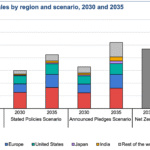
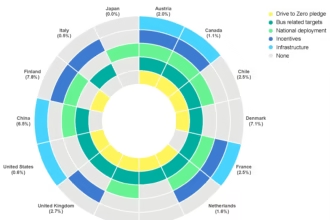
The push for autonomous EVs is not just a technological race but a policy-driven mandate. Major economies including the European Union, China, and parts of the United States have announced bans on the sale of new internal combustion vehicles starting between 2030 and 2035 (Zakrzewski & Czerniachowicz, 2024).
Market forecasts indicate that annual sales of autonomous cars could reach up to 77 million units by 2030, depending on the speed of regulatory approval and infrastructure development (Chalmers University, 2018). The Chinese market, in particular, has emerged as a leader in this space, with aggressive state support for AI research and EV infrastructure (World Bank, 2025).
Smart Cities and V2X Communication
The future of autonomous EVs is intrinsically linked to the development of smart cities. These urban environments will use Information and Communication Technology (ICT) to manage public resources and traffic flow more efficiently (Alanazi, 2023).
Vehicle-to-Everything (V2X) communication will allow cars to “talk” to each other and to road infrastructure, such as traffic lights and sensors. This connectivity enables:
- Real-time Traffic Management: AI systems can optimize routes for entire fleets to reduce congestion (Garikapati & Shetiya, 2024).
- Platooning: Autonomous trucks or cars can travel closely together in a “train” to reduce air resistance and save energy (World Bank, 2025).
- Smart Grid Integration: Bidirectional charging (Vehicle-to-Grid or V2G) will allow EVs to act as mobile batteries, storing excess renewable energy and feeding it back into the grid during peak demand (Van Mierlo et al., 2021).
Challenges: Ethics, Liability, and Cybersecurity
Despite the optimistic outlook, the path to 2030 is fraught with challenges. The legal framework for autonomous vehicle liability remains a complex issue. In jurisdictions like Indonesia, existing laws are still rooted in fault-based principles that assume a human driver is in control (Universitas 17 Agustus 1945 Semarang et al., 2025). Transitioning to a hybrid liability framework that balances product liability for manufacturers with adaptive insurance mechanisms is essential.
Cybersecurity also remains a paramount concern. As vehicles become more connected, they become potential targets for hacking. Ensuring robust data privacy and protecting against cyberattacks will be critical for maintaining public trust (Garikapati & Shetiya, 2024).
Live Daily Updates: State of the Industry as of December 30, 2025
As of today, December 30, 2025, several key developments are shaping the road to 2030:
- Regulatory Milestones: The U.S. National Highway Traffic Safety Administration (NHTSA) is currently reviewing comments on the “AV STEP” program, a voluntary framework designed to improve transparency and safety for automated driving systems (Federal Register, 2025).
- Battery Breakthroughs: Pilot production lines for next-generation solid-state cells have begun operations in Europe and East Asia, aiming for vehicle integration by the 2027 model year.
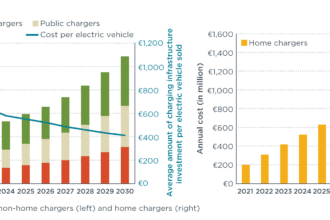
- Infrastructure Growth: Deployment of ultra-fast charging stations (350kW+) has increased by 40% year-over-year in metropolitan areas, significantly reducing charging times for the newest EV models.
Conclusion: A New Era of Mobility
By 2030, the “Future of Autonomous EVs” will no longer be a future at all—it will be the present. The integration of high-density batteries, advanced AI perception, and smart city infrastructure will create a transport ecosystem that is cleaner, safer, and more accessible than ever before. While hurdles in legislation and ethical decision-making remain, the momentum toward a driverless, electrified world is now irreversible.
References
Alanazi, F. (2023). Electric Vehicles: Benefits, Challenges, and Potential Solutions for Widespread Adaptation. Applied Sciences, 13(10), 6016. https://doi.org/10.3390/app13106016
Buff, T. (2025). Driving Together: The Necessity of a Comprehensive Federal Response for the Success of Autonomous Vehicles. Fordham Intellectual Property, Media and Entertainment Law Journal. https://ir.lawnet.fordham.edu/iplj/vol35/iss1/5/
Garikapati, D., & Shetiya, S. S. (2024). Autonomous Vehicles: Evolution of Artificial Intelligence and the Current Industry Landscape. Big Data and Cognitive Computing, 8(4), 42. https://doi.org/10.3390/bdcc8040042
Transport & Environment. (2025). 2050 Strategy: Roadmap to Decarbonising European Cars. Transport & Environment. https://www.transportenvironment.org/uploads/files/2050_strategy_cars_FINAL.pdf
Van Mierlo, J., Berecibar, M., El Baghdadi, M., De Cauwer, C., Messagie, M., Coosemans, T., Jacobs, V., & Hegazy, O. (2021). Beyond the State of the Art of Electric Vehicles: A Fact-Based Paper of the Current and Prospective Electric Vehicle Technologies. World Electric Vehicle Journal, 12(1), 20. https://doi.org/10.3390/wevj12010020
Victoria Transport Policy Institute. (2025). Autonomous Vehicle Implementation Predictions. VTPI. https://www.vtpi.org/avip.pdf
Zakrzewski, B., & Czerniachowicz, B. (2024). Cars of the Future – Development Prospects. European Research Studies Journal, XXVII(1), 1128-1144. https://doi.org/10.35808/ersj/3879