
The automotive landscape has undergone a monumental shift as we approach the dawn of 2026. With nearly one in four new vehicles sold globally now powered by electricity, the question for many drivers is no longer whether to go electric, but rather which path to take: the high-tech allure of a brand-new 2026 model or the remarkable value found in the rapidly maturing used market.
- The State of the Electric Vehicle Market on December 27, 2025
- The Case for Buying a New 2026 Electric Car
- Detailed Reviews: Top New 2026 Models to Watch
- The Case for Buying a Used Electric Car in 2026
- Strategic Comparison: Total Cost of Ownership (TCO)
- Key Considerations for the 2026 Buyer
- Technology Deep Dive: Battery Chemistries of 2026
- Environmental Impact and Sustainability in 2026
- How to Inspect a Used EV in 2026
- The Final Verdict: Which Should You Buy?
- Sources and Real-Time Data for December 2025
As of late December 2025, we are witnessing what experts call a market recalibration. The frantic hype of earlier years has settled into a steady rhythm of innovation and practical adoption. If you are standing in a dealership or scrolling through online listings today, the choices are more diverse and technically advanced than ever before. This guide provides a comprehensive deep dive into the financial, technical, and lifestyle factors that will define your car-buying journey in 2026.
The State of the Electric Vehicle Market on December 27, 2025
To understand the current market, we must look at the recent developments of the past twelve months. The year 2025 was a landmark period for battery technology and infrastructure. We saw the first public road tests of semi-solid-state batteries, with a Mercedes-Benz EQS successfully driving over 1,200 kilometers on a single charge. Simultaneously, the used market has finally achieved a level of inventory that allows for true competitive pricing, with many high-quality three-year-old models now hovering around the $25,000 mark.
The global sales figures for 2025 exceeded 20 million units, a testament to the fact that charging anxiety is fading as infrastructure expands. In Europe, the network has surpassed one million public charging points, while in North America, the implementation of the North American Charging Standard (NACS) across almost all major brands has simplified the experience for millions.
The Case for Buying a New 2026 Electric Car
Choosing a factory-fresh 2026 model means stepping into the absolute vanguard of automotive engineering. The 2026 model year is particularly significant because it represents the first generation of vehicles designed from the ground up on dedicated electric platforms rather than adapted internal combustion chassis.
1. Breakthrough Battery Technology and Range
The most compelling reason to buy new in 2026 is the advancement in battery chemistry. While older models relied heavily on standard Lithium-ion packs, the 2026 fleet introduces more efficient Nickel-Cobalt-Manganese (NCM) and Lithium Iron Phosphate (LFP) variations. LFP batteries, found in models like the 2026 Tesla Model 3 and various Hyundai entries, are praised for their longevity and ability to be charged to 100 percent daily without significant degradation.
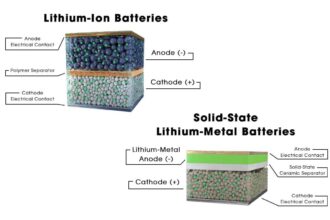
Furthermore, 2026 marks the arrival of the first pilot-production vehicles featuring solid-state components. These batteries offer higher energy density, meaning more miles per pound of battery, and significantly improved thermal safety. For drivers in extreme climates, these new packs maintain up to 72 percent of their capacity even in sub-zero temperatures, a feat that earlier used models struggle to match.
2. The Era of 800-Volt and 1,200-Volt Architecture
Charging speed is the new horsepower. New 2026 models from Kia, Hyundai, and Audi utilize 800-volt electrical architectures. This technology allows for ultra-rapid charging, moving from 10 percent to 80 percent battery capacity in as little as 18 minutes. Some high-end 2026 models are even debuting 1,200-volt platforms, which can theoretically add over 200 miles of range in under five minutes. If you frequently take long road trips, the time saved at a charging station is a luxury that older used models simply cannot provide.
3. Integrated Software and Autonomous Capabilities
The 2026 lineup is more “computer on wheels” than any previous generation. Artificial Intelligence is now deeply integrated into the driving experience. Predictive navigation in new models doesn’t just find a charger: it pre-conditions the battery temperature to ensure the fastest possible intake when you arrive. Systems like GM’s Super Cruise and Tesla’s latest FSD iterations have reached new levels of refinement, offering hands-free driving on hundreds of thousands of miles of mapped highways.
Detailed Reviews: Top New 2026 Models to Watch
The 2026 Hyundai Ioniq 9
As the flagship three-row SUV, the Ioniq 9 is designed for larger families who refuse to compromise on space. It features a refined interior with sustainable materials and an aerodynamic “aerocurve” design that maximizes its 350-plus mile range. Its 800V architecture makes it one of the fastest-charging family haulers on the market.
The 2026 Chevrolet Equinox EV
Representing the “value” segment of the new market, the 2026 Equinox EV brings premium range (over 300 miles) to a price point that challenges traditional gasoline SUVs. It is the perfect entry point for those who want the security of a full factory warranty without a six-figure price tag.
The 2026 Lucid Air
For the luxury-minded, the Lucid Air remains the king of efficiency and range. With some variants pushing past 500 miles on a single charge, it effectively eliminates range anxiety for even the most demanding drivers. Its 2026 refinements include a more intuitive infotainment system and improved Sapphire-trim performance.
The Case for Buying a Used Electric Car in 2026
While the “new car smell” is enticing, the savvy investor often looks toward the used market. By 2026, the inventory of “nearly new” vehicles (those 2-4 years old) is massive. This is largely due to the influx of lease returns from the 2022 and 2023 sales boom.
1. The Benefit of Steep Depreciation
Electric vehicles historically depreciated faster than their gasoline counterparts due to the rapid pace of technological change. However, for a buyer in 2026, this is a massive advantage. You can often find a 2023 Tesla Model 3 or a Hyundai Ioniq 5 for 40 to 50 percent less than its original MSRP. Since these cars have fewer moving parts than internal combustion engines, a vehicle with 30,000 miles is often in nearly pristine mechanical condition.
2. Proven Battery Longevity Data
One of the biggest fears of early adopters was that batteries would need replacement after five years. As of December 2025, real-world data from millions of vehicles has debunked this. Most EV batteries from the 2021-2023 era are retaining 85 to 92 percent of their original capacity even after 100,000 miles. When you buy a used EV in 2026, you are buying a vehicle that likely has another decade of reliable service left in its powertrain.
3. Immediate Availability and Retrofit Tech
Buying new often involves waitlists, especially for high-demand models like the Rivian R2 or the Ioniq 9. Used cars are available on the lot today. Furthermore, the 2026 aftermarket for EVs has matured. If a 2022 used model lacks a certain feature, there are now numerous companies offering software unlocks, infotainment upgrades, and even home-charging station bundles that bridge the gap between old and new.
Strategic Comparison: Total Cost of Ownership (TCO)
To truly decide between new and used, we must look at the financial picture over a five-year period. In 2026, the cost of electricity remains significantly lower than gasoline, but other factors vary.
Maintenance and Repairs
New 2026 models come with the peace of mind of a comprehensive bumper-to-bumper warranty and a specific battery warranty (usually 8 years or 100,000 miles). Used buyers should look for “Certified Pre-Owned” (CPO) vehicles which often extend these protections. Maintenance for both is remarkably low: no oil changes, no spark plugs, and reduced brake wear due to regenerative braking.
Insurance Premiums
Insurance for new 2026 EVs can be higher due to the increased cost of replacement parts and specialized labor for the latest sensor arrays. A used EV, while still more expensive to insure than a budget gasoline car, generally carries a lower premium than its brand-new equivalent.
Charging Infrastructure Access
By 2026, almost every used Tesla in North America has access to the Supercharger network. For non-Tesla used cars, the transition to NACS adapters has become standard. New 2026 models, however, come with native NACS ports, eliminating the need for bulky adapters and ensuring seamless “plug and charge” functionality at most stations.
Key Considerations for the 2026 Buyer
Before making a decision, you must evaluate your specific driving habits and home situation.
Home Charging Capabilities
The most significant “hidden” cost of EV ownership is the installation of a Level 2 home charger. While some 2026 new car promotions include a free home charger and installation, used buyers will likely need to budget approximately $1,000 to $1,500 for a quality unit and electrical work.
Regional Incentives and Policy
As of today, December 27, 2025, the incentive landscape has shifted. In the United States, several federal credits reached their expiration phase in September 2025, though many states still offer rebates for both new and used purchases. In Europe, new weight-based penalties for heavy vehicles have made smaller, more efficient new EVs like the Renault 5 and Kia EV3 more financially attractive than larger, older used SUVs.
Technology Deep Dive: Battery Chemistries of 2026
Understanding what is under the floorboards is crucial for a 2026 purchase. There are three primary chemistries you will encounter:
Lithium Iron Phosphate (LFP)
Commonly found in “Standard Range” new models and older budget used cars.
- Pros: Long life (can last 3,000+ charge cycles), safe, can be charged to 100 percent.
- Cons: Heavier, performs poorly in extreme cold.
Nickel Manganese Cobalt (NMC)
Found in most long-range and performance models.
- Pros: High energy density (more range for less weight), better cold-weather performance.
- Cons: Higher cost, usually recommended to only charge to 80 percent for daily use.
Semi-Solid-State and Solid-State
The “next-gen” tech appearing in high-end 2026 models.
- Pros: Incredible range (400 to 600 miles), ultra-fast charging, non-flammable.
- Cons: Currently very expensive, limited availability.
Environmental Impact and Sustainability in 2026
For many, the switch to electric is driven by environmental concerns. In 2026, the “greenness” of an EV depends heavily on its manufacturing.
The good news is that battery recycling has reached an inflection point. Facilities in North America and Europe can now recover up to 99 percent of the lithium, cobalt, and nickel from old packs. Buying a new 2026 EV often means purchasing a vehicle with a higher percentage of recycled materials in its battery than a used 2021 model.
However, buying used is the ultimate form of recycling. By extending the life of a vehicle that has already been manufactured, you are reducing the demand for new mining and production energy.
How to Inspect a Used EV in 2026
If you decide the used route is for you, the inspection process differs from a traditional car:
- Battery Health Report: Demand a state-of-health (SOH) certificate. This tells you exactly how much original capacity remains.
- Charging Port Inspection: Look for signs of “arcing” or burnt plastic in the charge port, which can indicate poor-quality charging cables were used.
- Software Version: Ensure the car is capable of receiving over-the-air (OTA) updates. Some early EVs from 2018-2019 have hardware limitations that prevent new features.
- Thermal Management: Check that the liquid cooling system for the battery is functioning correctly.
The Final Verdict: Which Should You Buy?
You should buy a NEW 2026 EV if:
- You want the fastest possible charging speeds (18 minutes or less).
- You live in a very cold climate where the latest battery thermal management is necessary.
- You plan to keep the car for more than 10 years and want the full original warranty.
- You want the latest autonomous driving and safety software.
You should buy a USED EV in 2026 if:
- You want to avoid the initial 40 percent depreciation hit.
- Your daily commute is under 150 miles (meaning extreme range isn’t a priority).
- You are looking for a car around the $20,000 to $27,000 price point.
- You want a vehicle that is available for immediate delivery.
Sources and Real-Time Data for December 2025
For the most up-to-date information on daily market shifts, please refer to the following industry leaders: