
The automotive landscape has undergone a seismic shift as we navigate through the final days of 2025 and look toward the bright horizon of 2026. For over a decade, the Nissan Leaf stood as the quintessential pioneer of accessible electric mobility, often characterized by its humble hatchback silhouette and reliable city-bound performance. However, the arrival of the 2026 Nissan Leaf marks a radical departure from its roots, transforming from a traditional compact car into a sophisticated, high-performance electric crossover. This evolution is not merely cosmetic; it represents a fundamental reimagining of what an entry-level electric vehicle (EV) can offer in terms of range, technology, and sheer driving pleasure.
- The Bold New Design Philosophy: From Hatchback to Crossover
- Engineering Excellence: The CMF-EV Platform
- Battery Performance and Real-World Range
- Charging Ecosystem: The Transition to NACS
- Interior Luxury and Digital Integration
- The Financial Perspective: Ownership and Incentives
- Comprehensive Insurance for the Modern EV
- Sustainable Energy: The Vehicle-to-Home (V2H) Revolution
- Safety and Advanced Driver Assistance
- Market Comparison: How the Leaf Stacks Up
- Maintenance and Long-Term Reliability
- The Verdict: A New Benchmark for Accessible EVs
- Live Information and Resources
The Bold New Design Philosophy: From Hatchback to Crossover
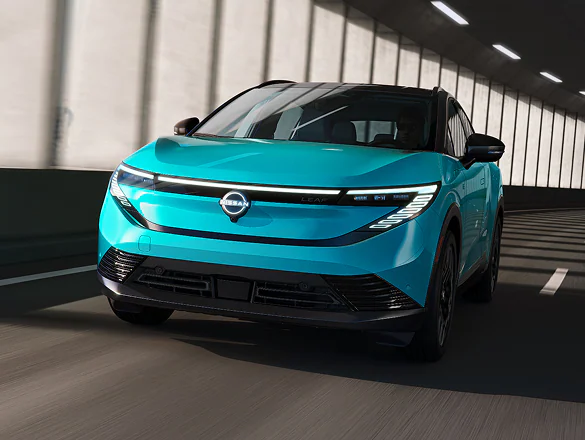
The most immediate change for the 2026 model year is the complete overhaul of the Leaf’s physical form. Drawing heavy inspiration from the Nissan Chill-Out concept and its larger sibling, the Nissan Ariya, the new Leaf has shed its somewhat polarizing hatchback skin for a sleek, coupe-like crossover body. This design choice is a direct response to global market trends where consumers increasingly favor the elevated seating position and versatility of SUVs.
The exterior is defined by clean, aerodynamic lines that contribute to a remarkably low drag coefficient of just 0.26. At the front, the traditional grille is replaced by a smooth, illuminated panel featuring a segmented daytime running light design that gives the vehicle a futuristic, almost ethereal presence on the road. The retractable door handles and 19-inch wheels with unique geometric patterns further emphasize the car’s premium aspirations. This is no longer just a budget EV; it is a design statement that rivals vehicles twice its price point.
Engineering Excellence: The CMF-EV Platform
Underneath the striking new bodywork lies the CMF-EV platform, a dedicated electric architecture shared within the Renault-Nissan-Mitsubishi Alliance. By moving to this specialized platform, Nissan has been able to optimize interior space while significantly improving structural rigidity and weight distribution. Unlike the previous generation, which utilized a modified internal combustion engine chassis, the 2026 Leaf is built from the ground up to be electric.
The placement of the battery pack low in the floor lowers the center of gravity, resulting in handling characteristics that are surprisingly nimble for a crossover. Engineers have utilized a multi-link rear suspension system to ensure that the ride remains supple over uneven urban pavement while staying firmly planted during spirited highway maneuvers. The 2026 Leaf feels light on its feet, a trait that many modern, heavy EVs struggle to replicate.
Battery Performance and Real-World Range
Range anxiety has long been the primary hurdle for potential EV buyers, but the 2026 Nissan Leaf addresses this head-on with two distinct battery configurations designed to meet different lifestyle needs.
The Long-Range 75 kWh Powerhouse
The S+, SV+, and Platinum+ trims come standard with a 75 kWh liquid-cooled lithium-ion battery pack. This unit is the heart of the Leaf’s newfound capability, providing an EPA-estimated range of up to 303 miles on a single charge. For the average driver, this means nearly two weeks of commuting without ever needing to visit a charging station. The liquid-cooling system is a critical upgrade over the previous air-cooled designs, ensuring that the battery maintains its efficiency and longevity even in extreme summer heat or freezing winter temperatures.
The Value-Focused 52 kWh Option
For urban dwellers and those with shorter daily commutes, Nissan offers a 52 kWh battery pack (with late 2026 availability). This version delivers 174 horsepower and is aimed at providing an even more affordable entry point into the EV market without sacrificing the core technological benefits of the new platform. It remains punchy and responsive, making it an ideal companion for navigating dense city traffic.
Charging Ecosystem: The Transition to NACS
One of the most significant updates for the 2026 model year is the inclusion of the North American Charging Standard (NACS) port. This move grants Leaf owners native access to the vast Tesla Supercharger network, arguably the most reliable and widespread fast-charging infrastructure in existence.
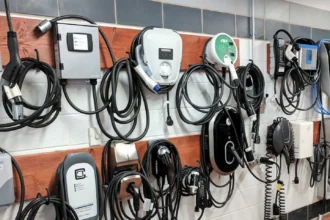
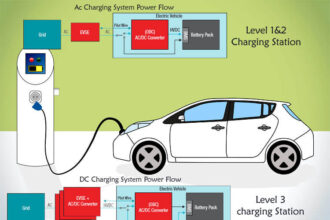
The 2026 Leaf is equipped with dual charging ports: a J1772 port on the driver-side for standard Level 1 and Level 2 home charging, and the NACS port on the passenger-side for high-speed Level 3 charging. With a maximum charging rate of 150 kW, the Leaf can replenish its battery from 10 percent to 80 percent in approximately 35 minutes. While not the absolute fastest in the industry, this performance is more than sufficient for long-distance road trips, allowing drivers to grab a coffee and a quick break while the car prepares for the next leg of the journey.
Interior Luxury and Digital Integration
Step inside the 2026 Nissan Leaf, and you are greeted by an interior that feels more like a high-end lounge than a traditional car cabin. The “Monolith” display system is the centerpiece of the dashboard, consisting of dual 14.3-inch screens housed in a single, curved enclosure. This system runs on a Google Built-in architecture, meaning Google Maps, Google Assistant, and the Google Play Store are integrated directly into the vehicle’s operating system.
The use of high-quality materials is evident throughout the cabin. Sustainable fabrics, soft-touch plastics, and available artificial leather create an environment that is both eco-friendly and luxurious. Despite being three inches shorter than its predecessor, the move to a crossover form factor has provided surprisingly generous headroom and a capacious 20 cubic feet of cargo space, which expands to over 55 cubic feet with the rear seats folded.
The Financial Perspective: Ownership and Incentives
Purchasing a vehicle in 2026 involves more than just looking at the MSRP. The 2026 Nissan Leaf starts at a competitive $29,990 for the S+ trim, making it one of the most accessible long-range EVs on the market. However, the true value lies in the long-term savings associated with electric ownership.
Tax Credits and Green Loans
Potential buyers should investigate the latest federal and state incentives available for 2026. Many jurisdictions offer substantial rebates that can effectively lower the purchase price by thousands of dollars. Additionally, many financial institutions now offer “Green Auto Loans” with lower interest rates specifically for zero-emission vehicles. These specialized financing products are designed to encourage the transition to sustainable transport and can significantly reduce the monthly cost of ownership.
Leasing and Salary Sacrifice Schemes
In markets like the UK and parts of Europe, salary sacrifice schemes have become an incredibly popular way to drive a new 2026 Leaf. These programs allow employees to pay for their vehicle lease out of their pre-tax salary, resulting in savings of up to 40 percent on the total cost. When combined with low Benefit-in-Kind (BiK) tax rates for EVs, the 2026 Leaf becomes an irresistible proposition for professionals looking to maximize their take-home pay while driving a cutting-edge vehicle.
Comprehensive Insurance for the Modern EV
Insuring an electric vehicle in 2026 requires a nuanced approach. While EVs historically carried higher premiums due to the cost of battery replacement and specialized repairs, the landscape is shifting. The 2026 Leaf benefits from advanced safety systems that help reduce the frequency of accidents, which can lead to more favorable rates from certain insurers.
When seeking insurance, it is vital to look for policies that offer specific EV coverage, such as protection for home charging equipment and wall boxes. Some insurers also offer “Usage-Based Insurance” (UBI), which uses telematics data from the vehicle to reward safe driving habits with lower premiums. Given the Leaf’s advanced connectivity, integrating with these programs is seamless and can lead to substantial annual savings.
Sustainable Energy: The Vehicle-to-Home (V2H) Revolution
The 2026 Nissan Leaf is not just a mode of transport; it is a mobile energy storage solution. Equipped with Vehicle-to-Load (V2L) and Vehicle-to-Home (V2H) capabilities, the Leaf can actually power your home during an outage or help manage energy costs during peak demand periods.
By connecting the Leaf to a compatible home energy management system, owners can draw power from the car’s 75 kWh battery to run essential appliances. This integration is a cornerstone of the modern smart home, allowing users to charge their car during off-peak hours when electricity is cheapest and then use that stored energy to power the house when rates are high. This creates a closed-loop ecosystem that maximizes both financial and environmental efficiency.
Safety and Advanced Driver Assistance
Safety has always been a priority for Nissan, and the 2026 Leaf comes standard with the Nissan Safety Shield 360 suite. This includes features such as Automatic Emergency Braking with Pedestrian Detection, Rear Automatic Braking, Blind Spot Warning, and Lane Departure Warning.
The standout feature, however, is the ProPILOT Assist with Navi-link. This system uses high-definition mapping and radar sensors to provide a semi-autonomous driving experience on the highway. It can adjust the vehicle’s speed based on upcoming curves or speed limit changes and maintain a safe distance from the car ahead. In the traffic-heavy environment of 2026, these systems are invaluable for reducing driver fatigue and increasing overall road safety.
Market Comparison: How the Leaf Stacks Up
The 2026 Leaf enters a crowded segment, facing off against formidable rivals such as the Chevrolet Bolt EUV, the Hyundai Ioniq 5, and the entry-level Tesla Model 2.
- Nissan Leaf vs. Chevrolet Bolt EUV: While the Bolt remains a value champion, the Leaf offers a more sophisticated interior and the advantage of the NACS port for superior charging access.
- Nissan Leaf vs. Hyundai Ioniq 5: The Ioniq 5 offers faster charging speeds due to its 800V architecture, but the Leaf’s lower starting price and Google-integrated software make it a more pragmatic choice for many families.
- Nissan Leaf vs. Tesla Model 2: The Leaf counters Tesla’s minimalist approach with a more traditional luxury interior, physical controls for key functions, and a dealership network that many buyers still find reassuring for service and maintenance.
Maintenance and Long-Term Reliability
One of the most overlooked benefits of the 2026 Leaf is the reduction in maintenance requirements. With no oil changes, spark plugs, or complex transmission systems to worry about, the service schedule is remarkably light. Owners primarily need to focus on tire rotations, cabin air filter replacements, and brake fluid checks.
Nissan provides a robust 8-year or 100,000-mile warranty on the battery, ensuring that owners can drive with confidence knowing that their most significant investment is protected. Early data from the CMF-EV platform suggests that battery degradation is minimal, even after several years of use, thanks to the advanced thermal management systems employed in this latest generation.
The Verdict: A New Benchmark for Accessible EVs
The 2026 Nissan Leaf is a triumph of engineering and market intuition. By listening to consumer demands for more range, better tech, and a crossover body style, Nissan has successfully revitalized its most famous electric nameplate. It strikes a nearly perfect balance between affordability and premium features, making it an ideal choice for first-time EV buyers and seasoned electric veterans alike.
Whether you are motivated by the environmental benefits of zero-emission driving, the significant financial savings offered by tax incentives and lower fueling costs, or simply the desire for a modern, tech-forward vehicle, the 2026 Leaf delivers on all fronts. It is more than just a car; it is a gateway to the future of sustainable, intelligent mobility.
Live Information and Resources
As of today, December 27, 2025, dealerships across North America and Europe are accepting pre-orders for the 2026 model year. Inventory is expected to begin arriving in showrooms within the first quarter of 2026. For those interested in the 52 kWh base model, production is slated to ramp up in late spring.