
The landscape of transportation has reached a definitive turning point as we enter 2026. What was once a niche network of experimental plugs has blossomed into a sophisticated, high-speed utility infrastructure that rivals the traditional gas station model in both scale and technological complexity. For property owners, fleet managers, and the average driver, understanding the nuances of public electric vehicle charging in 2026 is no longer optional. It is a fundamental requirement for navigating the modern economy.
- The Universal Standard: Transitioning to NACS and Integrated Networks
- High-Power Infrastructure: The Evolution of DC Fast Charging
- Commercial Fleet Electrification: The Megawatt Charging System
- The Economic Engine: Financing, Grants, and Investment Opportunities
- Navigating the Legal and Insurance Landscape of EV Charging
- Advanced Technology: Solid-State Batteries and AI Management
- Global Regulatory Standards: AFIR and Local Incentives
- Strategic Placement: Urban Planning and Rural Expansion
- Asset Management and Cybersecurity for 2026 Networks
- Environmental Impact and Sustainability of the Infrastructure
- Challenges and Mitigation Strategies
- Conclusion: The Road Ahead for 2027 and Beyond
As of late December 2025, the industry has seen a massive consolidation of standards and a surge in high-capacity deployments. This guide provides an exhaustive deep dive into the current state of infrastructure, the financial mechanisms driving growth, the legal and insurance frameworks surrounding these assets, and the cutting-edge hardware that defines the current year.
The Universal Standard: Transitioning to NACS and Integrated Networks
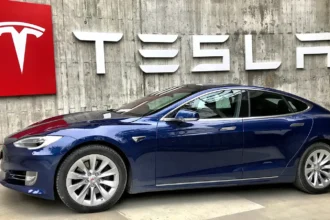
The most significant development leading into 2026 is the near-total standardization of charging connectors in North America and several international markets. The North American Charging Standard, commonly known as NACS, has transitioned from a proprietary Tesla design to the official benchmark for the entire industry.
By early 2026, major manufacturers including Ford, General Motors, Rivian, and most recently Stellantis, have fully integrated native NACS ports into their new vehicle lineups. For drivers, this means the days of carrying a trunk full of heavy adapters are largely over. The 2026 Jeep Recon and the Dodge Charger Daytona are among the latest high-profile releases to feature this native compatibility, allowing them seamless access to over 28,000 supercharging stalls across the continent.
The implications for public infrastructure are profound. Charging point operators are no longer forced to choose between competing hardware standards. Instead, they are deploying universal kiosks that serve the widest possible range of vehicles. This standardization has triggered a massive wave of investment in “Reliability-First” networks, where uptime is guaranteed through sophisticated backend software.
High-Power Infrastructure: The Evolution of DC Fast Charging
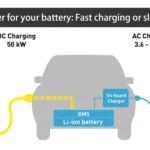
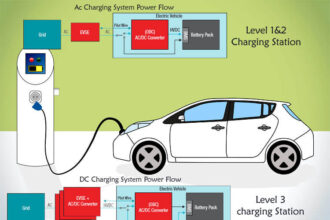
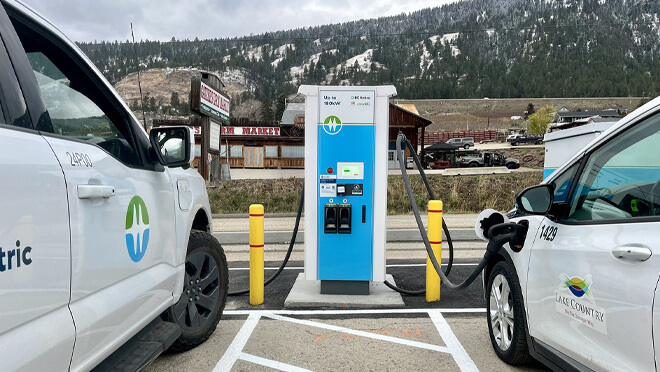
While Level 2 AC charging remains the backbone of residential and workplace environments, the public sector in 2026 is defined by the proliferation of Ultra-Fast DC chargers. We are seeing a shift away from the standard 50kW and 150kW units toward 350kW and even 500kW liquid-cooled dispensers.
Liquid-cooled cabling is a critical piece of 2026 technology. High-amperage charging generates significant heat, which can degrade hardware and slow down charging speeds. By utilizing specialized cooling loops within the cable itself, modern stations can maintain peak power delivery for the duration of the charging session. This allows vehicles equipped with 800-volt architectures to add 200 miles of range in under fifteen minutes.
For commercial property owners, installing these high-power units requires a significant upgrade to on-site electrical service. This has led to the rise of “Buffer Battery” systems. These systems use a large stationary battery to store energy from the grid at a slow, steady rate and then discharge it rapidly when a vehicle initiates a high-power charging session. This approach mitigates expensive peak-demand charges from utility companies and ensures that stations can operate even in areas with limited grid capacity.
Commercial Fleet Electrification: The Megawatt Charging System
Perhaps the most transformative breakthrough of 2026 is the commercial rollout of the Megawatt Charging System or MCS. Designed specifically for heavy-duty trucks, buses, and maritime vessels, MCS is capable of delivering power levels exceeding 1.2 megawatts.
As Tesla rolls out its expanded line of Semi trucks from the Nevada factory this year, the accompanying MCS infrastructure is being deployed along major freight corridors. These stations are not merely larger versions of passenger chargers. They utilize a completely different connector geometry designed to handle massive amounts of current safely.
The efficiency of MCS means a long-haul truck can reach an 80 percent state of charge during a driver’s mandatory 30-minute rest break. This parity with diesel refueling times is the catalyst for the rapid electrification of logistics. Companies like BYD, ABB, and Kempower have all launched 1.2MW+ systems in early 2026, targeting the logistics hubs and ports that serve as the heartbeat of global trade.
The Economic Engine: Financing, Grants, and Investment Opportunities
The expansion of EV infrastructure is being fueled by a complex mix of public and private capital. In the United States, the National Electric Vehicle Infrastructure or NEVI program has reached a peak deployment phase in 2026. Billions of dollars in federal grants are being distributed to states to ensure that high-speed charging is available every 50 miles along designated alternative fuel corridors.
For private investors and small business owners, the “Charging-as-a-Service” model has emerged as a high-yield opportunity. Instead of paying the massive upfront costs for hardware and installation, property owners can partner with operators who manage the equipment in exchange for a portion of the revenue or a monthly lease fee.
Business loans for green energy projects are currently at some of the most competitive rates in the financial sector. Lenders view EV charging stations as “Future-Proof” assets that increase the value of retail and hospitality real estate. Structured finance options, including equipment leasing and tax-equity partnerships, allow businesses to claim significant depreciation benefits while providing an essential service to their customers.
Navigating the Legal and Insurance Landscape of EV Charging
As the density of public charging stations increases, so does the complexity of the legal and insurance requirements. Business owners installing these systems must navigate a new frontier of liability and risk management.
Commercial General Liability insurance policies are being updated in 2026 to include specific riders for EV charging infrastructure. These riders cover potential risks such as electrical fires, cable trip hazards, and even “Cyber-Liability” in the event that a charging station is used as an entry point for a network hack.
From a legal perspective, the “Right to Charge” laws have gained traction in many jurisdictions. These laws prevent homeowner associations and landlords from unreasonably prohibiting the installation of charging equipment. Furthermore, the 2026 regulatory environment has introduced strict “Transparency in Pricing” mandates. Much like the price boards at gas stations, charging operators are now legally required to display the total cost per kilowatt-hour, including all fees, before a driver initiates a session.
Legal firms specializing in maritime and logistics law are also seeing an uptick in cases related to the shipping and installation of heavy-duty charging hardware. As these units often weigh several tons and contain hazardous battery components for buffering, the contractual obligations for transport and site preparation have become highly specialized.
Advanced Technology: Solid-State Batteries and AI Management
The year 2026 marks the arrival of the first production vehicles equipped with solid-state battery technology. Companies like Toyota and ProLogium have begun limited rollouts of vehicles that utilize solid electrolytes instead of the traditional liquid variety.
Solid-state batteries are a game-changer for public charging. They are inherently more stable, have a higher energy density, and can be charged at much higher rates without the risk of “Lithium Plating” or thermal runaway. A solid-state equipped vehicle can theoretically charge from 10 percent to 80 percent in about five minutes, making the public charging experience nearly identical to the time spent at a traditional pump.
Shutterstock
Simultaneously, Artificial Intelligence is being integrated into the “Energy Management” layer of the charging stack. AI algorithms now predict driver behavior and grid demand in real-time. By analyzing weather patterns, traffic flow, and local energy prices, these systems can perform “Energy Arbitrage,” charging up onsite storage when prices are low and selling power back to the grid when demand peaks. This “Vehicle-to-Grid” or V2G capability allows EVs to act as a distributed power plant, providing stability to the renewable energy grid.
Global Regulatory Standards: AFIR and Local Incentives
In Europe, the Alternative Fuels Infrastructure Regulation or AFIR has entered its most critical phase in 2026. This regulation mandates that all new public fast chargers must support contactless bank card payments. The requirement to download a dozen different apps just to charge a car is officially a thing of the past in the EU.
Furthermore, AFIR requires that “Plug & Charge” technology, based on the ISO 15118 standard, be the default for all new installations. This technology allows the car and the charger to communicate securely, handling both the handshake and the payment automatically. The driver simply plugs in the cable, and the session begins.
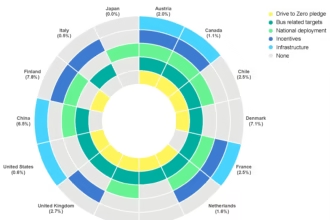
In other regions, local incentives continue to drive adoption. In the Asia-Pacific region, governments are providing massive subsidies for “Solar-Integrated” stations. These stations utilize large solar canopies to generate a portion of their own power, reducing the load on the urban grid and providing shade for the vehicles.
Strategic Placement: Urban Planning and Rural Expansion
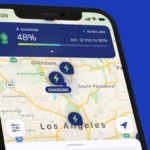
The geography of public charging is shifting in 2026. While early deployments focused on high-traffic highway stops, the focus has moved into “Curbside Charging” for urban dwellers who lack off-street parking. Cities like New York, London, and Tokyo are installing thousands of low-profile bollard chargers that utilize existing street lighting infrastructure.
At the same time, the “Rural Range Gap” is being closed. Portable charging solutions, which are essentially large battery packs on trailers, are being deployed to remote tourist destinations and national parks. These units can be moved as needed to accommodate seasonal surges in traffic, ensuring that EV drivers can explore off-the-beaten-path locations with confidence.
Retailers are also recognizing the “Dwell Time” advantage. Statistics from early 2026 show that EV drivers spend an average of 25 percent more time and money in stores that offer reliable fast charging. This has led to massive partnerships between charging networks and big-box retailers, coffee chains, and shopping malls.
Asset Management and Cybersecurity for 2026 Networks
With the proliferation of connected chargers comes the increased risk of cyber threats. In 2026, the industry has adopted the Open Charge Point Protocol or OCPP 2.0.1 as a mandatory security standard. This protocol provides end-to-end encryption for all communications between the charger and the cloud management system.
Asset management software has become a vital tool for network operators. These platforms provide real-time telemetry on every component of a charging station, from the temperature of the transformer to the wear and tear on the connector pins. Predictive maintenance algorithms can now identify a potential failure before it happens, dispatched a technician to replace a part during off-peak hours to ensure 99.9 percent uptime.
For those looking at the investment side, SaaS (Software-as-a-Service) platforms that manage these networks represent a significant growth sector. These platforms handle everything from billing and roaming agreements to carbon credit tracking, which has become a lucrative secondary revenue stream for green energy projects.
Environmental Impact and Sustainability of the Infrastructure
The sustainability of the charging infrastructure itself is a major topic of discussion in 2026. Leading operators are now focusing on the “Circular Economy” for charging hardware. This includes using recycled aluminum for dispenser housings and ensuring that all electronic components are modular and easy to repair.
Furthermore, the source of the electricity is being scrutinized. “Green Charging” certificates are now a standard feature in many apps, allowing drivers to see exactly what percentage of their charge came from wind, solar, or hydroelectric power. Some premium networks even guarantee 100 percent renewable energy for every session, appealing to the environmentally conscious consumer base.
The transition to EVs is estimated to have reduced global carbon emissions from light-duty vehicles by over 15 percent by the start of 2026. As the public charging network reaches maturity, this number is expected to accelerate, fundamentally altering the trajectory of global climate goals.
Challenges and Mitigation Strategies
Despite the rapid progress, 2026 is not without its challenges. Grid congestion remains a primary concern in densely populated areas. Utilities are working feverishly to upgrade substations, but the demand for power at “Peak Charging Hours” often exceeds supply.
To mitigate this, many networks have introduced “Tiered Pricing.” Charging during the middle of the day when solar production is high is significantly cheaper than charging during the evening peak. This “Demand Response” strategy encourages drivers to shift their habits, smoothing out the load on the grid.
Another challenge is the “Vandalism and Reliability” issue in certain urban areas. To combat this, newer 2026 designs feature retractable cables that are stored inside the unit when not in use, protecting them from both the elements and potential damage. Additionally, enhanced lighting and integrated security cameras have become standard features at all high-power sites.
Conclusion: The Road Ahead for 2027 and Beyond
As we look toward the remainder of 2026 and into 2027, the trajectory of public EV charging is clear. We are moving toward a future of “Invisible Infrastructure,” where charging is as ubiquitous and effortless as a Wi-Fi connection.
The convergence of NACS standardization, megawatt power levels for heavy industry, and the arrival of solid-state battery technology has removed the final barriers to mass adoption. For the consumer, it means freedom and convenience. For the investor and business owner, it represents a generational opportunity to build the fueling network of the 21st century.
The information provided here is based on the current industry status as of December 28, 2025. The rapid pace of innovation means that staying informed is the most valuable asset you can have in this evolving market.
Sources and Further Reading
- International Energy Agency (IEA): Global EV Outlook 2025/2026
- Department of Energy (DOE): NEVI Formula Program Updates
- Tesla Investor Relations: NACS Standardization and Supercharger Open Access
- European Commission: Alternative Fuels Infrastructure Regulation (AFIR) Full Text
- BloombergNEF: Electric Vehicle Infrastructure Market Forecast 2026
- Society of Automotive Engineers (SAE): J3400 NACS Standard Technical Specifications