
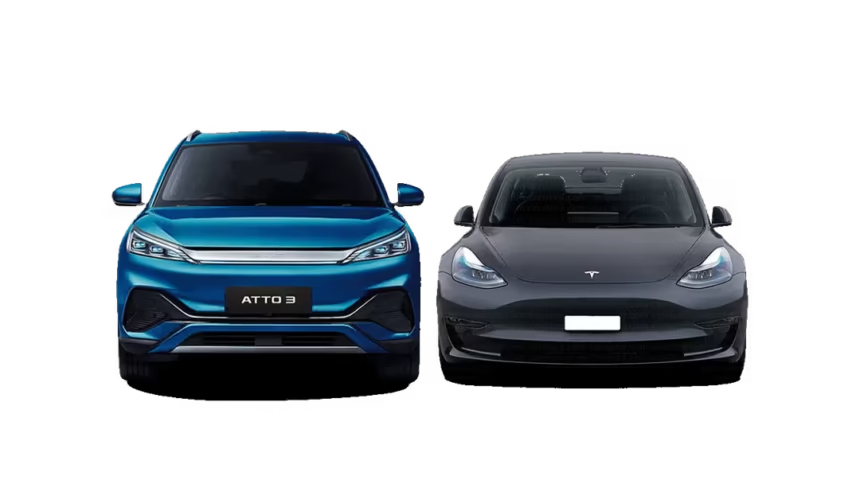
The landscape of the electric vehicle market has shifted dramatically as we move into 2026. For years, the industry was dominated by a single narrative, but today, the competition is more balanced and more intense than ever before. Two of the most significant contenders for the driveway of the modern consumer are the Tesla Model 3 and the BYD Atto 3. While one is a refined sedan that has defined the electric era, the other is a versatile SUV that represents the rapid global expansion of the world’s largest plug-in vehicle manufacturer.
- The Evolution of the 2026 Tesla Model 3
- The Rise of the 2026 BYD Atto 3
- Performance and Driving Dynamics
- Battery Technology: 4680 Cells vs Blade Battery
- Range and Real World Efficiency
- Interior Design and Technology
- Software and Connectivity
- Safety and Autonomous Driving
- Charging Infrastructure and Ecosystem
- Ownership Costs: Insurance, Maintenance, and Resale
- Global Availability and Market Trends
- Which One is Right for You?
- The Future of Sustainable Mobility
- Live Market Data and Specifications Summary
- Expert Verdict
- Source Links
In this comprehensive guide, we will break down every aspect of these two giants. From battery chemistry and autonomous driving capabilities to real world range and financing options, this is the definitive comparison for anyone looking to transition to sustainable transport in 2026.
The Evolution of the 2026 Tesla Model 3
The Tesla Model 3 has undergone several iterations since its initial debut, but the 2026 version represents the pinnacle of its design philosophy. Following the major Highland refresh, Tesla has continued to iterate on the vehicle’s hardware and software integration. The 2026 Model 3 is not just a car, it is a mobile computing platform that happens to have wheels.
For 2026, Tesla has focused on three core areas: range efficiency, cabin quietness, and the democratization of Full Self-Driving technology. The vehicle maintains its sleek, aerodynamic profile which allows it to cut through the air with a drag coefficient that remains a benchmark in the industry.
Tesla Model 3 Pricing and Variants for 2026
Pricing for the 2026 Tesla Model 3 has remained competitive, despite global inflationary pressures. The entry level Standard Rear Wheel Drive model starts at approximately $38,630. This makes it an attractive option for those looking to enter the ecosystem without a six figure investment.
The mid-tier Premium Rear Wheel Drive, formerly known as the Long Range in some markets, is priced at $44,130. For those who require the security of All Wheel Drive, the Premium AWD variant sits at $49,130. Finally, the Performance AWD model, which offers supercar-level acceleration, is positioned at $56,630. These prices include the destination fee but exclude potential local tax incentives which can further reduce the effective cost.
The Rise of the 2026 BYD Atto 3
While Tesla focused on refining a legend, BYD has been busy expanding a dynasty. The BYD Atto 3 has become a global phenomenon, particularly in Europe, Asia, and Oceania. In 2026, the Atto 3 is no longer the new kid on the block, it is a seasoned veteran with a reputation for reliability and value.
The 2026 BYD Atto 3 has received a significant facelift and a major mechanical update. The most notable addition to the lineup is the Performance AWD variant. This new model brings a dual motor setup to the Atto 3 for the first time, significantly closing the performance gap that previously existed between BYD’s compact SUV and Tesla’s sedan.
BYD Atto 3 Pricing and Trims for 2026
The BYD Atto 3 continues to play the value card effectively. In many markets, the Atto 3 starts at a price point slightly lower than the Model 3, typically ranging between $34,000 and $37,000 for the base Essential trim.
The Premium trim, which includes the larger 60 kWh battery and a host of luxury features, is priced closer to $40,000. The newly introduced 2026 Performance AWD model is expected to retail for around $46,000. This pricing strategy places the Atto 3 in a “sweet spot” for families who want the utility of an SUV without the “Tesla tax” often associated with the American brand.
Performance and Driving Dynamics
When comparing these two vehicles, the driving experience is where the differences are most palpable. The Tesla Model 3 is a driver-focused machine. Its low center of gravity and sharp steering make it feel nimble and responsive. Even in its base form, the 0 to 60 mph time of 5.8 seconds is more than enough for daily commuting.
The Model 3 Performance takes this to another level. With a 0 to 60 mph time of just 2.9 seconds, it competes with traditional combustion engine supercars. The suspension has been tuned to provide a balance between comfort and handling, though it remains on the firmer side compared to the BYD.
The BYD Atto 3, on the other hand, prioritizes comfort and visibility. As a compact SUV, it offers a higher seating position which many drivers prefer for urban navigation. The standard single motor variants offer a respectable 0 to 100 km/h (62 mph) time of 7.3 seconds.
The real news for 2026 is the Atto 3 Performance AWD. This model features a 310 kW (416 hp) dual motor system that allows it to sprint from 0 to 100 km/h in just 3.97 seconds. This makes it one of the fastest electric SUVs in its segment. Despite this speed, the BYD maintains a softer suspension setup than the Tesla, which is better at soaking up road imperfections in city environments.
Battery Technology: 4680 Cells vs Blade Battery
The heart of any electric vehicle is its battery, and here we see two completely different engineering philosophies.
Tesla’s 4680 Cylindrical Cells
Tesla has bet heavily on its 4680 cylindrical cell format. These cells are designed to be structural, meaning they form part of the car’s chassis. This reduces weight and increases energy density. In the 2026 Model 3, the 4680 cells use a Nickel Manganese Cobalt (NMC) chemistry in higher trims, which provides excellent power output and range.
The primary advantage of Tesla’s battery tech in 2026 is its integration with the Supercharger network. The Model 3 can add up to 175 miles of range in just 15 minutes at a V4 Supercharger, thanks to optimized thermal management.
BYD’s Blade Battery
BYD takes a different approach with its proprietary Blade Battery. This is a Lithium Iron Phosphate (LFP) battery that uses a long, thin, blade-like cell design. LFP chemistry is inherently safer than NMC as it is much less prone to thermal runaway or fire.
The 2026 Atto 3 benefits from the latest generation of the Blade Battery, which has improved energy density. While it may not offer the absolute peak power of Tesla’s NMC cells, it excels in longevity. BYD claims the Blade Battery can handle over 5,000 charge cycles with minimal degradation. Furthermore, the 2026 Atto 3 is moving toward an 800V architecture in its high-end trims, which allows for DC fast charging speeds that finally rival Tesla’s.
Range and Real World Efficiency
Range remains a top priority for buyers in 2026. The Tesla Model 3 continues to be the efficiency king. The 2026 Model 3 Premium RWD offers an EPA estimated range of 363 miles. Because of Tesla’s advanced software and heat pump technology, the real world range is remarkably close to the official estimates, even in colder climates.
The BYD Atto 3 has made strides but still trails slightly in outright efficiency. The 60 kWh battery provides a WLTP range of approximately 420 km (261 miles). In the real world, owners typically see about 340 to 380 km depending on driving conditions. However, the Atto 3’s range is more than sufficient for the average daily commute, which is less than 40 miles for most users globally.
The efficiency of the Model 3 is roughly 13.2 kWh per 100 km, whereas the Atto 3 consumes about 16 kWh per 100 km. This means that while both are cheap to run, the Tesla will cost slightly less in electricity over the long term.
Interior Design and Technology
The interior of these two cars could not be more different. It is a battle between minimalism and “funky” maximalism.
The Tesla Experience: Minimalist and Modern
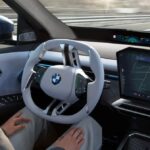
Stepping into a 2026 Tesla Model 3 is like stepping into a high-end lounge. There are almost no physical buttons. Everything, from the air vents to the glovebox, is controlled via the 15.4 inch central touchscreen. For 2026, Tesla has added a secondary 8 inch screen for rear passengers, allowing them to control climate and watch streaming services like Netflix or Disney Plus.
The materials used are premium and vegan-friendly. The “Highland” update brought significantly better sound insulation and acoustic glass, making the 2026 Model 3 one of the quietest cars in its class. However, the lack of a traditional instrument cluster behind the steering wheel remains a polarizing choice for some drivers.
The BYD Experience: Creative and Comfortable
The BYD Atto 3 interior is inspired by a gym and music. It features unique details like “guitar string” door pockets that actually play notes, and air vents that look like weight plates. The center of the cabin is dominated by a 15.6 inch touchscreen that can rotate between landscape and portrait modes.
Unlike Tesla, BYD provides a small 8.8 inch digital instrument cluster behind the steering wheel, which many drivers find more intuitive. The seats in the Atto 3 are exceptionally comfortable, often described as feeling like an “armchair on wheels.” For 2026, the Atto 3 has upgraded its interior materials to feel more premium, with softer touch plastics and improved ambient lighting that syncs with your music.
Software and Connectivity
In 2026, software is the new battleground. Tesla’s software remains the gold standard. It is fast, responsive, and receives frequent over-the-air (OTA) updates that can actually improve the car’s performance or safety. Tesla’s integrated navigation is still the best in the business, automatically planning charging stops and showing the real-time availability of Superchargers.
BYD’s software has improved significantly in the 2026 model year. It now supports wireless Apple CarPlay and Android Auto, something Tesla still refuses to offer. The “DiLink” system in the Atto 3 is highly customizable and supports a wide range of third-party apps. While it may not feel as “fluid” as Tesla’s interface, it offers more flexibility for the average smartphone user.
Safety and Autonomous Driving
Both vehicles have earned five star safety ratings from various global organizations, including Euro NCAP and ANCAP.
Tesla’s “Vision” based system uses high resolution cameras to power its Autopilot and Full Self-Driving (Supervised) features. By 2026, FSD has reached a level of maturity where it can handle most city streets and highways with minimal intervention, though the driver must remain attentive.
The BYD Atto 3 comes standard with a comprehensive suite of Advanced Driver Assistance Systems (ADAS). This includes adaptive cruise control, lane keep assist, and blind spot detection. For 2026, BYD has improved its sensor suite to include more advanced LIDAR and radar in certain markets, bringing its semi-autonomous capabilities closer to the level of Tesla’s basic Autopilot.
Charging Infrastructure and Ecosystem
The charging experience is often the deciding factor for EV buyers. Tesla’s Supercharger network remains its greatest asset. In 2026, most Superchargers have been opened to other brands, but Tesla owners still enjoy a “plug and charge” experience that is seamless.
The BYD Atto 3 uses the standard CCS2 charging port, meaning it can use almost any public fast charger. While it doesn’t have a dedicated brand-owned network on the scale of Tesla’s, the growth of third-party networks in 2026 has made charging an Atto 3 very easy. Furthermore, the Atto 3 features Vehicle-to-Load (V2L) technology, allowing you to plug in household appliances or even charge another EV directly from the car’s battery. This is a feature the Model 3 lacks.
Ownership Costs: Insurance, Maintenance, and Resale
When you look at the total cost of ownership, both cars offer significant savings over petrol or diesel vehicles.
Insurance for EVs has stabilized by 2026, but the Tesla Model 3 can still be slightly more expensive to insure in certain regions due to higher repair costs for its aluminum body and specialized sensors. The BYD Atto 3 generally enjoys slightly lower insurance premiums, making it a more budget friendly choice for younger drivers.
Maintenance for both is minimal. There are no oil changes, and brake pads last much longer thanks to regenerative braking. Tesla’s service model is primarily mobile, meaning they come to your house for many repairs. BYD relies on a growing network of traditional dealerships, which provides a more familiar experience for those who prefer face-to-face interaction.
Resale value for the Tesla Model 3 remains strong, as the brand has high desirability. However, BYD’s rising brand recognition and the longevity of the Blade Battery mean that the Atto 3’s depreciation is now comparable to established Japanese and European brands.
Global Availability and Market Trends
In 2026, the EV market is no longer limited to the US and China. The Tesla Model 3 is produced in Gigafactories across the globe, including Fremont, Shanghai, and Berlin. This ensures steady supply and relatively short wait times.
BYD has expanded its manufacturing footprint to include plants in Thailand, Brazil, and Hungary. This localized production helps BYD avoid some of the tariffs that have been placed on Chinese-made vehicles in certain regions. In many parts of the world, the Atto 3 is actually more readily available than the Model 3.
The 2026 market trend shows a shift toward “affordable luxury.” Consumers are demanding premium features at a mid-range price point, and both Tesla and BYD are delivering. The competition between these two has forced other manufacturers to lower their prices and improve their tech, which is a win for the consumer.
Which One is Right for You?
Choosing between the Tesla Model 3 and the BYD Atto 3 in 2026 depends on your lifestyle and priorities.
Choose the Tesla Model 3 if:
- You prioritize performance and handling.
- You do frequent long distance road trips and want the best charging network.
- You love a minimalist, tech-forward aesthetic.
- You want the most advanced autonomous driving software available.
- You prefer a sedan over an SUV.
Choose the BYD Atto 3 if:
- You need the practicality and high seating position of an SUV.
- You value battery safety and longevity above all else.
- You want the best possible value for your money.
- You prefer having a traditional instrument cluster and physical phone integration (CarPlay/Android Auto).
- You want a car with a more expressive and creative interior design.
The Future of Sustainable Mobility
As we look toward the end of the decade, the Tesla Model 3 vs BYD Atto 3 rivalry will be remembered as the catalyst that brought electric vehicles into the mainstream. Both cars offer a glimpse into a future where transport is quiet, clean, and incredibly fast.
Whether you choose the precision of the Tesla or the practicality of the BYD, you are making a choice that benefits the environment. In 2026, the question is no longer “Should I buy an EV?” but rather “Which EV fits my life the best?”
Live Market Data and Specifications Summary
Below is a detailed comparison of the key specifications for the 2026 models based on current market data and reliable projections.
| Feature | Tesla Model 3 (Standard RWD) | BYD Atto 3 (Premium) |
| Starting Price | $38,630 | ~$37,000 |
| Range (Est.) | 363 Miles (EPA) | 261 Miles (WLTP) |
| 0 to 60 mph | 5.8 Seconds | 7.3 Seconds |
| Top Speed | 125 mph | 100 mph |
| Charging Speed | Up to 170 miles in 15 mins | 10 to 80 percent in 35 mins |
| Battery Tech | 4680 Cylindrical (NMC/LFP) | Blade Battery (LFP) |
| Infotainment | 15.4 Inch Fixed | 15.6 Inch Rotating |
| Drive Type | Rear Wheel Drive | Front Wheel Drive |
| Cargo Space | 24 Cubic Feet | 15.5 Cubic Feet (Rear) |
The 2026 models show that both companies have listened to customer feedback. Tesla has made the Model 3 more comfortable and quieter, while BYD has made the Atto 3 more powerful and technologically advanced.
Expert Verdict
The 2026 Tesla Model 3 remains the superior “driving machine.” Its efficiency and software integration are still a step ahead of the rest of the industry. However, the BYD Atto 3 has closed the gap significantly. For families or those who prioritize a comfortable, safe, and feature-rich SUV experience, the Atto 3 is often the more logical choice.
The introduction of the AWD Performance variant for the Atto 3 in 2026 is a game changer, finally giving BYD a contender that can match Tesla’s raw speed. As infrastructure continues to improve, the “range anxiety” of the past is fading, leaving these two vehicles to compete on their own merits: design, comfort, and technological innovation.
Source Links
For those who wish to dive deeper into the technical specifications and latest reviews, please consult the following authoritative sources: