
The landscape of global transportation is undergoing a monumental shift. As of late December 2025, the transition toward electric mobility is no longer a distant vision but a rapidly accelerating reality. Recent market data from the final quarter of 2025 indicates that global plug-in vehicle sales have climbed to represent nearly 24 percent of the total light-vehicle market. This surge is driven by a combination of technological breakthroughs in energy storage and a global commitment to sustainable infrastructure. However, to understand the sophisticated machines navigating our streets today, one must look back nearly two centuries to a time when electricity, not gasoline, was the leading contender for the future of travel.
- The Early Pioneers and the Birth of Electric Propulsion (1828 to 1835)
- The Invention of the Rechargeable Battery and Practical Prototypes
- The Golden Age of Electric Vehicles (1890 to 1910)
- The Great Decline: How Gasoline Gained the Upper Hand
- The Mid-Century Lull and the Spark of Rebirth (1960 to 1980)
- The 1990s: Legislation and the GM EV1
- The Tesla Revolution and the Modern Landscape
- 2025 Market Trends and Daily Technological Updates
- The Economic and Investment Outlook for 2025 and Beyond
- Sustainable Transport and Environmental Impact
- Conclusion: The Road Ahead
The Early Pioneers and the Birth of Electric Propulsion (1828 to 1835)
The story of the electric vehicle began long before the internal combustion engine became a household term. Between 1828 and 1835, inventors across the globe were experimenting with the concept of battery-powered locomotion. In Hungary, Ányos Jedlik created a small-scale model car powered by an electric motor. Around the same time, in the Netherlands, Professor Sibrandus Stratingh and his assistant Christopher Becker developed a small-scale electric vehicle powered by non-rechargeable primary cells.
In the United States, Thomas Davenport, a blacksmith from Vermont, is often credited with building the first American DC electric motor in 1834. He installed it in a small model car that operated on a short, circular track. These early attempts were hampered by one significant limitation: the batteries were not rechargeable. These primary cells were expensive and consumed themselves during use, making the vehicles more of a scientific curiosity than a practical means of transport.
The Invention of the Rechargeable Battery and Practical Prototypes
A turning point arrived in 1859 when French physicist Gaston Planté invented the lead-acid battery. This was the first battery that could be recharged by passing a reverse current through it. In 1881, Camille Alphonse Faure improved the design, significantly increasing the battery capacity and making it viable for industrial use.
With the energy storage problem partially solved, the 1880s saw the emergence of the first practical electric vehicles. In 1884, Thomas Parker, an English inventor who was also responsible for electrifying the London Underground, built the first production electric car in Wolverhampton. He was concerned about the rising levels of smoke and pollution in London and saw electricity as the cleanest alternative. Across the Atlantic, William Morrison, a chemist from Des Moines, Iowa, debuted his six-passenger electric wagon in 1890. It had a top speed of 14 miles per hour and could travel about 50 miles on a single charge. Morrison’s vehicle sparked a wave of interest across America, leading to the formation of dozens of electric carriage companies.
The Golden Age of Electric Vehicles (1890 to 1910)
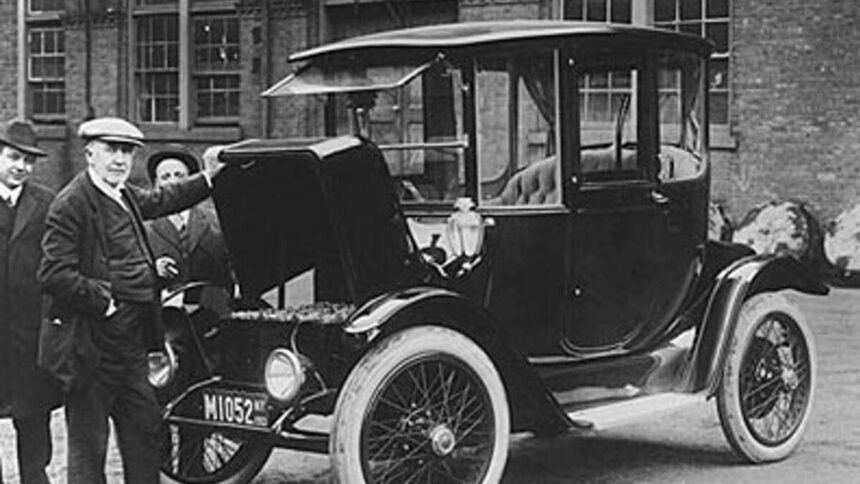
By the turn of the century, electric vehicles were the preferred choice for urban residents. In 1900, approximately 38 percent of American automobiles were electric, while 40 percent were powered by steam and only 22 percent ran on gasoline. Electric cars offered several advantages over their competitors at the time. They were quiet, did not emit smelly exhaust, and were significantly easier to start than gasoline cars, which required a strenuous manual hand crank.
During this period, electric taxis became a common sight in major cities. In 1897, Walter Bersey introduced a fleet of battery-powered cabs to the streets of London, famously nicknamed Hummingbirds because of the sound they made. In New York City, the Electric Vehicle Company operated a fleet of dozens of hansom cabs. These vehicles were often marketed as luxury products for women and the wealthy, featuring ornate interiors and plush materials. Even the legendary Ferdinand Porsche entered the fray in 1898, designing the Egger-Lohner C.2 Phaeton, and later the world’s first functional hybrid vehicle, the Lohner-Porsche Mixte, in 1901.
The Great Decline: How Gasoline Gained the Upper Hand
Several factors converged in the early 20th century to bring the first era of electric mobility to an end. The first was the discovery of massive oil reserves in Texas and Oklahoma, which made gasoline incredibly cheap. Simultaneously, the development of the American highway system meant that drivers wanted vehicles with a longer range than the 30 to 50 miles offered by electric batteries.
However, the most decisive blows came from Henry Ford. In 1908, the introduction of the mass-produced Model T made gasoline cars affordable for the average citizen. While an electric roadster might cost 1,750 dollars, a Model T could be purchased for around 650 dollars. Then, in 1912, Charles Kettering invented the electric self-starter, eliminating the need for the dangerous hand crank. This removed the final major advantage of electric cars. By 1935, electric vehicles had almost entirely disappeared from the market, relegated to niche uses like milk delivery trucks in the United Kingdom.
The Mid-Century Lull and the Spark of Rebirth (1960 to 1980)
For several decades, the internal combustion engine reigned supreme. It was not until the late 1960s and early 1970s that interest in alternative fuels resurfaced. Concerns over air pollution and the 1973 Arab Oil Embargo, which caused gasoline prices to skyrocket, prompted governments and manufacturers to look at electricity once again.
In 1971, the profile of electric propulsion received a massive boost when NASA’s Lunar Roving Vehicle successfully navigated the surface of the moon. This high-profile application proved that electric motors could be reliable in the most extreme environments. Back on Earth, companies like Sebring-Vanguard produced the CitiCar, a wedge-shaped electric vehicle that became the most-produced American electric car until the 2010s. Despite these efforts, the limited range and low speeds of these vehicles meant they failed to capture the mass market.
The 1990s: Legislation and the GM EV1
The modern era of electric vehicles began to take shape in the 1990s, largely driven by environmental regulations in California. The California Air Resources Board (CARB) passed a mandate requiring zero-emission vehicles to make up a percentage of a manufacturer’s sales. This forced major automakers to return to the laboratory.
General Motors responded with the EV1, a sleek, aerodynamic car that developed a cult following. It was the first mass-produced electric vehicle from a major manufacturer in the modern era. However, the program was famously canceled, and the cars were repossessed and crushed, a story documented in the film Who Killed the Electric Car? Despite its tragic end, the EV1 proved that a high-performance, highway-capable electric car was possible. This era also saw the commercialization of the lithium-ion battery by Sony in 1991, providing the energy density required to finally compete with gasoline.
The Tesla Revolution and the Modern Landscape
The narrative shifted permanently in 2008 with the release of the Tesla Roadster. Unlike previous electric cars, which were often viewed as slow or boring, the Roadster was a high-performance sports car with a range of over 200 miles. Tesla proved that electric vehicles could be aspirational luxury items. This success forced the entire automotive industry to pivot.
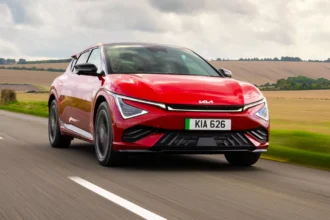
By the early 2020s, every major legacy automaker, from Volkswagen and Hyundai to General Motors and Ford, had announced multi-billion dollar investments in electrification. As we stand at the end of 2025, the market has matured significantly. The introduction of the Tesla Model Y and Model 3, alongside competitors like the Hyundai IONIQ 5 and the Ford Mustang Mach-E, has pushed electric vehicle adoption into the mainstream.
2025 Market Trends and Daily Technological Updates
The current state of the industry in 2025 is defined by “Stable Volume and Improved Quality.” While some markets in North America have seen a stabilization of growth, the global picture remains one of expansion.
Breaking Breakthroughs in Battery Technology
The most significant news of late 2025 is the progress in solid-state battery technology. Samsung has recently reported breakthroughs in silver-based solid-state batteries. These units replace the liquid electrolyte found in traditional lithium-ion batteries with a solid material, offering significantly higher energy density and improved safety. These batteries are expected to provide ranges of over 600 miles and can be recharged in under 10 minutes.
Global Sales and Infrastructure Growth
Current 2025 statistics show that China continues to lead the world, with electric vehicles accounting for over 50 percent of their domestic car sales. In Europe, despite trade uncertainties, sales are forecast to rise by over 26 percent in 2025 as stricter CO2 targets take effect. Emerging markets like India and Brazil are also seeing record-breaking adoption rates, driven by the arrival of low-cost models and government subsidies.
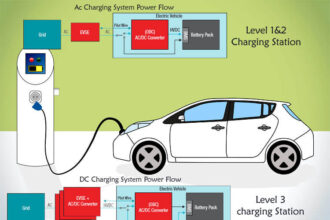
The investment in charging infrastructure has also reached a critical mass. As of late 2025, the global charging network has expanded fivefold since 2022. Public charging stations are now being integrated into traditional gas stations and retail centers at an unprecedented rate, easing the “range anxiety” that historically hindered sales.
The Economic and Investment Outlook for 2025 and Beyond
For those monitoring the financial health of the sector, the transition to electric mobility represents a massive reallocation of capital. The global electric vehicle market was valued at over 713 billion dollars in 2024 and is projected to surpass 2.1 trillion dollars by 2032.
The investment landscape in 2025 is focused on three key areas:
- Supply Chain Vertical Integration: Automakers are no longer just building cars; they are investing directly in lithium and cobalt mines to secure their raw material supply.
- Next-Generation Motors: Companies like Ola Electric have introduced ferrite motors that do not require rare-earth magnets, reducing dependence on volatile international supply chains.
- Software-Defined Vehicles: Modern electric cars are essentially computers on wheels. Revenue is increasingly being generated through over-the-air updates, autonomous driving subscriptions, and integrated digital ecosystems.
Sustainable Transport and Environmental Impact
The primary driver for the history of the electric vehicle remains the quest for sustainability. In 2025, the decarbonization of the transport sector is a central pillar of global climate policy. Electric vehicles produced today have a significantly lower carbon footprint over their lifetime compared to internal combustion engines, even when accounting for the manufacturing of the batteries.
As the global power grid becomes greener with the addition of solar and wind energy, the environmental benefits of electric cars continue to multiply. Furthermore, the development of battery recycling technologies ensures that the materials used in today’s cars will power the vehicles of the next generation, creating a truly circular economy.
Conclusion: The Road Ahead
From the crude electric carriages of the 1830s to the AI-integrated, solid-state powered machines of 2025, the journey of the electric vehicle has been one of cycles, innovation, and eventual triumph. The technology has survived oil booms, legislative battles, and manufacturing hurdles to become the undisputed future of personal and commercial transport.
As we look toward 2030, the goal of many nations to phase out the sale of new gasoline cars seems more attainable than ever. The electric vehicle is no longer a niche alternative; it is the catalyst for a cleaner, more efficient, and technologically advanced world.
https://kentshield.online/
https://kentshield.online/category/ev-basics/