

The global automotive landscape is currently undergoing a transformation so profound that it rivals the invention of the assembly line itself. At the center of this seismic shift is Ford Motor Company, an American icon that is reinventing its entire identity to meet the demands of a digital and sustainable future. Recent announcements regarding Ford’s upcoming $30,000 electric vehicle platform have sent ripples through the financial markets and the technology sector alike. This project, often referred to as the brainchild of a specialized skunkworks team, represents more than just a new car. It is a strategic pivot designed to democratize electric transport while introducing groundbreaking autonomous capabilities by 2028.
- The Visionary Strategy Behind Ford’s Affordable EV Skunkworks Team
- Defining Eyes Off Driving: The 2028 Technological Milestone
- The Economic Impact of a Thirty Thousand Dollar Electric Truck
- Investment Outlook and the Competitive Landscape
- The Engineering Behind the Platform: Batteries and Efficiency
- Sustainable Energy and the Infrastructure Challenge
- Life in 2028: The User Experience of Autonomous Transit
- Safety and Regulation in the Eyes-Off Era
- Global Logistics and the Small Business Revolution
- Environmental Stewardship and Corporate Responsibility
- The Intersection of Fintech and Automotive Sales
- Conclusion: The Road to 2028
- Live Daily Information and Real-Time Updates
As we look toward the late 2020s, the intersection of affordability and advanced software is where the next great market battle will be fought. Ford is positioning itself to not only compete with domestic rivals but also to provide a robust answer to the low-cost electric vehicles emerging from international markets. The promise of an electric truck at a thirty thousand dollar price point, combined with eyes-off driving technology, marks a new era for personal and commercial logistics.
The Visionary Strategy Behind Ford’s Affordable EV Skunkworks Team
To understand where Ford is going, one must look at how they are building. Recognizing that traditional automotive development cycles are often too slow and costly for the fast-paced EV market, Ford CEO Jim Farley established a dedicated skunkworks team in California. This group, led by former Tesla engineering talent, was given a specific mandate: create a low-cost, high-efficiency electric vehicle platform that can scale globally.
The goal is to strip away the complexity that often plagues modern electric cars, focusing instead on vertical integration and simplified manufacturing. By operating like a startup within a legacy giant, this team has been able to innovate on battery chemistry and structural design without the overhead of traditional corporate bureaucracy. This lean approach is the primary reason Ford believes it can achieve a $30,000 price point without sacrificing the profitability that investors demand.
Defining Eyes Off Driving: The 2028 Technological Milestone
One of the most provocative aspects of Ford’s roadmap is the commitment to eyes-off driving by 2028. For those following the progression of automated driving systems, this represents a leap into Level 3 and potentially Level 4 autonomy. Currently, systems like Ford’s BlueCruise or Tesla’s Autopilot are considered hands-off but require the driver to keep their eyes on the road at all times.
Eyes-off driving changes the fundamental relationship between the driver and the vehicle. It implies that under specific conditions, such as on mapped highways, the vehicle takes full responsibility for the driving task, allowing the occupant to engage in other activities like reading, working, or resting. This level of autonomy requires a massive increase in redundant sensors, including advanced Lidar, high-resolution cameras, and sophisticated radar systems, all orchestrated by a high-performance onboard computer.
The integration of this technology into an affordable platform is a bold move. Typically, advanced autonomy is reserved for luxury flagship models. By targeting 2028 for mass-market availability, Ford is betting that the cost of these sensors and the necessary computing power will drop significantly over the next few years, much like the cost of batteries has over the last decade.
The Economic Impact of a Thirty Thousand Dollar Electric Truck
Affordability has long been the primary barrier to mass EV adoption. While early adopters were willing to pay a premium for luxury electric sedans and high-end SUVs, the broader market requires a vehicle that fits the average household budget. A $30,000 electric truck would be a game-changer for several reasons.
First, it targets the most popular vehicle segment in North America. The Ford F-Series has been the best-selling vehicle for decades. Bringing that utility to an electric platform at a price that competes with internal combustion engine vehicles is the “holy grail” of the industry. Second, the total cost of ownership for such a vehicle is remarkably low. When you factor in reduced maintenance costs and the lower price of electricity compared to gasoline, a $30,000 EV becomes an incredibly attractive financial proposition for middle-class families and small business owners.
Furthermore, this platform will likely serve as the foundation for multiple body styles. While the truck is the headline-grabber, the same underlying architecture could support compact SUVs and vans, creating a versatile ecosystem that drives down costs through massive economies of scale.
Investment Outlook and the Competitive Landscape
From an investment perspective, Ford’s pivot is a high-stakes maneuver. The company is navigating the difficult “valley of death” where it must fund massive research and development for EVs while its traditional gasoline-powered business continues to provide the necessary cash flow.
The competition is fierce. Tesla continues to iterate on its manufacturing processes, while Chinese manufacturers like BYD are already producing highly capable EVs at lower price points than most Western consumers are used to. Ford’s advantage lies in its deep understanding of the truck market and its extensive dealer and service network. By focusing on a $30,000 platform, Ford is aiming directly at the heart of the market where the highest volumes are found.
Wall Street analysts are closely watching the progress of the skunkworks team. Success here would mean that Ford has solved the profitability puzzle that has hindered many legacy automakers in their transition to electric power. If Ford can deliver a vehicle that is both affordable to the consumer and profitable for the company, it will solidify its position as a leader in the new energy economy.
The Engineering Behind the Platform: Batteries and Efficiency
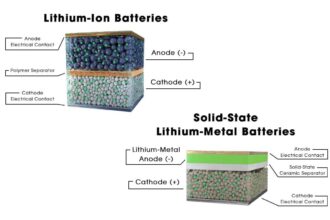
Achieving a $30,000 price point requires radical engineering choices. One of the most significant factors is battery chemistry. It is widely expected that Ford will utilize Lithium Iron Phosphate (LFP) batteries for its affordable platform. LFP batteries are cheaper to produce, do not require cobalt (which is expensive and difficult to source ethically), and offer excellent longevity and safety profiles.
Beyond chemistry, the physical design of the platform focuses on aerodynamics and weight reduction. Every bit of drag reduced and every pound saved translates directly into better range or the ability to use a smaller, cheaper battery pack. The skunkworks team is reportedly obsessed with “aerodynamic efficiency,” using advanced simulations to create shapes that cut through the air with minimal resistance.
Another key component is the software architecture. Ford is moving toward a centralized “zone” architecture where a few powerful computers control the entire vehicle, rather than dozens of small, disconnected modules. This reduces the amount of wiring needed, which saves weight and cost, while also making it much easier to deliver over-the-air (OTA) updates.
Sustainable Energy and the Infrastructure Challenge
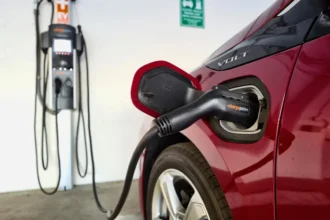
The success of Ford’s 2028 vision is intrinsically linked to the development of charging infrastructure. A $30,000 EV truck is only useful if the owner can reliably and quickly charge it. Ford has taken a significant step in this direction by adopting the North American Charging Standard (NACS), giving its customers access to the vast Tesla Supercharger network.
Moreover, the rise of affordable EVs will place new demands on the power grid. This has sparked a surge in investment in renewable energy projects and smart grid technologies. We are seeing a synergy between the automotive and energy sectors, where EVs act as mobile battery storage units that can help stabilize the grid during peak demand. This concept, known as vehicle-to-grid (V2G) technology, could potentially turn a Ford truck into a revenue-generating asset for its owner.
Life in 2028: The User Experience of Autonomous Transit
Imagine a typical morning in the year 2028. You step into your Ford electric truck, which has been pre-conditioned to your preferred temperature using energy from your home solar array. As you pull onto the highway, you engage the eyes-off driving mode. The steering wheel retracts slightly, and the interior lighting shifts to a soft, productive hue.
During your forty-minute commute, you are not stressed by stop-and-go traffic. Instead, you are reviewing a presentation on the large central display, catching up on the morning news, or simply enjoying a cup of coffee while watching the landscape go by. The truck’s sensors are scanning the environment thousands of times per second, communicating with other vehicles and infrastructure to ensure the smoothest, safest route possible.
This is the promise of Ford’s 2028 vision. It is not just about moving people from point A to point B; it is about reclaiming the time spent in transit. This shift has profound implications for urban planning and real estate, as longer commutes become more palatable when the time can be used productively.
Safety and Regulation in the Eyes-Off Era
The transition to eyes-off driving is not without its hurdles. Safety is the paramount concern, and regulatory bodies like the National Highway Traffic Safety Administration (NHTSA) are working to establish frameworks for these advanced systems. Ford must prove that its autonomous technology is significantly safer than a human driver before it can be widely deployed.
This involves millions of miles of real-world and simulated testing. The 2028 timeline gives Ford the necessary window to refine its algorithms and ensure that the “edge cases”—those rare and unpredictable road events—are handled with absolute precision. Insurance companies are also preparing for this shift, as the liability for accidents may move from the individual driver to the vehicle manufacturer when the autonomous system is in control.
Global Logistics and the Small Business Revolution
While much of the focus is on personal use, the $30,000 electric truck platform will have a massive impact on small businesses and commercial fleets. For a contractor, a delivery service, or a tradesperson, the vehicle is a tool. A low-cost electric truck reduces operating overhead significantly.
With eyes-off technology, commercial productivity could soar. A driver could handle administrative tasks, billing, or scheduling while the truck handles the long stretches of highway between job sites. This increases efficiency and reduces the fatigue associated with professional driving, leading to safer roads and more profitable businesses.
Environmental Stewardship and Corporate Responsibility
Ford’s commitment to an affordable EV platform is a key part of its broader sustainability goals. By making electric vehicles accessible to a wider demographic, Ford is accelerating the reduction of carbon emissions from the transportation sector. This aligns with global climate targets and the increasing consumer demand for environmentally responsible products.
The manufacturing process itself is also being overhauled. Ford is investing in “BlueOval City,” a massive, sustainable automotive manufacturing ecosystem in Tennessee. This facility is designed to be carbon neutral and will use recycled materials and renewable energy to produce the next generation of electric trucks. This holistic approach ensures that the environmental benefits of the vehicle start long before it ever hits the road.
The Intersection of Fintech and Automotive Sales
As vehicles become more like software platforms, the way we buy and finance them is changing. The $30,000 price point is strategically chosen to fit within the sweet spot of modern financing and leasing models. We are seeing the rise of “subscription” services for software features, where owners might pay a monthly fee for the eyes-off driving capability or enhanced performance metrics.
This creates a recurring revenue stream for Ford, similar to a tech company. For the consumer, it offers flexibility. You might choose to enable advanced autonomy only for a long road trip, saving money during months when you only do local driving. This fusion of automotive engineering and financial technology is a hallmark of the new era of mobility.
Conclusion: The Road to 2028
Ford’s announcement regarding its $30,000 EV platform and the 2028 eyes-off driving goal is a landmark moment in automotive history. It represents a bold synthesis of affordability, advanced technology, and strategic foresight. By focusing on the heart of the market and leveraging a lean, startup-like engineering team, Ford is positioning itself to lead the transition to a sustainable, autonomous future.
The journey to 2028 will be filled with challenges, from supply chain logistics to regulatory approvals. However, the potential rewards for consumers, investors, and the environment are immense. As we move closer to this milestone, the vision of a world where safe, clean, and productive transportation is available to everyone becomes clearer every day.
Live Daily Information and Real-Time Updates
For those following this story in real-time, the situation evolves daily. Market fluctuations, new patent filings, and legislative updates regarding autonomous vehicle testing are frequent. It is recommended to monitor official Ford investor relations communications and major automotive news outlets for the latest breakthroughs.
The “skunkworks” project is currently in an intensive testing phase, with prototypes being spotted in various environments. As 2028 approaches, expect a steady cadence of announcements regarding battery suppliers, software partnerships, and specific vehicle features.