

The landscape of the automotive industry has undergone a radical transformation as we navigate through December 2025. For families looking toward the 2026 model year, the choices are no longer limited to compromise:heavy vehicles or short-range commuters. The current market offers a sophisticated blend of high-performance engineering, luxury interior craftsmanship, and advanced safety suites that rival even the most established internal combustion legends. Selecting a family vehicle today involves a deep look into long-term asset value, technological longevity, and the financial benefits of modern energy platforms. This guide provides an exhaustive analysis of the top contenders in the electric vehicle space for 2026, focusing on the needs of modern households.
- The Tesla Model Y Juniper Refresh: A New Standard for Utility
- Lucid Gravity: The Pinnacle of Luxury and Efficiency
- Rivian R2: The Rugged Midsize Challenger
- Hyundai Ioniq 9: The Ultimate Three-Row Family Hauler
- Cadillac Vistiq: American Luxury Reimagined
- Volvo EX90: The Safety Pioneer
- Kia EV9: The Value-Driven Powerhouse
- Comparing the Top 2026 Family Electric Vehicles
- Advanced Driver Assistance and Autonomous Systems in 2026
- The Economic Benefits of Choosing an EV in 2026
- Battery Technology Breakthroughs for the 2026 Model Year
- Infrastructure and Charging: The 2026 Reality
- The Future of Family Mobility: Beyond 2026
- Choosing the Right EV for Your Household
- Conclusion
The Tesla Model Y Juniper Refresh: A New Standard for Utility
The 2026 Tesla Model Y, often referred to by its developmental codename Juniper, remains the benchmark for the midsize family SUV segment. Following its significant update in 2025, the 2026 version has refined the driving experience to address previous criticisms regarding ride quality and cabin noise. Families will find the updated suspension system particularly beneficial, as it utilizes frequency-selective damping to smooth out urban road imperfections.
Design and Aerodynamics
The exterior of the Model Y Juniper features a sleeker front fascia and redesigned lighting elements. These changes are not merely aesthetic: they improve the drag coefficient, allowing the vehicle to achieve a range of up to 373 miles on the Long Range All-Wheel Drive variant. The removal of traditional stalks in favor of steering wheel controls and a minimalist dashboard further aligns it with the flagship Model S and Model X.
Interior Versatility and Tech
The 2026 Model Y continues to offer a versatile 5 or 7-seat configuration. The 7-seat layout is ideal for families with younger children, though the third row remains best suited for shorter trips. Storage remains a strong point with a massive front trunk and a flat-folding rear row that provides over 70 cubic feet of cargo space. The central 15.4-inch touchscreen remains the hub for all vehicle functions, now powered by a faster processor to handle complex autonomous driving visualizations and high-definition entertainment for children during charging stops.
Source: Tesla Official Specifications
Lucid Gravity: The Pinnacle of Luxury and Efficiency
For families seeking a premium experience without sacrificing utility, the 2026 Lucid Gravity is the undisputed leader in efficiency and space. Lucid has successfully translated the record-breaking technology from the Air sedan into a full-sized three-row SUV that challenges the status quo of luxury automotive design.
Performance and Ultra-Fast Charging
The Gravity Grand Touring model delivers a staggering 828 horsepower, enabling a 0 to 60 mph sprint in just 3.4 seconds. While speed is impressive, the real value for families lies in the range and charging. With an EPA-estimated range of up to 450 miles, the Gravity minimizes the need for frequent stops on long road trips. Furthermore, its 900V architecture allows it to regain 200 miles of range in less than 11 minutes at a compatible high-speed charging station.
The Sanctuary Interior
Inside, the Gravity offers “Sanctuary” modes: multisensory experiences that use the 22-speaker Surreal Sound Pro system and ambient lighting to create a calming environment. The second-row passengers enjoy executive-level legroom and integrated convenience tables, while the third row can comfortably accommodate adults, a rarity in the electric SUV segment. This vehicle represents a significant financial investment in sustainable luxury, often retaining high value due to its industry-leading battery technology.
Source: Lucid Motors Media Room
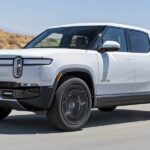
Rivian R2: The Rugged Midsize Challenger
The highly anticipated Rivian R2 is slated for its first full year of wide availability in 2026. Starting at an estimated $45,000, it targets the heart of the family market. The R2 is designed for those who balance the daily school run with weekend outdoor adventures.
Utility and Outdoor Readiness
One of the R2’s standout features is its “all-glass-down” capability. The rear window can be lowered into the tailgate, and the rear quarter windows vent, allowing for unique airflow and the ability to carry long items like surfboards or lumber. Inside, the R2 features two gloveboxes and a flashlight integrated into the driver side door, maintaining Rivian’s reputation for clever, thoughtful design.
Adventure Tech and Safety
Every R2 comes equipped with 11 cameras and 5 radar sensors. This hardware suite supports Rivian’s advanced driver assistance systems, which offer significant hands-free capabilities on highways. With a range of over 300 miles across all configurations: single, dual, or tri-motor: the R2 ensures that range anxiety is a thing of the past for the modern adventurous family.
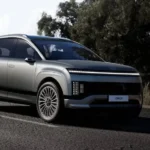
Hyundai Ioniq 9: The Ultimate Three-Row Family Hauler
Hyundai has officially expanded its award-winning Ioniq lineup with the 2026 Ioniq 9. Built on the proven E-GMP platform, this SUV is essentially a “living room on wheels,” designed specifically for large families who require maximum interior volume and rapid charging.
Interior Innovation: The Universal Island
The Ioniq 9 features a completely flat floor, which allows for a sliding center console known as the Universal Island 2.0. This can be moved back to provide the second-row passengers with their own storage and charging hub. The vehicle offers “Relaxation Seats” in the first and second rows, which can fully recline with leg rests, turning a charging stop into a restorative break for parents.
Charging and Range Specifications
Powered by a 110.3 kWh battery, the Ioniq 9 offers up to 335 miles of range. Its 800V system remains a competitive advantage, allowing the battery to charge from 10% to 80% in approximately 24 minutes. For families, this means the time spent at a highway charger is roughly equivalent to a quick meal or a restroom break.
Source: Hyundai Global Newsroom
Cadillac Vistiq: American Luxury Reimagined
The 2026 Cadillac Vistiq fills the gap between the Lyriq and the massive Escalade IQ. It is a sophisticated, three-row luxury SUV that leverages General Motors’ Ultium battery platform to provide a smooth, powerful, and tech-forward driving experience.
Visual Grandeur and Lighting
Cadillac has emphasized “choreographed lighting” with the Vistiq. As the driver approaches, the LED grille and headlamps perform a welcoming sequence. The interior is dominated by a 33-inch diagonal advanced LED display that integrates navigation, entertainment, and vehicle settings into a single, high-definition interface.
Performance and Ride Comfort
Standard with dual-motor all-wheel drive, the Vistiq produces 615 horsepower and 650 lb:ft of torque. Families will appreciate the available Air Ride Adaptive Suspension, which constantly adjusts to road conditions to maintain a cloud-like ride quality. Additionally, the inclusion of Super Cruise as a standard feature for the first three years offers hands-free driving on over 400,000 miles of compatible roads in North America.
Source: Cadillac Vistiq Product Page
Volvo EX90: The Safety Pioneer
Volvo has long been synonymous with family safety, and the 2026 EX90 is the safest vehicle the brand has ever produced. It acts as a highly advanced computer on wheels, designed to protect occupants through a combination of hardware and software that continuously learns from its environment.
LiDAR and the Safety Shield
The EX90 features a roof-mounted LiDAR sensor as standard. Unlike cameras alone, LiDAR can “see” in total darkness and through heavy rain or snow, detecting pedestrians or obstacles hundreds of yards away. This creates a “safety shield” around the vehicle that significantly reduces the likelihood of severe accidents.
Sustainable Luxury
The interior avoids traditional leather in favor of “Nordico,” a high-tech material made from recycled PET bottles and bio-attributed material from Swedish forests. The cabin is incredibly quiet, thanks to extensive acoustic insulation and a Bowers & Wilkins High Fidelity sound system with speakers integrated into the headrests for an immersive audio experience.
Kia EV9: The Value-Driven Powerhouse
The Kia EV9 has already won numerous “Car of the Year” awards, and for 2026, it receives refinements in its battery management software and interior materials. It remains one of the few three-row EVs that provides a premium experience at a price point accessible to many upper-middle-class families.
Family-Centric Features
The EV9 offers swiveling second-row seats (in certain markets), allowing passengers to face the third row, creating a lounge-like atmosphere. It also features Vehicle-to-Load (V2L) technology, which allows the car to act as a massive power bank. Families can plug in a laptop, a portable fridge, or even coffee makers during camping trips, using the car’s main battery.
Performance and Ownership
With dual motors, the EV9 provides confident acceleration for highway merging even when fully loaded with seven passengers and luggage. Kia’s industry-leading 10-year/100,000-mile powertrain warranty provides significant peace of mind for families planning to keep their vehicle long-term.
Comparing the Top 2026 Family Electric Vehicles
The following data provides a quick reference for the most critical metrics families consider when selecting an electric vehicle.
| Model | Seating Capacity | Max Range (Est.) | Charging Speed (10-80%) | Starting Price (Est.) |
| Tesla Model Y | 5 / 7 | 373 miles | 27 mins | $48,000 |
| Lucid Gravity | 7 | 450 miles | 11 mins | $79,900 |
| Rivian R2 | 5 | 300+ miles | 30 mins | $45,000 |
| Hyundai Ioniq 9 | 6 / 7 | 335 miles | 24 mins | $59,000 |
| Cadillac Vistiq | 7 | 300 miles | 30 mins | $77,000 |
| Volvo EX90 | 7 | 360 miles | 30 mins | $76,000 |
| Kia EV9 | 6 / 7 | 304 miles | 24 mins | $55,000 |
Advanced Driver Assistance and Autonomous Systems in 2026
As we move into 2026, the technology behind driver assistance has evolved from simple cruise control to sophisticated autonomous suites. For families, this technology serves two purposes: reducing driver fatigue during long commutes and providing an extra layer of active safety.
The Rise of LiDAR and AI
Most 2026 models, including the Volvo EX90 and the Cadillac Vistiq, utilize a combination of LiDAR, Radar, and AI-driven camera systems. These systems are now capable of “Intent Prediction,” where the vehicle’s software analyzes the movement of surrounding cars and pedestrians to anticipate potential hazards before they occur.
Hands-Free Highway Driving
Systems like Tesla’s Full Self-Driving (Supervised), GM’s Super Cruise, and Rivian’s Autonomy Platform have become remarkably reliable on controlled-access highways. By 2026, these systems have expanded their operational domains, allowing families to traverse entire states with minimal manual intervention, though driver monitoring remains a critical safety requirement.
The Economic Benefits of Choosing an EV in 2026
While the initial purchase price of an electric vehicle can be higher than a gasoline equivalent, the total cost of ownership (TCO) over five years often favors the electric option. This is particularly true for families who drive more than 12,000 miles per year.
Energy Savings and Maintenance
In 2026, the cost of electricity remains significantly lower and more stable than gasoline. Families can save upwards of $1,500 annually in “fuel” costs by charging at home during off-peak hours. Furthermore, EVs have approximately 20 moving parts in their drivetrain compared to over 2,000 in an internal combustion engine. This eliminates the need for oil changes, spark plug replacements, and transmission services, reducing scheduled maintenance costs by nearly 50%.
Tax Incentives and Financial Strategies
Many governments continue to offer tax credits for the purchase of electric vehicles, especially those assembled within North America. In 2026, many of these incentives can be applied directly at the point of sale, effectively lowering the down payment. Additionally, luxury EVs are increasingly viewed as high-value assets by financial institutions, qualifying for competitive financing rates and specialized insurance products that cover high-tech components like LiDAR sensors and battery packs.
Battery Technology Breakthroughs for the 2026 Model Year
The 2026 year marks a turning point in battery chemistry. We are seeing the widespread adoption of Nickel-Cobalt-Manganese (NCM) for long-range models and Lithium Iron Phosphate (LFP) for more affordable, durable base models.
Solid-State Battery Rumors
While full-scale solid-state batteries are still on the horizon, several manufacturers in 2026 have begun testing “semi-solid” prototypes. These batteries promise even faster charging and higher energy density, ensuring that the vehicles purchased today will remain competitive in the resale market for years to come.
Bidirectional Charging: Your Car as a Home Battery
A key trend for 2026 is Vehicle-to-Home (V2H) technology. Models like the Kia EV9, Hyundai Ioniq 9, and the Ford F-150 Lightning (2026 update) can power a home during a blackout. For a family, an EV with a 100 kWh battery can keep critical appliances, lights, and heating running for several days, providing an unparalleled level of emergency preparedness.
Infrastructure and Charging: The 2026 Reality
One of the biggest concerns for families has always been charging infrastructure. By late 2025 and moving into 2026, this hurdle has largely been overcome through industry standardization.
NACS Adoption
Almost every major manufacturer has now transitioned to the North American Charging Standard (NACS). This means that owners of Rivian, Hyundai, Volvo, and Cadillac vehicles can now use the extensive Tesla Supercharger network seamlessly. This interoperability has transformed long-distance family travel, making it as convenient as stopping for gas.
High-Power Residential Charging
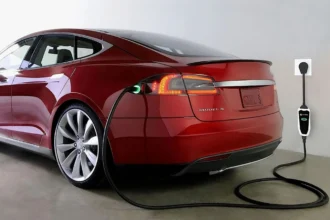
Home charging has also become smarter. 2026 model home chargers are now integrated with smart home ecosystems, allowing them to communicate with solar arrays and home batteries. Families can program their cars to charge only when solar production is at its peak or when utility rates are at their lowest, essentially driving on “free” energy.
The Future of Family Mobility: Beyond 2026
As we look further ahead, the family electric car is evolving into a mobile living space. With the advent of more spacious cabins and enhanced connectivity, the “commute” is becoming a time for productivity or relaxation.
Over-the-Air (OTA) Updates
A defining characteristic of the best 2026 family EVs is their ability to improve over time. Tesla, Rivian, and Lucid have mastered the art of OTA updates, which can add range, improve braking performance, or introduce new entertainment features overnight. This ensures that a car purchased in 2026 will still feel modern and technologically relevant in 2030.
Connectivity and In-Car Commerce
The 2026 infotainment systems are deeply integrated with 5G connectivity. Families can stream high-definition content to multiple screens, attend video meetings from the driver’s seat (while parked or using advanced assistance), and even pay for parking or charging directly through the vehicle’s interface.
Choosing the Right EV for Your Household
Selecting the best family electric car in 2026 requires a balance of lifestyle needs and financial goals.
- For the Tech-Forward Minimalist, the Tesla Model Y Juniper remains the most logical choice due to its efficiency and ease of use.
- For the Large Family requiring Luxury, the Lucid Gravity or Cadillac Vistiq offers the space and prestige that traditional luxury brands struggle to match.
- For the Value-Conscious Family, the Kia EV9 and Hyundai Ioniq 9 provide three rows of comfort and ultra-fast charging at a competitive price point.
- For the Outdoor Enthusiast, the Rivian R2 is unmatched in its utility and rugged design.
- For the Safety-Conscious Parent, the Volvo EX90 stands alone with its advanced LiDAR-based protection systems.
Conclusion
The 2026 model year represents the pinnacle of electric vehicle development for families. These cars are no longer just “good for the environment”: they are simply better vehicles. They are quieter, faster, safer, and more spacious than the gasoline SUVs they replace. With the expansion of the charging network and the stabilization of battery technology, there has never been a better time for a family to make the transition to electric mobility. By focusing on long-term value, safety technology, and charging flexibility, modern households can select a vehicle that will serve them reliably well into the next decade.