
The year 2026 marks a pivotal era in the history of transportation. As we look across the automotive landscape, the transition from internal combustion engines to electric propulsion is no longer a distant goal but a present reality. For the modern driver, understanding the nuances of fueling has shifted from knowing the difference between regular and premium gasoline to mastering the complexities of kilowatt hours, voltage, and connector standards. This comprehensive guide explores the state of electric vehicle charging in 2026, providing the technical depth and practical insights needed to navigate this high voltage world.
- The State of the Charging Ecosystem in 2026
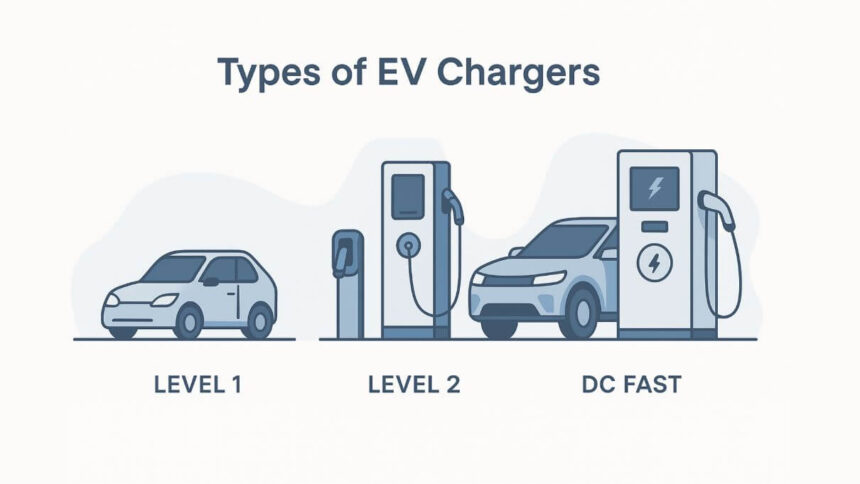
- Level 1 Charging: The Reliable Foundation
- Level 2 Charging: The Workplace and Home Standard
- Bidirectional Charging: Your Vehicle as a Power Plant
- DC Fast Charging: The High Speed Highway Network
- Emerging Technologies: Wireless and Megawatt Charging
- Installation Costs and Financial Incentives in 2026
- Maintenance and Long Term Reliability
- Environmental and Economic Impact
- Conclusion: The Road Ahead
The State of the Charging Ecosystem in 2026
As of late 2025 and moving into 2026, the infrastructure supporting electric mobility has undergone a massive transformation. The most significant shift has been the industry-wide consolidation around the North American Charging Standard, commonly known as NACS. What began as a proprietary connector has now become the universal language for vehicles across the continent. Simultaneously, the European Union has implemented the Alternative Fuels Infrastructure Regulation, which mandates transparent pricing and interoperability across all member states.
The technology itself has moved beyond simple power delivery. In 2026, charging is an intelligent process. Artificial intelligence now manages grid loads in real time, ensuring that the surge in demand from millions of vehicles does not overwhelm local utilities. We are also seeing the widespread adoption of Plug and Charge technology, where the vehicle and the station communicate securely to handle authorization and billing without the need for physical cards or mobile applications.
Level 1 Charging: The Reliable Foundation
Often dismissed as too slow for modern needs, Level 1 charging remains a critical component of the electric vehicle ecosystem in 2026. This method utilizes a standard 120 volt household outlet, the same kind used for a toaster or a lamp. While it provides the slowest rate of energy transfer, its ubiquity makes it the ultimate safety net for drivers.
Technical Specifications and Performance
Level 1 charging typically operates at a current of 12 to 16 amps, delivering approximately 1.4 to 1.9 kilowatts of power. In practical terms, this adds about 3 to 5 miles of range per hour of charging. For a modern electric sedan with a 75 kilowatt hour battery, a full charge from empty could take over 50 hours.
However, looking at this through the lens of daily usage rather than total capacity reveals its true value. The average commuter travels fewer than 40 miles per day. A Level 1 charger can replenish this distance over a 10 to 12 hour overnight period. In 2026, many manufacturers still include a dual voltage mobile connector with new vehicles to ensure that owners always have a way to add range, even when away from dedicated infrastructure.
The Role of Level 1 in 2026
The primary advantage of Level 1 is the lack of installation costs. There is no need for an electrician or a panel upgrade. It is particularly valuable for plug-in hybrid vehicles, which have smaller batteries that can be easily topped off overnight. Furthermore, in multi unit dwellings where infrastructure upgrades are slow, Level 1 outlets provided at parking spots offer a basic but functional solution for residents.
Level 2 Charging: The Workplace and Home Standard
Level 2 is the workhorse of the industry. In 2026, it is the most common form of charging found in residential garages, office parking lots, and shopping centers. Operating on a 240 volt circuit, similar to what a heavy duty clothes dryer or electric oven requires, Level 2 offers a significant step up in speed and functionality.
Power Levels and Amperage
In the 2026 market, Level 2 chargers have become more powerful than their predecessors. Standard installations now frequently utilize 48 amp or 80 amp circuits. A 48 amp charger delivers roughly 11.5 kilowatts, while a high end 80 amp unit can push up to 19.2 kilowatts.
At 11.5 kilowatts, a vehicle can gain approximately 25 to 35 miles of range for every hour it is plugged in. This means that even the largest SUV batteries can be fully replenished from near zero in about 7 to 9 hours. This speed perfectly aligns with the “charge where you park” philosophy, where the vehicle reaches a full state of charge during the workday or while the owner sleeps.
Smart Integration and Grid Management
The Level 2 chargers of 2026 are highly sophisticated computers. Most units are now equipped with Wi-Fi and Bluetooth connectivity, allowing them to participate in demand response programs. During periods of high grid stress, the utility company can subtly reduce the charging speed across thousands of units to prevent blackouts, often in exchange for lower electricity rates for the consumer.
Another major feature in 2026 is dynamic load balancing. For households with two or more electric vehicles, smart chargers can share a single circuit. The system intelligently allocates power based on which vehicle needs the most energy or which one is scheduled to depart first.
Bidirectional Charging: Your Vehicle as a Power Plant
One of the most exciting developments in 2026 is the mainstream availability of bidirectional charging technology. This allows the energy stored in a vehicle battery to flow back out, either to power a home (Vehicle to Home) or to support the electrical grid (Vehicle to Grid).
Vehicle to Home (V2H)
In 2026, a high capacity electric vehicle is essentially a massive backup battery on wheels. With the right Level 2 equipment, a vehicle can power an average home for several days during an outage. This technology has become a major selling point for families living in areas prone to extreme weather or grid instability. It eliminates the need for expensive stationary home batteries like the Tesla Powerwall, as the vehicle already contains a much larger energy reserve.
Vehicle to Grid (V2G)
From a macro perspective, V2G is a game changer for renewable energy. Because solar and wind power are intermittent, the grid needs a way to store excess energy. In 2026, millions of parked electric vehicles act as a distributed battery system. Utilities can draw small amounts of power from these vehicles during peak evening hours and refill them late at night when wind energy is abundant and demand is low. Many drivers in 2026 actually earn credits on their utility bills by allowing their cars to support the grid in this manner.
DC Fast Charging: The High Speed Highway Network
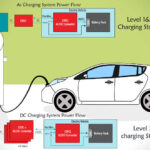
For long distance travel, DC Fast Charging (often called Level 3) is the essential technology. Unlike Level 1 and Level 2, which provide Alternating Current (AC) that the car must convert to Direct Current (DC), these stations deliver DC power directly to the battery. This bypasses the limitations of the vehicle’s onboard charger and allows for much higher speeds.
Breaking the 350kW Barrier
By 2026, the standard for ultra fast charging has shifted from 150 kilowatts to 350 kilowatts and beyond. New stations being deployed along major corridors now offer speeds up to 600 kilowatts. For vehicles equipped with 800 volt or 1000 volt architectures, these chargers can add 200 miles of range in less than 10 minutes.
This speed brings the electric vehicle experience very close to the traditional gas station stop. In 2026, the bottleneck is often the battery chemistry itself rather than the charger. Liquid cooled cables are now standard at these stations to manage the immense heat generated by such high currents.
The Rise of NACS and the End of CCS
In North America, the transition to the NACS connector is virtually complete by 2026. Most major manufacturers, including Ford, GM, Rivian, Volvo, and BMW, now build their vehicles with the NACS port natively. For older vehicles, high speed adapters are widely available and reliable. This consolidation has greatly improved the user experience, as drivers no longer need to worry about whether a station has the “right” plug.
Emerging Technologies: Wireless and Megawatt Charging
As we move through 2026, two specialized forms of charging are beginning to leave the laboratory and enter the real world.
Wireless Inductive Charging
The 2026 Porsche Cayenne Electric has made headlines as one of the first luxury vehicles to offer a factory integrated wireless charging option. This system uses a pad on the garage floor and a receiver on the vehicle. When the driver parks over the pad, energy transfers through a magnetic field at speeds up to 11 kilowatts (matching a standard Level 2 wired charger). While currently an expensive option for premium vehicles, it represents the future of convenience where the act of “plugging in” becomes obsolete.
Megawatt Charging System (MCS)
For the heavy duty trucking industry, even 600 kilowatts is not enough. The Megawatt Charging System, capable of delivering over 1,000 kilowatts (1 MW), is being deployed at freight hubs in 2026. This allows massive semi trucks to recharge their multi hundred kilowatt hour batteries during a driver’s mandatory 30 minute break. This technology is the key to decarbonizing the logistics industry.
Installation Costs and Financial Incentives in 2026
Purchasing the vehicle is only half the journey; setting up home charging is the other. In 2026, the costs of installation have stabilized, but they remain a significant consideration.
Residential Installation
A standard Level 2 home installation typically costs between $800 and $2,000, depending on the age of the home’s electrical panel. If a panel upgrade is required to handle the additional 50 to 60 amp load, costs can rise by another $1,500 to $3,000.
In the United States, the 30C Alternative Fuel Infrastructure Tax Credit remains a vital tool for homeowners, providing a credit of up to 30% of the cost (capped at $1,000) for those in eligible census tracts. However, it is important to note that this specific credit is currently set to expire on June 30, 2026, making the first half of the year a busy period for electrical contractors.
Commercial and Fleet Opportunities
For businesses, the incentives are even more robust. Companies can receive credits up to $100,000 per charging port. This has led to a surge in workplace charging, where employees can fill their batteries while at their desks, often as a free or subsidized benefit.
Maintenance and Long Term Reliability
In 2026, the industry has addressed many of the reliability issues that plagued early charging networks. AI-driven predictive maintenance is now the norm for major networks like Tesla, Electrify America, and Iona. Sensors within the charging stalls monitor for cable wear, connector temperature, and communication errors before a failure occurs.
For the individual owner, maintenance is minimal. Level 2 home chargers are solid state devices with no moving parts. The most important safety tip in 2026 remains the same: always use a qualified, licensed electrician for installation to ensure all local building codes are met and that the circuit can handle the continuous thermal load of an EV session.
Environmental and Economic Impact
The shift to these various charging levels has profound implications for the environment. By 2026, the carbon intensity of the electrical grid in many regions has dropped significantly as more renewables are integrated. Charging an electric vehicle is now, on average, 70% cleaner than refueling a gasoline car, even when accounting for the manufacturing of the battery.
Economically, the “fuel” cost for an electric vehicle in 2026 remains significantly lower than gasoline. While public DC fast charging prices have risen to reflect the convenience and infrastructure costs, home charging remains remarkably affordable, especially for those utilizing time of use rates to charge during the middle of the night.
Conclusion: The Road Ahead
Electric vehicle charging in 2026 is defined by choice and intelligence. Whether it is the slow but steady Level 1 trickle, the reliable Level 2 home hub, or the lightning fast DC stations of the interstate, the infrastructure is finally catching up to the ambitions of the automotive industry. As bidirectional charging turns cars into grid assets and wireless technology makes the process invisible, the very concept of “refueling” is being redefined.