
The global automotive landscape is undergoing a radical transformation as the industry moves closer to the middle of this decade. Leading this charge is the Volkswagen Group, a titan of manufacturing that has committed its entire future to the electrification of transport. As we look specifically at the 2026 model year, the Volkswagen ID series represents more than just a collection of new vehicles. It represents a pivot toward affordability, high performance, and deep technological integration. For investors, enthusiasts, and daily commuters, the 2026 lineup serves as a benchmark for what modern sustainable transportation can achieve.
- The Evolution of the Modular Electric Drive Matrix: From MEB to MEB Plus
- The Headline Act: The 2026 Volkswagen ID Polo and ID 2all
- Refining the Icon: The 2026 Volkswagen ID 4 SUV
- The Flagship Sedan: Volkswagen ID 7 in 2026
- The Global Status of the ID Buzz
- PowerCo and the Unified Cell Revolution
- Infrastructure and Ecosystem: The NACS Transition
- Sustainability in Manufacturing
- Market Trends and the Competitive Landscape
- Conclusion: A Year of Consolidation and Growth
The Evolution of the Modular Electric Drive Matrix: From MEB to MEB Plus
At the core of the 2026 Volkswagen ID strategy is the evolution of its primary hardware foundation. While many anticipated a jump to the Scalable Systems Platform (SSP) by this year, Volkswagen has strategically chosen to refine its existing architecture into what is now known as MEB Plus. This platform is the skeleton of the ID.3, ID.4, ID.5, and the upcoming compact models.
The refinement of this platform for 2026 focuses on two critical areas: charging speeds and automated driving capability. By optimizing the thermal management systems within the battery housing, Volkswagen has managed to push DC fast charging rates higher than ever before. This means that for 2026 models, a ten percent to eighty percent charge can be completed in approximately twenty minutes under ideal conditions. This reduction in charging time is a significant hurdle cleared for long distance travel, making electric vehicles a more viable option for those who frequently traverse cross country routes.
Furthermore, the MEB Plus platform integrates a more sophisticated sensor suite. This includes high resolution cameras and radar systems that feed data into the updated software stack. The result is a more seamless Travel Assist function, which in 2026 will support assisted lane changes and improved urban navigation assistance. This level of semi-autonomous driving is becoming a standard expectation for premium electric vehicles, and Volkswagen is ensuring its mass market models remain competitive.
The Headline Act: The 2026 Volkswagen ID Polo and ID 2all
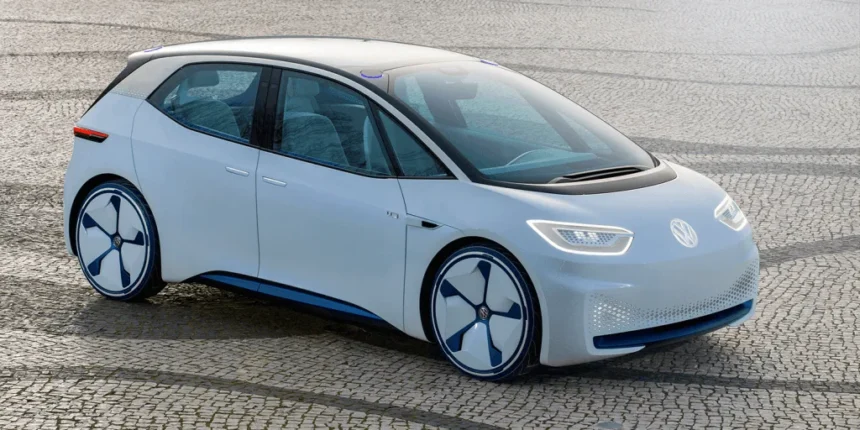
Perhaps the most significant development for the 2026 model year is the introduction of the production version of the ID 2all concept, which many are referring to as the ID Polo. This vehicle is designed to bring electric mobility to the masses with a starting price target below 25,000 Euros. For the first time, the ID series will feature a front wheel drive layout, a departure from the rear wheel drive configuration found in the ID.3 and ID.4.
The 2026 ID Polo is a masterclass in space efficiency. Despite having external dimensions similar to the traditional internal combustion Polo, the interior volume rivals that of a Golf. This is achieved by the compact nature of the electric motor and the flat floor design enabled by the battery placement.
Technical Specifications and Battery Options
The ID Polo will be available with two distinct battery chemistries to cater to different price points and use cases. The entry level versions will utilize Lithium Iron Phosphate (LFP) technology. LFP batteries are known for their durability and lower production costs, making them the perfect choice for an affordable city car. These models are expected to offer a range of approximately 300 kilometers on the WLTP cycle.
For those requiring more range, a higher tier version featuring Nickel Manganese Cobalt (NMC) chemistry will be available. This version utilizes the new PowerCo Unified Cell technology, which provides a higher energy density. The NMC variant is projected to achieve a range of up to 450 kilometers, making it a serious contender for a primary household vehicle.
The power output for the ID Polo range is equally impressive. The standard models will offer between 85 kW and 155 kW of power. However, for those who crave performance, the ID Polo GTI is slated for a late 2026 release. This sporty variant is expected to produce 166 kW (roughly 226 horsepower), allowing for a zero to one hundred kilometer per hour sprint in under seven seconds.
Refining the Icon: The 2026 Volkswagen ID 4 SUV
The ID.4 remains the most popular model in the Volkswagen electric portfolio, and for 2026, it receives a series of crucial mid cycle updates. The focus here is not on radical exterior changes but on refining the user experience and increasing the overall efficiency of the powertrain.
Power and Range Enhancements
The 2026 ID.4 Pro models will continue to feature the high efficiency rear electric motor that was introduced in recent updates. This motor provides 282 horsepower for the rear wheel drive versions, while the all wheel drive 4Motion variants boost that figure to 335 horsepower. This increase in power has not come at the expense of range. In fact, due to software optimizations and improved aerodynamics in the wheel designs, the 2026 ID.4 Pro is expected to maintain an EPA estimated range of 291 miles, with some configurations potentially breaking the 300 mile barrier.
Interior Technology and Infotainment
One of the biggest criticisms of early ID models was the infotainment interface. Volkswagen has listened to this feedback, and the 2026 ID.4 features the latest 12.9 inch touchscreen as standard. This system is powered by a faster processor, ensuring that the interface is lag free. The climate controls are now permanently visible at the bottom of the screen, and the sliders for volume and temperature are finally backlit for easier use at night.
Additionally, the 2026 ID.4 introduces a factory installed HomeLink mirror for S Plus trims and an available 14 speaker Harman Kardon audio system that provides a truly immersive soundstage. These premium touches are part of Volkswagen’s strategy to move the ID.4 slightly upmarket while keeping the base Pro trims accessible.
The Flagship Sedan: Volkswagen ID 7 in 2026
The ID.7 is the sophisticated long distance cruiser of the family. By 2026, the ID.7 will be fully available in both sedan and Tourer (wagon) body styles across international markets. This vehicle is specifically designed to compete with luxury sedans by offering exceptional aerodynamics and a quiet cabin environment.
The ID.7 features a massive 86 kWh battery in its Pro S trim, which allows for a range that can exceed 700 kilometers on the WLTP cycle. For business professionals and fleet operators, this makes the ID.7 a viable alternative to diesel powered executive cars. The 2026 model year also brings refined seats with advanced massage and climate control functions, ensuring that drivers arrive at their destinations refreshed.
The Global Status of the ID Buzz
The ID. Buzz is undoubtedly the most charismatic member of the ID family. However, the 2026 model year presents a unique situation. In the United States, Volkswagen has decided to skip the 2026 model year for the ID. Buzz to focus on managing current inventory and preparing for a major transition in 2027. This means that while 2025 models will remain on dealer lots, there will not be a specific 2026 production run for the American market.
In Europe and other regions, the ID. Buzz continues to evolve. The 2026 international models will benefit from the Long Wheelbase (LWB) configuration, which offers seven seats and a larger 86 kWh battery. The ID. Buzz GTX, a dual motor performance version, will also be available for those who want their electric van to have 335 horsepower and a towing capacity of up to 1,800 kilograms.
PowerCo and the Unified Cell Revolution
A blog post about Volkswagen’s 2026 EV lineup would be incomplete without discussing what is happening under the floorboards. Volkswagen’s battery subsidiary, PowerCo, has officially commissioned its Salzgitter gigafactory. This is a monumental shift in how the company sources its most expensive component.
By 2026, the first Unified Cells will be integrated into production vehicles. The Unified Cell is a prismatic cell design that can be filled with different chemical compositions (LFP or NMC) while maintaining the same external dimensions. This allows Volkswagen to use the same manufacturing equipment for different battery types, drastically reducing production costs through massive economies of scale.
The 2026 Unified Cells offer a ten percent increase in energy density compared to the previous generation. Furthermore, the “cell to pack” architecture eliminates the need for separate modules within the battery housing. This reduces weight, creates more space for active material, and improves the structural integrity of the vehicle. This vertical integration of battery production is a key reason why Volkswagen is able to target lower price points for the ID Polo while maintaining healthy margins.
Infrastructure and Ecosystem: The NACS Transition
For drivers in North America, 2026 marks a turning point in how they interact with the charging infrastructure. Volkswagen has officially adopted the North American Charging Standard (NACS). This means that 2026 models will either come equipped with a NACS port or be provided with a factory approved adapter to access the Tesla Supercharger network.
This move significantly reduces range anxiety, as it opens up thousands of reliable high speed charging points to Volkswagen owners. Additionally, Volkswagen continues to expand its own Electrify America network, which remains a cornerstone of the non Tesla charging landscape. The 2026 models will also support Plug and Charge technology, allowing the vehicle to handle authentication and payment automatically as soon as it is plugged into a compatible station.
Sustainability in Manufacturing
The 2026 ID series is not just about tailpipe emissions. Volkswagen is heavily focused on the carbon footprint of the manufacturing process itself. The production of the ID series in 2026 will utilize green energy for both vehicle assembly and battery cell production. Furthermore, the interiors of these vehicles are increasingly made from recycled materials. For example, the seat covers and headliners in the ID.7 and ID Polo utilize Seaqual yarn, which is made from plastic waste collected from the oceans.
This commitment to circular economy principles is becoming a major selling point for environmentally conscious consumers. It also helps the company meet increasingly strict environmental regulations in Europe and China, where carbon neutrality targets are a significant driver of corporate strategy.
Market Trends and the Competitive Landscape
As we move through 2026, the competition in the electric vehicle space is fiercer than ever. Volkswagen is facing pressure from established players like Tesla and Hyundai, as well as emerging brands from China like BYD and MG.
Volkswagen’s competitive advantage in 2026 lies in its vast service network and its reputation for build quality. While software remains a battlefield, the updates seen in the 2026 ID models suggest that the company is finally finding its footing in the digital space. The decision to maintain physical buttons for certain controls in the ID Polo is a direct response to consumer demand, showing a willingness to blend traditional automotive strengths with modern technology.
Conclusion: A Year of Consolidation and Growth
The 2026 model year for the Volkswagen ID series is characterized by a “democratization of innovation.” By taking the advanced technologies found in the flagship ID.7 and filtering them down to the affordable ID Polo, Volkswagen is fulfilling its promise of making electric mobility accessible to everyone. The refinement of the ID.4 and the strategic hiatus of the ID. Buzz in certain markets show a company that is being pragmatic about the transition.
With the PowerCo Salzgitter factory coming online and the MEB Plus platform reaching its peak efficiency, 2026 is set to be a landmark year for the brand. Whether you are looking for a compact city car, a family SUV, or a luxury long distance sedan, the 2026 Volkswagen ID lineup offers a compelling vision of the future.
Summary of Key Features for 2026 ID Series
| Feature | Description |
| New Model | ID Polo (Production version of ID 2all) starting under 25,000 Euros. |
| Battery Tech | PowerCo Unified Cells with LFP and NMC options. |
| Platform | MEB Plus with faster 200kW+ charging and improved Travel Assist. |
| Infotainment | New 12.9 inch screens with backlit sliders and faster processors. |
| Infrastructure | NACS charging standard adoption for North American models. |
| Sustainability | Carbon neutral production and high use of recycled interior materials. |
Sources and Daily Updates
To stay informed about the latest developments and daily updates regarding the Volkswagen ID series, please refer to the following official and industry sources: