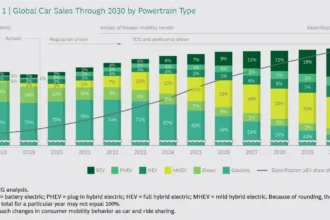

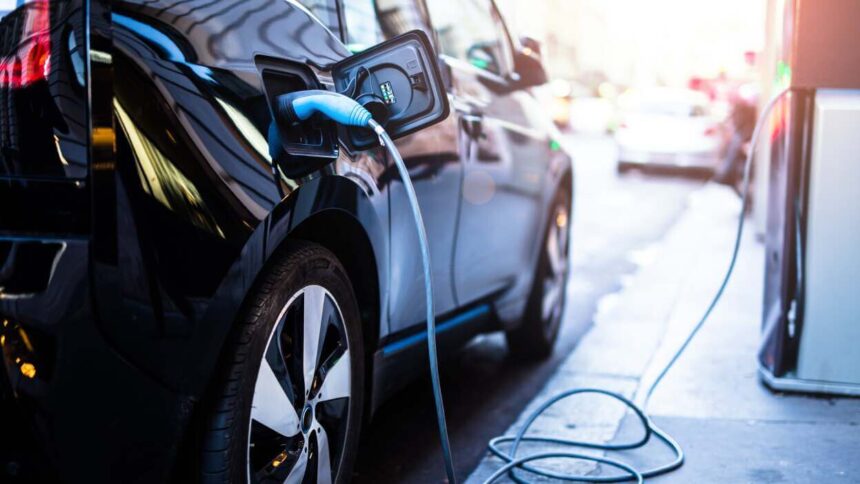
The automotive landscape is undergoing its most significant transformation since the days of Henry Ford. As we navigate through the final days of December 2025, the shift from internal combustion engines to electric propulsion has moved from a niche trend to a global standard. More than a quarter of all new cars sold worldwide this year are electric, a milestone that underscores a fundamental change in how we perceive mobility. For many, the transition to an electric vehicle (EV) represents a commitment to sustainability, a desire for cutting-edge technology, or a savvy financial move. This guide is designed to demystify every aspect of electric vehicle ownership for the beginner, providing the most current information available as of December 26, 2025.
- Understanding the Core: What Is an Electric Vehicle?
- The Mechanics of Modern Mobility: How EVs Work
- The Heart of the Machine: Battery Technology in 2025
- Charging Your EV: Everything You Need to Know
- The Economic Reality: Costs, Savings, and Incentives
- Environmental Impact: Is an EV Truly Green?
- Top Electric Vehicles for Beginners in late 2025
- Live Daily Information: State of the Market (December 26, 2025)
- Choosing the Right EV: A Checklist for Beginners
- Future Outlook: Beyond 2025
- Source Links and References
Understanding the Core: What Is an Electric Vehicle?
At its simplest, an electric vehicle is a car that uses one or more electric motors for propulsion instead of an internal combustion engine (ICE). Unlike traditional cars that burn gasoline or diesel to create energy, an EV draws power from a large, rechargeable battery pack. This pack stores electricity, which is then converted into mechanical energy by the motor to turn the wheels.
The experience of driving an EV is fundamentally different. Because electric motors provide instant torque, the acceleration is smooth and immediate. There are no gears to shift in the traditional sense, and the silence of the motor creates a serene cabin environment. As we reach the end of 2025, the variety of EVs available has exploded, ranging from affordable city cars to high-performance supercars and heavy-duty trucks.
The Different Types of Electric Vehicles
Not all “electrified” cars are the same. Understanding the distinction between the various types is crucial for any beginner looking to make a purchase.
- Battery Electric Vehicles (BEVs)These are what most people refer to when they say “electric car.” A BEV is powered entirely by electricity and has no gasoline engine. You charge the battery by plugging it into an external power source. As of late 2025, modern BEVs like the Tesla Model Y (recently refreshed in the “Juniper” update) or the Hyundai Ioniq 6 offer ranges that comfortably exceed 300 miles on a single charge.
- Plug-in Hybrid Electric Vehicles (PHEVs)A PHEV is a bridge between the old and new worlds. It contains both an internal combustion engine and an electric motor with a battery that can be plugged in. Typically, a PHEV can drive on pure electricity for 30 to 50 miles, enough for most daily commutes, before the gasoline engine kicks in to provide extended range. Models like the Volvo XC90 PHEV remain popular for those who aren’t quite ready to go “all-in” on pure electric.
- Hybrid Electric Vehicles (HEVs)While they use electricity to assist the engine and improve fuel efficiency, HEVs cannot be plugged in. They rely on “regenerative braking” and the gasoline engine to charge a small battery. In 2025, these are often seen as the baseline for fuel efficiency rather than true electric vehicles.
The Mechanics of Modern Mobility: How EVs Work
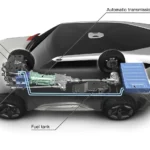
To understand why EVs are so efficient, we must look at the drivetrain. A traditional car has hundreds of moving parts, including pistons, valves, and a complex transmission. An electric vehicle’s drivetrain is incredibly simple by comparison.
The Battery Management System (BMS)
The “brain” of an electric vehicle is the Battery Management System. This complex software ensures that the battery operates within safe temperature and voltage ranges. In December 2025, BMS technology has reached a point where battery degradation is significantly slower than it was a decade ago. Most manufacturers now guarantee that batteries will retain at least 70 percent of their capacity after eight to ten years of use.
Regenerative Braking
One of the most innovative features of an EV is regenerative braking. When you lift your foot off the accelerator, the electric motor reverses its function, acting as a generator. This process captures the kinetic energy that would otherwise be lost as heat during braking and sends it back into the battery. This not only increases the vehicle’s range but also allows for “one-pedal driving,” where the car can come to a complete stop just by modulating the accelerator.
The Heart of the Machine: Battery Technology in 2025
The most expensive and critical component of any EV is the battery. As we conclude 2025, the industry is seeing a diversification in battery chemistries, each with its own set of advantages.
Lithium-Ion (NMC and NCA)
The standard for high-performance EVs remains the Lithium Nickel Manganese Cobalt (NMC) or Nickel Cobalt Aluminum (NCA) battery. These offer high energy density, allowing for long ranges in smaller footprints. However, they are more expensive to produce and rely on minerals like cobalt and nickel, which have faced supply chain challenges this year.
Lithium Iron Phosphate (LFP)
LFP batteries have surged in popularity in 2025, particularly for entry-level models like the newly released Tesla Model Q. While they have slightly lower energy density than NMC batteries, they are cheaper to manufacture, more durable, and do not use cobalt. They are also less prone to overheating, making them exceptionally safe.
The Rise of Solid-State Batteries
While still in the pilot production phase, 2025 has seen major breakthroughs in solid-state battery technology. Companies like GAC and Factorial Energy have begun delivering “B-samples” to manufacturers for testing. Solid-state batteries replace the liquid electrolyte with a solid material, promising nearly double the energy density of current batteries and charging times of under 10 minutes. Most experts predict that mass-market vehicles with this technology will arrive between 2027 and 2028.
Charging Your EV: Everything You Need to Know
For a beginner, the transition from gas stations to charging stations is often the most daunting part of the journey. Fortunately, the charging infrastructure has seen massive expansion throughout 2025.
The Three Levels of Charging
- Level 1 (Household Outlet): This uses a standard 120-volt outlet. It is very slow, adding only about 3 to 5 miles of range per hour. It is best used for PHEVs or emergencies.
- Level 2 (240-volt Outlet): This is the standard for home charging and public “destination” chargers. It can fully charge a typical EV overnight, adding 25 to 30 miles of range per hour. Installing a Level 2 charger at home is highly recommended for any new EV owner.
- Level 3 (DC Fast Charging): These are the “gas stations” of the electric world. Found along highways, they can charge an EV from 10 percent to 80 percent in as little as 15 to 30 minutes.
The Standard War: NACS vs. CCS
In North America, the “Plug War” is officially over as of December 2025. The North American Charging Standard (NACS), pioneered by Tesla, has been adopted by virtually every major manufacturer, including Ford, GM, Rivian, and Volvo. Most new 2025 and 2026 models now come with a NACS port natively, while older vehicles can use adapters to access the vast Tesla Supercharger network. In Europe, the CCS2 standard remains the dominant and universal choice.
The Economic Reality: Costs, Savings, and Incentives
While the sticker price of an electric vehicle can be higher than an equivalent gasoline car, the total cost of ownership is often lower.
Live 2025 Financial Update
As of December 26, 2025, the financial landscape for EVs in the United States has shifted. The federal tax credit of $7,500, which was a staple for years, underwent significant changes in October 2025. Many of the previous consumer-facing credits have been replaced by new business-focused incentives, such as 100 percent bonus depreciation for electric commercial vehicles. However, several states (like California, Colorado, and New Jersey) continue to offer substantial rebates that can lower the cost by thousands of dollars.
In Europe, countries like France and Spain are maintaining subsidies of up to 4,000 to 7,000 euros, though these are increasingly tied to the environmental footprint of the vehicle’s manufacturing process.
Maintenance and Fueling
The average EV owner saves approximately $800 to $1,500 per year on fuel, depending on local electricity rates. Maintenance is another area of significant savings. Because EVs lack oil, spark plugs, timing belts, and complex exhaust systems, their scheduled maintenance is minimal. Apart from tire rotations, cabin air filter changes, and brake fluid checks, there is very little to do.
Environmental Impact: Is an EV Truly Green?
A common question for beginners is whether the environmental cost of manufacturing a battery outweighs the benefits of driving without tailpipe emissions. The data from late 2025 is clear: while the initial production of an EV is more carbon-intensive due to mineral mining, the “carbon parity” (the point at which the EV becomes cleaner than a gas car) is reached within 15,000 to 20,000 miles of driving on an average power grid.
Furthermore, as the global energy grid transitions to renewables, every EV on the road becomes cleaner over time. In countries like Brazil and parts of the EU, where renewable energy makes up a large share of the grid, EVs reduce life-cycle emissions by more than 80 percent compared to internal combustion engines.
Top Electric Vehicles for Beginners in late 2025
If you are looking to buy your first EV right now, these are the standout models currently dominating the market:
- Tesla Model Y (Juniper Refresh): The best-selling car in the world for a reason. Its software is unparalleled, and the 2025 update brings a quieter cabin and improved suspension.
- Hyundai Ioniq 5 / 6: Known for their ultra-fast 800-volt charging architecture, these cars can charge faster than almost anything else on the road.
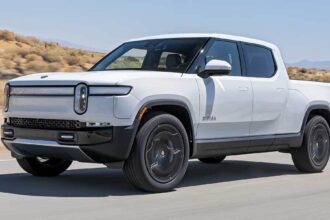
- Rivian R1S / R1T: For those who need off-road capability and ruggedness, Rivian has established itself as the premier choice in the electric truck and SUV space.
- Kia EV3: A brand-new entry for 2025, the EV3 offers a premium feel and 300 miles of range at a much more accessible price point.
- Tesla Model Q: Released in mid-2025, this is the first true “mass-market” Tesla, priced under $30,000, making EV ownership possible for a much wider audience.
Live Daily Information: State of the Market (December 26, 2025)
The electric vehicle market is moving fast. Here are the headlines you need to know today:
- Market Share: In the last 30 days, EV market share in the European Union exceeded 20 percent for the first time on a monthly basis.
- Battery Prices: Lithium carbonate prices have continued to rise sharply this week due to increased demand for 2026 production cycles, though the cost of finished battery packs remains near historic lows of $95 per kilowatt-hour.
- Infrastructure: Over 2,000 new fast-charging ports were activated across North America this month alone, with a focus on “charging deserts” in the Midwest.
- New Announcements: Rumors from the upcoming CES 2026 suggest that several Japanese manufacturers, led by Toyota and Mazda, will finally unveil their first dedicated long-range EV platforms.
Choosing the Right EV: A Checklist for Beginners
Before you visit a dealership, consider these five factors:
- Range Requirements: Look at your daily commute. If you drive less than 50 miles a day, almost any modern EV will suffice. If you frequently take long trips, look for a vehicle with at least 250 miles of range and fast-charging capabilities.
- Charging at Home: Do you have a garage or a dedicated parking spot where you can install a Level 2 charger? This is the single most important factor in EV satisfaction.
- Cargo and Space: EVs often have more interior space than gas cars of the same size because they lack a transmission tunnel. Check the “frunk” (front trunk) for extra storage.
- Resale Value: Brands with established battery reputations, like Tesla and Hyundai, currently hold their value better in the used market.
- Local Incentives: Always check for local utility rebates. Many power companies offer discounted rates for charging your car during off-peak hours (typically late at night).
Future Outlook: Beyond 2025
The end of 2025 marks the beginning of the “post-adoption” era. We are no longer asking if EVs will happen, but how fast the infrastructure can keep up with them. Innovations like bidirectional charging (V2G), where your car can power your home during a blackout, are becoming standard features in new models like the 2026 Ford F-150 Lightning. Autonomous driving software is also maturing, with many EVs now capable of handling highway driving with minimal driver intervention.
Source Links and References
For more detailed technical data and the latest market reports, please refer to these authoritative sources:
- BloombergNEF Electric Vehicle Outlook 2025: https://about.bnef.com/electric-vehicle-outlook/
- International Energy Agency (IEA) Global EV Data Explorer: https://www.iea.org/data-and-statistics/data-tools/global-ev-data-explorer
- U.S. Department of Energy Fuel Economy Guide: https://www.fueleconomy.gov/
- Ember Energy Analysis on Global EV Race: https://ember-energy.org/latest-insights/the-ev-leapfrog/
- PwC Strategy& Electric Vehicle Sales Review: https://www.strategyand.pwc.com/evsalesreview